



Prepared for the Worst: Securing Motorcoach Passengers
Understanding the nature of threats is a good first step. Information sharing -- formally and informally -- loss and incident data collection, and analysis of past experience all play a role in determining what should be done to protect passengers.
Be prepared. The Boy Scout motto provides words to live by for all of us, but as some recent headlines reveal — “Bus beating being probed;” “Gruesome Manitoba bus killing suspect held;” and “Bus bomb kills 8, injures 50” — it is especially important if you are a motorcoach company manager or owner.
But being prepared is not easy in a world full of threats. The questions abound: How can you stop, prevent or deter attacks? What steps could be taken to minimize trouble? What is your legal obligation to protect your passengers?
The coach industry and every company operating as part of the national transportation network must develop countermeasures to possible life-threatening situations. Many companies have already done so. The question is, what have you done? Is it enough? What might be done next? Where do private sector obligations meet governmental responsibilities?
What is your duty?
A passenger transportation provider has a significant
obligation to protect its riders. The specific nature of that obligation can
and will vary. First, by the laws of the jurisdiction involved (each state has
established its own set of standards.) Second, by the nature of the trip;
charter trips often have a different legal definition than the more open
obligations of line or scheduled service. Despite these factors, the bus
company must act to prevent accidents and protect its passengers from injury.
The company’s obligation derives from the long-standing duties of a common carrier, where many circumstances make mandatory the implementation of prevention programs. As always, the law and the duties it imparts vary and are subject to interpretation. According to the wording of one court ruling:
“transport…includes the obligation on the part of the carrier to guarantee to its passenger respectful and courteous treatment, and to protect them, not only from violence and insults from strangers, but also from violence and insult from the carrier’s own agents.*”
Legal viewpoint
Pennsylvania-based trial lawyer Gerald McHugh
(www.geraldmchugh.com) has years of
experience handling negligence litigation, which has placed him in a unique
position of understanding that every dispute has two sides. McHugh offers the
following thoughts on the subject:
“As a common carrier, a bus line would owe its passengers the highest duty of care in most states. That would include a duty to identify and guard against foreseeable risks. However, stating the legal duty is one thing; describing it in the real world is much more difficult…
As a lawyer for plaintiffs, my assessment of…a passenger attack incident would hinge on two critical factors. First, what had been the carrier’s previous experience with incidents of criminal assault, and in particular, had it identified any particular routes that were plagued with incidents? If so, some program of deterrence, such as periodic plain clothed security guard on a bus, or a video system, accompanied by notices to passengers of such surveillance, would seem to be practical options in an effort to inhibit criminal activity.
The second critical area is the carrier’s response system when an incident has occurred. Were drivers able to make instant contact with local police along the route? Did drivers have a protocol to follow in the event of an incident?”
From an expert litigator, these words provide a clear pathway to passenger carrier loss and litigation prevention.
Nature of threat
Criminal activity, which may occur on board a bus or coach,
is often described as simply reflecting criminal behavior in our culture. To
some extent, this is certainly true. But now, in 2008, the nature of crime that
can and does impact the bus and coach industry has taken on a new dimension.
What is being discussed today is terrorism.
Terrorism has in the past been defined as “government by intimidation.” A United Nations panel determined that terrorism is an act “intended to cause death or serious bodily harm to civilians or non-combatants with the purpose of intimidating a population or compelling a government or an international organization to do or abstain from doing any act.” And sadly, those acts of terrorism have targeted buses. Worldwide, buses are a key target, by default, as other targets become harder to strike.
But terrorism, at its simplest level defined as malevolent criminal action, is not the only threat. Crimes against persons and property impact the bus industry as well. One informal study by an expert in loss prevention showed serious bus passenger incidents occurring once every three weeks; other data released in past litigation matters showed that unfit passengers were expelled from (or denied transportation on) bus travel almost daily.
No service provider in the bus and coach industry is immune from the threat of crime and violence. Being prepared means understanding that theft, abuse and attack are the minor league equivalents to the big league of hijackings, murder and potential terrorist incidents. Each needs a plan to address risk and a plan for response.
[PAGEBREAK]Risk and response
Crime, violence and terrorism can all result from forces
beyond the control of the passenger transportation service provider. But, this
reality can have minimal impact when the obligation of a company to provide
passenger protection is under close scrutiny, as it certainly would be in a
courtroom. The wise service provider can, and will, investigate its options and
select those “fixes” that are appropriate to security needs.
Risk will vary and solutions should be tailored to need. One key factor in assessing risk is whether the trip operates in an “open” transportation system. Open systems include transit, commuter runs, intercity line runs and other trips where any and all riders may approach the coach and step on board.
Closed systems often include charter trips, where the passengers are linked in advance by destination, group purchase and often other forms of relationship.
Open transportation systems seem to demand more extensive security efforts due to the perceived higher level of risk. Although, closed systems are certainly not trouble free, especially when alcohol is added to the charter trip mixture.
Understanding the nature of threats is a good first step. Information sharing — formally and informally — loss and incident data collection, and analysis of past experience all play a role in determining what should be done to protect passengers.
In response to security needs, much has already been done through the use of both private funding and in concert with Transportation Security Administration (TSA) grants and assistance. Many open system bus, coach and transit agencies have responded to their security needs with dedicated police forces, intercom systems, operator communication tools and other systems and devices, or a combination of these efforts. Private-sector initiatives, gradually becoming best practices today, include security communication systems, GPS locators and the installation of “panic” alert buttons on vehicles.
Does the future hold the potential, as one expert pointed out, for metal detectors or hand-held wands at bus doorways, or drug and bomb-sniffing dogs at terminals? Or, can we expect a dedicated security staff riding over the lines of a long-distance system? Some of these programs exist but need expansion, while others may be described as pending action. Practical solutions are needed, ones that do not destroy the benefit of an accessible bus transportation system, but are solutions that consider the continuing obligation of the service provider to provide a violence-free system.
Where to begin
Like so much of loss prevention in passenger transportation,
our work begins with our people. Our people are our biggest asset in so many
ways and, in no case are they more valuable than in helping to secure our
transportation system.
In a TSA-inspired program, Operation Secure Transport, driver and customer service personnel training became a focus of first-step activity. The program content is currently available through the United Motorcoach Association’s Bus and Motorcoach Academy, available online at www.itc.csmd.edu/uma.
Teaching drivers the nature of the threat and how to logically and reasonably respond to perceived threats makes sense. Giving them the tools to work with can help, as well as helping them understand that, according to the U.S. Department of Homeland Security and FBI experts, criminals and terrorists fit no set “profile”; the case of a blue-eyed, blond-haired female suicide bomber on a bus put most of those thoughts to rest.
Passenger transportation companies should consider employee training that includes topics such as:
• Managing and responding to unacceptable passenger behavior;
• Dealing with physical threats and attacks;
• Recognizing and responding to dangerous materials and devices;
• In case of fire or breakdown;
• Criminal activity: the right mix of prevention and response.
In conjunction with employee training, next steps might include company-wide assessments of operational, facility and equipment weaknesses. Generally, the best results of such efforts are obtained when such evaluations are completed in conjunction with security or law enforcement professionals. Follow up, that vital action step should include the development of plans that address the risks, potential and real, that have been noted.
Addressing the security needs of the vehicles in the fleet is important as well. The previously mentioned GPS systems can be a powerful security tool, but so can the simple act of lettering in bold the coach roof top with company name and unit number. Remote devices that can shut down or disable a vehicle are potentially valuable security systems, but simple ignition interlocks to prevent unauthorized engine start-up can be a simpler, cheaper fix and address much, but not all of, the unauthorized use problem.
Risk in transportation is inevitable. But managing risk is possible. “Be prepared,” when put into action, can impact the safety and security of your company, your employees and as essentially, your passengers. In turbulent times, managing risk through preparation is a responsibility you cannot ignore.
*Knoxville Traction v. Lane 103 Tenn 383, 46 LRA 549
Jack Burkert is director of safety and security programs for the Trailways Transportation System. Jack may be reached at jackburkert@verizon.net.
More Management

Joshua Schank on Transportation Innovation, Risk, and the Future of Mobility
In this edition of METROspectives, Joshua Schank discusses lessons from launching LA Metro’s Office of Extraordinary Innovation, the challenges of advancing new mobility technologies, and much more.
Read More →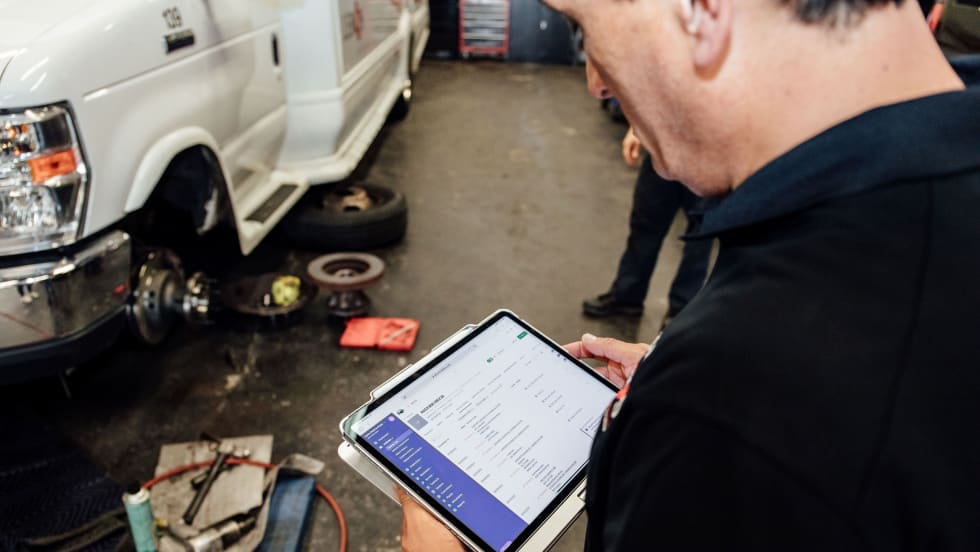
Reinventing Fleet Maintenance with Real-time Visibility and AI
Transit leaders need to know what needs fixing, where to look, who is responsible, when work is completed, and what it costs without having to chase information across disconnected systems.
Read More →
Alstom Acquires Delaware Site to Support Amtrak NextGen Acela Fleet
The company is investing more than $55 million to acquire and improve the property and will employ approximately 100 people at this site once it is operational.
Read More →
SamTrans Sets Priorities for Potential Connect Bay Area Revenue
The board-approved framework allocates future funding to maintaining service, rider improvements, equity initiatives, and infrastructure repairs.
Read More →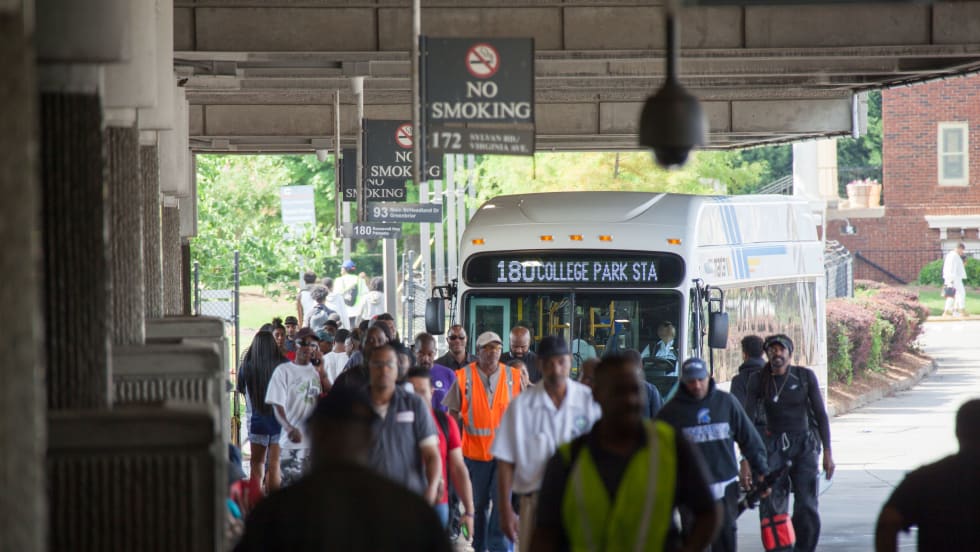
Federal Transit Officials Launch MARTA Safety Probe
FTA has given MARTA 15 days to provide records on crime prevention, fare evasion enforcement, and security funding as part of a broader safety investigation.
Read More →
ABA's Ferguson Testifies in Support of BUS Act, National Standards for Bus Operators
The BUSES Act would create a nationwide framework preventing state and local governments from enforcing bus idling restrictions of less than 15 minutes, a threshold consistent with existing Environmental Protection Agency guidance.
Read More →
When Routine Fails: How Public Transit Must Adapt for the World Cup
The 2026 FIFA World Cup will test transit agencies’ ability to manage unpredictable travel patterns, making real-time data and operational flexibility critical to moving millions of visitors efficiently.
Read More →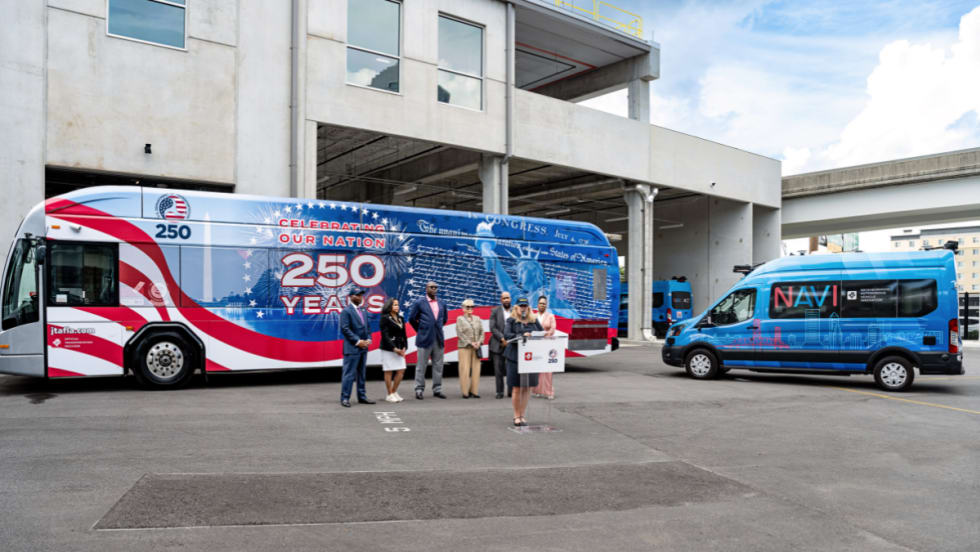
Florida’s JTA Puts Innovation in Motion Ahead of America250
The agency unveiled a commemorative America250 bus during a visit from U.S. DOT's Seval Oz and showcased its autonomous mobility programs.
Read More →
California Selects Team for Nation’s First True High-Speed Rail Track and Systems Contract
The board action follows completion of track installation at the 150-acre southern railhead in Kern County, which will serve as the staging and distribution hub for high-speed track and systems installation.
Read More →
IndyGo, Cleveland RTA Expand Digital Fare Payment Options with Masabi
The new systems combine mobile apps, smart cards, and automatic fare capping to simplify payments, expand flexibility, and help riders access the lowest available fares.
Read More →