



Proactive Programs Key To Rail Safety
Visionaries in the rail industry are working to change the mindset and culture of rail work and safe performance. Preventive measures, such as removing barriers to safety and ensuring thorough training, are rapidly reducing safety risks and injuries.

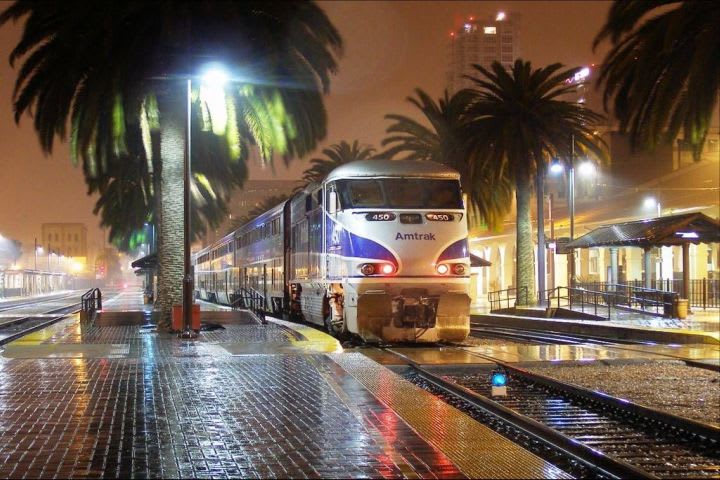
[IMAGE]MET9RailSafety-.jpg[/IMAGE] After having worked on a rail system for more than 11 years, Paul Messina, superintendent of rail investigations, MTA New York City Transit (NYCT), found himself in a potentially fatal situation. In the middle of an ice storm, he was working on an F train to Coney Island on a curved portion of elevated track about 30-feet above ground. It was hailing and sleeting with such intensity that the third rail quickly became icy and the train was stuck in between stations, because the third rail shoes rode up on top of the ice. He and the other track workers had to get the train and the passengers to the next station safely.
He slipped on the ice, and almost fell into the street. “I just grabbed the handrail at the edge, then two employees helped me up. I was wearing shoes with cleats on them, but with ice, that’s not going to help,” says Messina.
In order to prevent dangerous situations like this and others, several rail industry leaders are working toward the goal of changing the culture and mindset in rail safety from reactive — and sometimes punitive — to proactive and preventive, providing rail workers with the necessary tools and training to work safely, and significantly reduce, or ideally eliminate, accidents and fatalities. NYCT and Amtrak are just a couple of the transit operators implementing new safety programs based on extensive feedback and research that indicates that many — if not all — accidents can be completely prevented.
Industry mindset changing
When Peter Hall, director of safety, western region for Amtrak Chicago, began working for the rail transit provider in the mid-1990s, they, like many others in the industry, hadn’t yet done much work with behavioral safety and used a more reactive approach to injury prevention. “The culture was based on letting things happen before we figured out why. And, [the rail industry] is not alone in that…it’s easy to measure…how many riders came on the train, how many injuries we had…what’s hard to measure are behaviors that could lead to an injury,” says Hall.
Marc Magliari, media relations manager for Amtrak government affairs and communications, agrees. “Someone gets hurt, there’s an investigation, then they find out what the wrong thing was and teach people not to do it.”
Hall adds that by implementing behavioral safety principles, Amtrak has been able to reverse that trend.
Safety practices re-examined
In a joint project with the Federal Railroad Administration (FRA), Hall began work on a behavioral safety program for the Chicago Union Station in 2000. The FRA office of research and development asked Amtrak to be the pilot program for the railroad industry. “Behavioral safety was a new program, and the FRA wanted to try it,” Hall explains. “I jumped at the chance, because it was a unique approach for a railroad.”
Working with behavioral safety technology, the pilot was carried out at the station, judged an ideal location due to its relatively small size and pool of 200 employees with varying degrees of seniority. The Volpe National Transportation System Center was hired to handle statistical analysis. A Steering Committee was appointed; they analyzed all the injuries that had occurred over the past three years and determined how each one occurred and what could be done to prevent similar injuries in the future. They then created a categorized list of all the behaviors, called the Critical Behavior Inventory.
Based on the list, the committee developed a checklist and selected trained observers to review the work of employees volunteering to be observed. Twice daily, the observers would watch their peers, who had already received safety training, record their behavior and discuss it with them afterward during a feedback session. Hall added that the behavior safety training was essential to achieving the performance they wanted.
The observers would point out what they saw the employees doing safely and what they were doing that was at-risk. Common at-risk behaviors included lifting heavy items with the back instead of the legs; workers not watching where they are walking; or not being mindful of “pinch points” when carrying or lifting objects. The observers would ask the employee whether there was a reason for the at-risk behavior. In some cases, the employee would respond that they couldn’t carry out the task safely, because there was a barrier to safe performance.
The observers would file daily reports and list barriers to safe performance that employees encountered, and considered changing how the job was done, or what tools were available.
[PAGEBREAK]Removing safety barriers
One change that resulted from this work was made to baggage trailers. After watching employees attach a trailer full of baggage to a tractor, take it out to the platform and load the baggage onto the train, they noted that some pinch-point injuries had been caused by having to grab the tongue of the trailer by the eye — a large, round piece of steel — to pull it and attach it to the tractor. The team responded with a solution: welding hand-holds onto the tongues of the trailer. The need to hold the eye that was going to be dropped onto the hook of the tractor — a barrier to safe performance — was eliminated.
“That’s the way behavioral safety works,” Hall explains. “You can actually see how people are putting themselves at risk before the injuries happen; you can do something about it."
The program proved effective in helping Amtrak prevent injuries. The year before the program was implemented, 21 injuries were reported; the year after implementation, there were only three injuries. Hall describes the results as a “revelation in terms of safety for the station.”
Because the program is what Hall calls front-end loaded, it can be expensive at the start. “You have to put the team together, analyze all the injuries, create the inventory and the training program.
It takes about six months before you start getting results, and then another six months before everyone realizes what they’re supposed to be doing. But if you put in the effort at the beginning, the result will be an exceptional safety record.”
Climate versus culture
Levern McElveen, the Federal Transit Administration's (FTA) acting director of the office of safety and security, has noted that the transit industry can go further to improve rail safety by creating what is called a “safety culture.”
According to a presentation given by McElveen at the June 2008 APTA Rail Conference in San Francisco, creating a safety culture is critical, because it puts a system in place that modifies worker behavior to such an extent that in the event of an accident, usually caused by a failure in policy, procedure or communication, safety behavior “will in time self-align.”
McElveen has distinguished between what is referred to as “safety climate” and “safety culture,” pointing out that the term “safety climate” is often mistakenly used in place of the term “safety culture,” despite the fact that they have different meanings.
Safety climate refers to how people “feel about and emotionally react to their environment,” whereas safety culture is more complex.
An aspect of organizational culture, it “establishes safety as a top priority, using a systemic approach to prevent accidents and continually seeking to improve the process.” McElveen also stressed that individuals and groups in an organization need to assume, “personal responsibility for safety, and communicate safety concerns, strive to actively learn, adapt and modify behavior, based on lessons learned from mistakes.”
In his presentation, McElveen also maintained that safety culture, a new approach for many rail agencies/authorities, should review analysis of errors or accidents in a transparent way, revealing and examining leadership, technical and human failures, and limitations.
An effective safety culture also requires shared decision-making, since safety hazards tend to happen at lower levels in an organization, and there is often not time for those at the highest level to decide how a situation should be handled.
In order to successfully create a safety culture, McElveen also stresses making safety a top priority, making continuous safety improvements, ongoing education and training of employees, and ensuring that values are aligned. He recommends making clear what will be monitored and measured, and “modeling, teaching, coaching and establishing effective criteria for granting rewards, and promoting or punishing employees.”
While it may take years to put an effective safety culture in place, the benefits of adopting one are, “enhancing organizational performance by energizing and motivating employees to unite around a shared goal, and having a higher mission to guide workers’ behavior so that their actions are aligned with strategic priorities.”
[PAGEBREAK]Proactive practices
NYCT is currently going through the steps to ensure an effective safety culture. Messina has teamed up with Robert Howard, NYCT president, and Roger Toussaint, NYCT Local 100 president, to develop a New York City joint track safety task force, a program that has worked to make proactive safety improvements to prevent injuries throughout the large system.
Messina describes the system as having 443 miles of track underground, 156 miles above ground and 357 at-grade miles, as well as more than 2,600 switches, 68 bridges and 14 underwater tunnels, and points out that the only transit system in the world that carries more passengers is the Moscow Monorail Transit System. “Our service is 24 hours, seven days a week, on 26 lines. Maintenance is critical; employee safety is imperative,” he says.
Like Amtrak, NYCT also hired a professional organization, the Global Strategy Group, to conduct research for the project, this time in the form of a field survey. More than 400 industry professionals, including supervisors, train operators, maintenance workers and rapid transit operations flaggers were interviewed. The feedback included employees calling for a focus on safety risks, investment in the mission, trying to change to a safer work culture, communications and training, notes Messina.
After that, the track safety task force was organized. Started in May 2007, it is comprised of representatives from the Transit Workers Union, NYCT office assistant safety and department of subways management, and still meets regularly. “Their mission is to identify cultural behaviors that might negatively affect track safety and to make recommendations. [So far], they have made 63 recommendations, and here in the office, we have made 29 rule changes,” Messina says.
Some of the changes that the task force has made to prevent accidents include improving procedures, such as ensuring that tracks are closed using the appropriate lights and personnel, investigating what are called “near miss” incidents (situations where no one was hurt but someone possibly could have been) to determine how the situation could be changed to avoid unsafe behavior. Labeling areas without adequate clearance with visible “No Clearance” signs, and constantly making upgrades to and repair of all the emergency alarm boxes, so that each one is working in the event of an incident, were other improvements.
Overall, Messina says that the program is a work in progress. “Where we find the rules are lacking, we change the rules. It’s a cooperative, dynamic, ongoing process.”
More Rail
The Invisible Infrastructure of Passenger Flow
What a seat reservation system on Austria’s Railjet trains reveals about the future of rider experience, and why U.S. agencies should pay attention.
Read More →
Caltrain Board Approves FY27 Budget, Endorses Efficiency Measures
The move ensures Caltrain service will continue operating as usual in the near term, but long-term financial challenges remain for the rail agency absent a new revenue source.
Read More →
Alstom Acquires Delaware Site to Support Amtrak NextGen Acela Fleet
The company is investing more than $55 million to acquire and improve the property and will employ approximately 100 people at this site once it is operational.
Read More →
When Routine Fails: How Public Transit Must Adapt for the World Cup
The 2026 FIFA World Cup will test transit agencies’ ability to manage unpredictable travel patterns, making real-time data and operational flexibility critical to moving millions of visitors efficiently.
Read More →
California Selects Team for Nation’s First True High-Speed Rail Track and Systems Contract
The board action follows completion of track installation at the 150-acre southern railhead in Kern County, which will serve as the staging and distribution hub for high-speed track and systems installation.
Read More →
Seattle's Sound Transit Launches New Sounder Railcars into Service
Alstom manufactured all the cars under a $46.5 million contract and came into service in anticipation of summer crowds for soccer and baseball.
Read More →
Alstom Partners With Universities to Build Rail Talent Pipeline
The partnerships include a new engineering scholarship fund at Alfred State College in Western New York and collaborations with transportation centers at the University of Pennsylvania and New York University.
Read More →
Chicago's NITA Act Moves Into Next Phase as Service Improvements Begin
Rider-focused improvements will begin rolling out across the system immediately as CTA, Metra, and Pace increase service this summer in the six-county region.
Read More →
Seattle’s Sound Transit Adopts Updated ST3 System Plan
The updated system plan incorporates cost savings across the agency, including new revenue sources and financial policies, to set the agency on a sustainable path for the future.
Read More →
Inside Look: EMBARK Expands Fare-Free Transit Program Through New Public-Private Partnership
The OKC transit agency says sponsorship helps subsidize the Third Friday Free initiative while reducing barriers for first-time riders and boosting ridership across buses, streetcars, and river cruises.
Read More →