



Tire leasing contracts help agencies save cash
A significant cost for many transit agencies, some in the industry have begun leasing tires and reaping a large savings, annually.
The Greater Cleveland Regional Transit Authority (RTA) board recently approved a contract with Bridgestone America Tire Operations to provide the transit tires for the agency's 550 standard buses and 77 paratransit vehicles.
Bridgestone outbid Goodyear Tire and Rubber Co., which had been the previous contract holder with RTA.
The total contract is not to exceed $6.6 million for a period of five years, according to Deputy General Manager Michael York. "It's a requirements contract," he explains. "It's purely a function of how many miles we operate, and it's based on tire miles."
Bridgestone bid a price of 0.0058 cents per mile. Under the terms of the contract, Bridgestone employees at tire shops in each of the agency's operating districts will provide tires, perform monthly inspections, balance and rotate the tires, and correct air pressure twice a month. "It's full service," York says. RTA employees also include tires in their daily preventive maintenance inspections.
The bus tires are made with extra rubber for long life. As the tread wears, Bridgestone can cut new grooves in the tire until it is too worn down. RTA estimates its tire miles will add up to more than 146 million miles in 2009 - bus tires wear out and require replacement after about 54,000 miles.
Aside from the one-time capital outset the agency would need to expend to maintain the 2,840 tires they go through in a year, RTA saves an additional $230,000 in labor and inventory costs per year by leasing tires, York says. "Maybe some of the real small agencies own their own tires, but none of the large ones do," he says.
Rob Orvis, procurement supervisor for Ben Franklin Transit in Richland, Wash., concurs. "In the transit world it seems like everyone is in agreement that we're better off, overall, by leasing than buying," he says.
Ben Franklin also contracts with Bridgestone, but plans to issue an RFP (request for proposals) for bids later this fall for its 60 buses, which require transit tires. Under the current contract, the agency pays 0.0066 cents per tire mile.
While some transit agencies have tire company techs on site to manage the tire leasing program and any necessary repairs, Ben Franklin has Bridgestone ship the tires to the transit agency and pick up the old tires once they've reached a set tread depth. Any tires that need repair, for instance, in case of a flat, are taken to a local tire shop.
California's Norwalk Transit has awarded a capital lease tire agreement to Goodyear. The tire lease applies exclusively to the agency's 32 fixed-route buses, amounting to approximately 150 tires per year.
Norwalk Transit staff completed a cost analysis of tire leasing versus tire purchase before initiating the contract with Goodyear. According to the analysis, a leasing program provides such benefits to the agency as reduced inventory, labor and maintenance costs, and risk of tire theft due to the contractor's individual tire branding. Also under the program, cost per mile is fixed for each twelve-month period of the contract, and the contractor provides weekly tread-depth analysis and retread service.
The analysis found that with a tire purchasing program, transit personnel would be responsible for all tire service and repair, as well as inventory control and record keeping. The agency would also assume the risk associated with non-performance or damage of purchased tires. A purchase program would require an up-front investment cost and the increased costs of repair materials.
In its conclusion, the analysis report finds that the tire lease program provides the agency with "a more cost efficient solution to procure and maintain tires for city buses."
More Bus
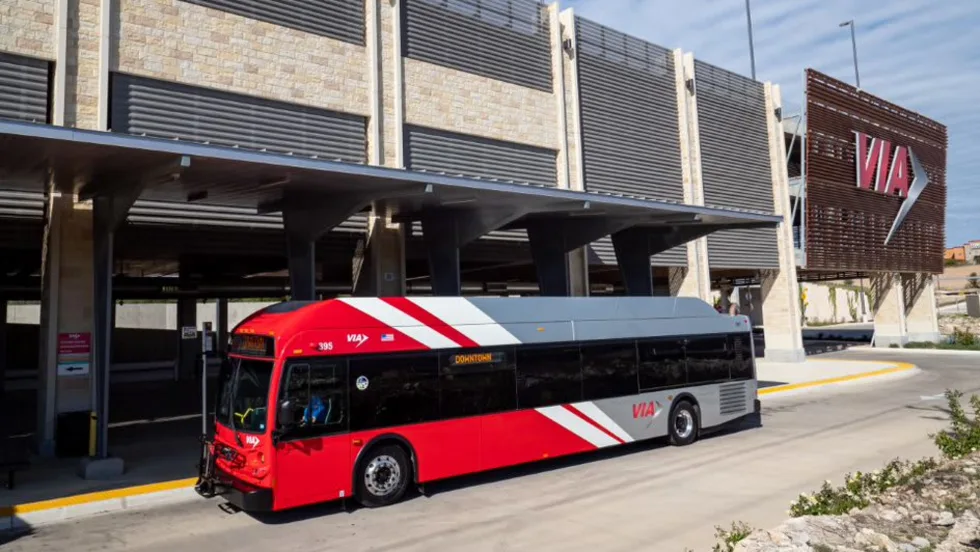
VIA, MBTA Reach Pre-Pandemic Ridership Milestones as Transit Use Climbs
VIA surpasses three million monthly trips for the first time since 2020, while the MBTA tops one million average weekday trips as both agencies report continued ridership growth.

What Transit Maintenance Facilities Should Know About Gas-Detection Placement
Proper gas-detector placement is critical to maintaining safety in transit maintenance facilities, requiring agencies to consider fleet fuel types, ventilation, shop operations, and ongoing equipment maintenance.

Improving Transit Safety and Reliability Through AI
Hayden AI’s Chief Growth Officer, Charley Territo, discusses how AI-powered camera enforcement is helping transit agencies keep bus lanes and stops clear, improve accessibility, and move from pilot programs to full-scale deployments.

Castro to Lead RTC of Southern Nevada and More in People Movement
In this edition, we also cover recent appointments and announcements at the STV, MCI, and more, showcasing the individuals helping to shape the future of transportation.

Study: Denver RTD Generates $2.1 Billion in Annual Economic Activity
An economic impact study finds the agency supports approximately 17,500 jobs, delivers $1.6 billion in annual community and mobility benefits, and generates $2.42 in economic value for every dollar invested.

Mark Aesch Nominated to Lead Federal Transit Administration
The former Rochester transit chief and TransPro founder, who has also contributed to METRO Magazine, brings decades of industry experience and a focus on performance, accountability, and financial sustainability to the nomination.

Pierce Transit Moves to Expand Fleet Following Proposition 1 Approval
The agency authorized the purchase or refurbishment of up to 60 buses to support a 47% service expansion, as voters nationwide approved billions in new transit funding.

Transit Expands Agency Partnerships, Reaching 200 Official App Partners
COO Jake Sion discusses Transit’s growth, the success of its Transit Royale program, and how technology is helping agencies improve the rider experience.
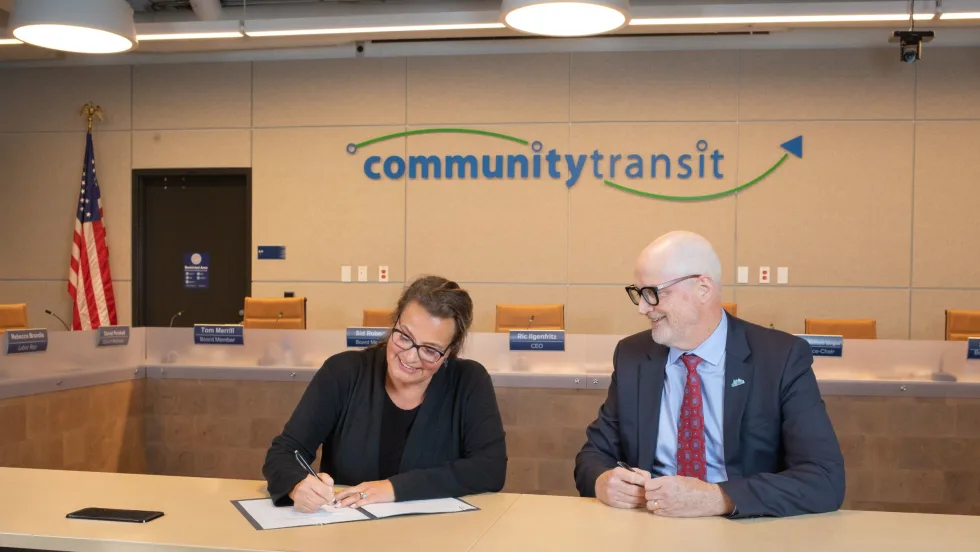
Everett Transit, Community Transit Approve Consolidation of Services
The agreement will bring Everett Transit into Community Transit’s network in April 2027, with plans to increase bus service by 50% by 2031 and expand regional connections.
Brian Dickson on Building Stronger, More Resilient Transportation Organizations
Bus Business Consultants Founder Brian Dickson discusses the leadership principles, operational discipline, and strategic planning that separate transportation companies positioned for long-term success from those stuck in survival mode.