



Freight and Passenger Rail: Friends or Foes?
Freight and passenger rail operators share two goals: enhanced infrastructure and efficient transportation. Can they attain those goals while sharing tracks? Both sides emphasize the necessity of balancing needs and working together to receive funding.
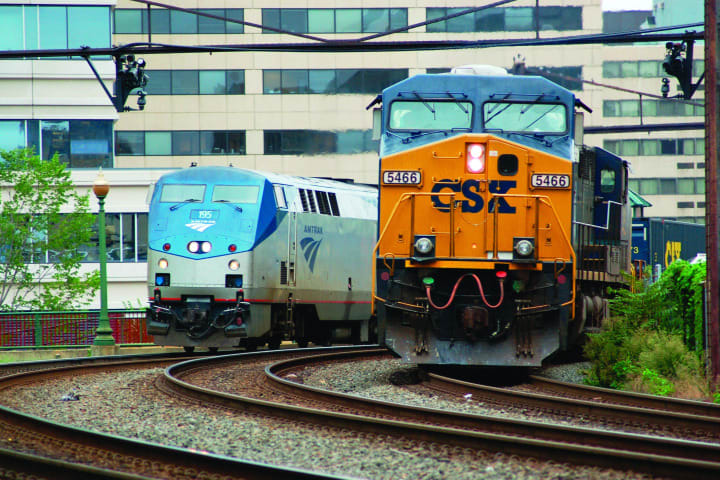
[IMAGE]ET01freight-.jpg[/IMAGE]With political forces and public interest turning toward rail, growing traffic on the nation's rail network and infrastructure build-outs will no doubt be a part of coming decades. Freight and passenger rail operators are preparing for that growth and looking at options to share rail lines or add capacity through a variety of cooperative arrangements.
Passenger rail advocates see existing freight railways, in many cases, as the first choice for expanding capacity. "The growth of rail is going to require the prudent use of the corridors that exist," says Art Guzzetti, vice president, policy, for the American Public Transportation Association (APTA).
Freight operators, however, emphasize the importance of balancing both freight and passenger needs on the nation's rail network. "Nobody in the world does freight railroading better than the folks in this country," says Jay Westbrook, assistant vice president, passenger and commuter operations, at CSX Corp. "There are tremendous amounts of freight that travel the nation's railways that are not on the highways impeding our automobiles. It would not make a lot of sense to sacrifice that freight system when you're trying to improve the fluidity of both highway and rail traffic."
A shared history
For Amtrak, freight railway sharing has been a built-in part of the system's development. The agency began in the 1970s as a management entity for passenger trains running on freight railways and evolved into a rail operator in its own right, an owner of some portions of track and employer of its own rail crews.
Amtrak only owns about 600 of the 21,000 miles of track its trains run on - mostly in the Northeast corridor, according to Corporate Communications Director Cliff Black. "Everywhere else, Amtrak is a tenant on the nation's freight railroads."
CSX Corp. is one of the freight operators Amtrak relies on for trackage, operating in 23 states east of the Mississippi River. Of the 220 daily passenger trains on CSX railway, 60 are Amtrak trains. The remaining trains are comprised mostly of what the company refers to as the Big Four group: the Massachusetts Bay Transportation Authority (MBTA), the Maryland Area Regional Commuter (MARC) Train Service, the Virginia Railway Express (VRE), and South Florida Regional Transportation Authority's TriRail.
Building partnerships
Amtrak has a dedicated staff - the host railroads division of the policy and development department — that maintains liaison with its freight partners. "The freight railroads also provide an Amtrak liaison," Black says. "They dedicate an upper middle manager to the job, and Amtrak pays the cost of that person, even though he or she is a direct employee of the freight railroad."
In its relationships with freight operators, Amtrak negotiates the cost of using freights' lines and services, and pays for any incremental costs incurred by Amtrak trains running on their tracks. In addition, "Sometimes they sell us fuel and provide on-route mechanical repairs if necessary, and we sometimes lease stations and buildings from them," Black explains.
In dealing with its passenger rail tenants, Westbrook says, "None of them are alike - they have their own unique needs and characteristics."
CSX has established four principles that must be taken into consideration when adding passenger trains on its lines: safety, liability, ability to serve current and future customers, and funding. "If a community can say, 'we've got a solution for all four of those,' then we're willing to take those discussions further," Director of Corporate Communications Gary Sease says.
Westbrook says an example of one of the more successful partnerships is with the VRE. "The reason it is one of the more successful relationships is the belief by the commuter agency, the Commonwealth of Virginia and CSX that one must build the capacity before one adds the trains," he says. CSX conducts capacity studies to determine through engineering the enhancements required for adding passenger trains, and Westbrook emphasizes that funding must be in place to complete those enhancements.
Although rail sharing may not be a source of direct revenue for freight operators, Westbrook says there are still tangible gains. In Florida, he says, CSX was able to sell tracks to the state for passenger rail in exchange for enhancements to the company's freight line. Under a partnership in Massachusetts, CSX will turn over use of tracks around Boston during daylight hours in exchange for clearance to operate double-stack trains.
Amtrak offers freight operators financial incentives for the improvement of on-time performance. Black says that in the past, these incentives were not large enough in number to attract the attention of the freights, but as the operators have become better at choreographing the dispatch of both freight and passenger trains on their lines, the incentives they are now able to claim are an added benefit to the partnership. "Is Amtrak upset about having to pay more? Not at all, because on-time trains bring more passengers and it raises the quality of the service. And with higher-quality service, we can charge a higher fare," Black says.
[PAGEBREAK]
Liability concerns
Part of negotiating joint use of any railway is working out liability in case of accidents, property damage or injury to employees or passengers. "Because liability is such a costly thing, freight railroads want to make sure they're absolutely covered for anything that could go wrong," APTA's Guzzetti says.
"Liability is of course a concern," Black says. "We use a traditional railroad approach to indemnification. Amtrak takes care of its own damages, and the freight railroad takes care of its own employees, equipment and infrastructure costs in the event of an accident. It is essentially a no-fault system where one railroad through contract would give another railroad trackage rights and, essentially, they hold one another harmless. Each is responsible for those costs incurred, whether by lawsuit, a settlement or just repair costs."
The passenger rail perspective
Guzzetti describes the relationship between freight and passenger rail operators as potentially contentious when sharing railways. "As owners, the freight operators can sometimes call the shots - he who has the tracks makes the rules," he says. "As public sector entities, we should pay a fair price for the access, but no more than the fair price."
APTA and the Association of American Railroads (AAR) both provide forums for discussing policy and hammering out some of these disagreements, as well as lobbying for railroad interests in the U.S. Although AAR's membership is primarily the Class I freight operators, Amtrak is also a member. "We are able to maintain a high level management relationship with those freight railroads through the AAR, and that's very important and useful," Black says. "There was, for a time, friction and animosity because of the feeling, on the part of the freights, that Amtrak trains were a burden and the sense, on Amtrak's part, that we were not being handled according to law."
Black refers to the naming legislation that gave Amtrak priority over freight trains, even on freight-owned lines. However, as he sees it, that animosity has disappeared, and he describes current relations as collegial and mutually supportive. "They've become much better stewards of Amtrak trains. They've demonstrated an ability to be flexible and to do a good job of dispatching trains with the disparity of operating speeds. It's difficult and Amtrak realizes that. But the freight railroads have done a marvelous job in the last several years of improving the on-time performance of Amtrak trains and we really applaud that," he says.
In a November 2009 press release, Amtrak announced that ridership on its Chicago-St. Louis corridor has gone up 21 percent since FY 2007. The trains are operated under a contract with the Illinois Department of Transportation on Union Pacific-owned tracks. The Illinois DOT plans to apply for stimulus funding to increase capacity along the corridor, which would result in reducing ride times by 90 minutes or more. According to the release, Amtrak and the Illinois DOT have worked closely with Union Pacific to improve reliability on the route and increase the number of daily round-trips. Union Pacific owns most of the 284-mile corridor and has projected the need for double-tracking the route for on-time performance with increased train volumes.
The freight perspective
In response to Amtrak's criticisms, CSX's Westbrook says Amtrak has had difficulties of its own in the past that hindered cooperative arrangements. "Amtrak has not been able to fund improvements that both Amtrak and the host railroads know are needed," he says. "They've been strapped for cash for a number of years and their funding has been in question, and that's prevented them from investing as they might otherwise do to enhance their operation and improve the fluidity of networks where they operate."
However, the upcoming $8 billion infusion of federal dollars should jumpstart those improvements, making higher speeds and additional capacity a reality in coming years - and lessening tensions between freight and passenger rail operators.
As Westbrook sees it, providing passenger rail opportunities creates many positives, as it has in CSX's central Florida corridor. "It's a job creator in those areas where we're enhancing our operations, and it's very positive for those commuters that now have an alternative to what has historically been a very difficult commute," he notes.
"We strive to be a good neighbor, but we have to be safe and we have to have the capacity," adds Westbrook. "We can't be asked to subsidize the passenger operation and we can't be expected to maintain a five-track infrastructure, where but for the passenger service, we would only need two tracks. We really struggle to make sure that all people understand when they're envisioning a passenger service that the availability of capital funds is key."
Looking to the future
CSX is actively working with states to create further partnerships and attain funding for projects to add rail capacity, Westbrook reports.
Much of public discourse about rail network expansion focuses on high-speed rail. Westbrook says CSX is willing to work with agencies on high-speed rail projects, but the company's position generally is that high-speed trains need to operate with temporal or physical separation from freight trains. "Frankly, the slower-moving freight traffic compromises the passenger train's ability to run fast," he says. "The whole idea about a high-speed passenger network is to go long distances without stopping - that's where the efficiencies come in."
As he sees it, high-speed/freight rail sharing will require multiple tracks to avoid meets and overtakes.
Positive train control (PTC) is also getting a great deal of attention, particularly in light of recent fatal accidents involving commuter and freight trains.
The Passenger Rail Investment and Improvement Act of 2009 included PTC as a requirement for railroads, and also requires the development of a national rail plan with a deadline of Sept. 15, 2010. APTA's Guzzetti says that high-speed rail considerations and PTC concerns should be a part of that plan. "You have equipment issues: high-speed rail uses a different kind of equipment in the U.S.," he says, adding, "What are the regulatory and management issues that the Federal Railroad Administration is going to set up to have an efficient grant management system?"
Black says some clarification is needed in order to specify what type of PTC should be adopted under law to promote unity among operators. In addition, it poses a financial concern.
"It's generally felt that the freights are looking for ways to exempt themselves from having to install it on some of their lines," he says. "They realize its safety value, but the cost-benefit ratio seems to them to be way out of whack. As far as Amtrak's concerned, PTC is a marvelous and necessary safety device. But the cost is a concern and we need to have appropriations for it to be affordable."
Overall, Black sees the opportunity for mutually beneficial partnerships in the future. "I think the freights and passenger rail interests now are more closely allied with one another because both are noticing a changing public attitude toward railroads in general as a way out of the transportation crisis that we face in this country," he says.
More Rail
The Invisible Infrastructure of Passenger Flow
What a seat reservation system on Austria’s Railjet trains reveals about the future of rider experience, and why U.S. agencies should pay attention.
Read More →
Caltrain Board Approves FY27 Budget, Endorses Efficiency Measures
The move ensures Caltrain service will continue operating as usual in the near term, but long-term financial challenges remain for the rail agency absent a new revenue source.
Read More →
Alstom Acquires Delaware Site to Support Amtrak NextGen Acela Fleet
The company is investing more than $55 million to acquire and improve the property and will employ approximately 100 people at this site once it is operational.
Read More →
When Routine Fails: How Public Transit Must Adapt for the World Cup
The 2026 FIFA World Cup will test transit agencies’ ability to manage unpredictable travel patterns, making real-time data and operational flexibility critical to moving millions of visitors efficiently.
Read More →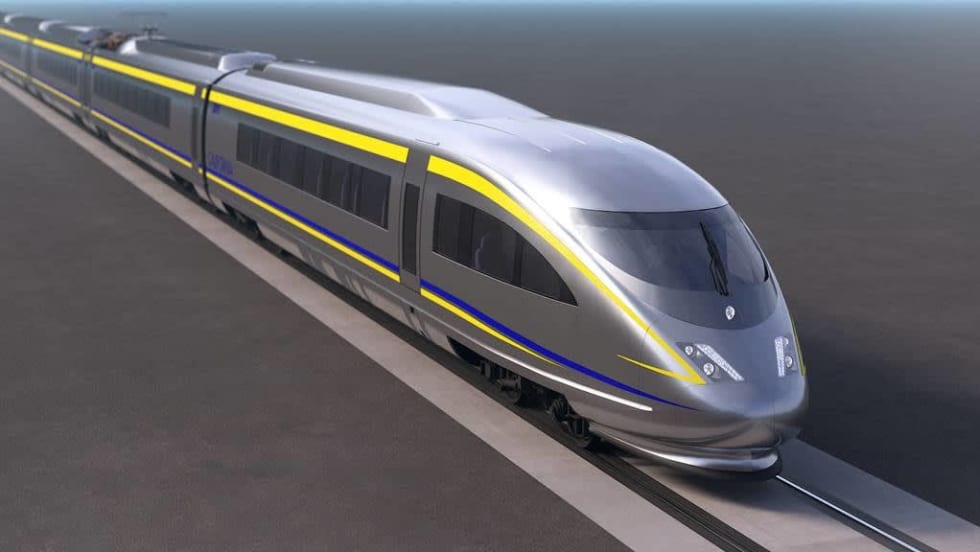
California Selects Team for Nation’s First True High-Speed Rail Track and Systems Contract
The board action follows completion of track installation at the 150-acre southern railhead in Kern County, which will serve as the staging and distribution hub for high-speed track and systems installation.
Read More →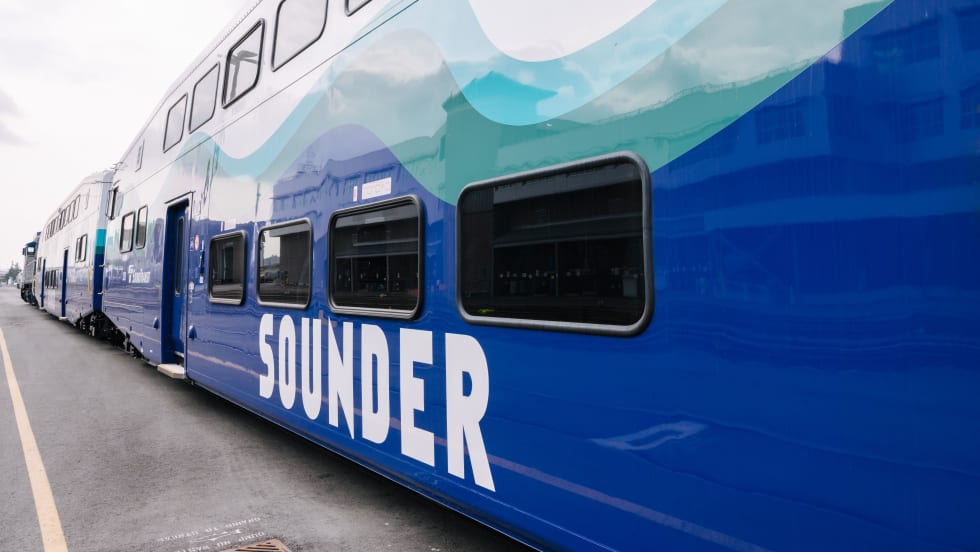
Seattle's Sound Transit Launches New Sounder Railcars into Service
Alstom manufactured all the cars under a $46.5 million contract and came into service in anticipation of summer crowds for soccer and baseball.
Read More →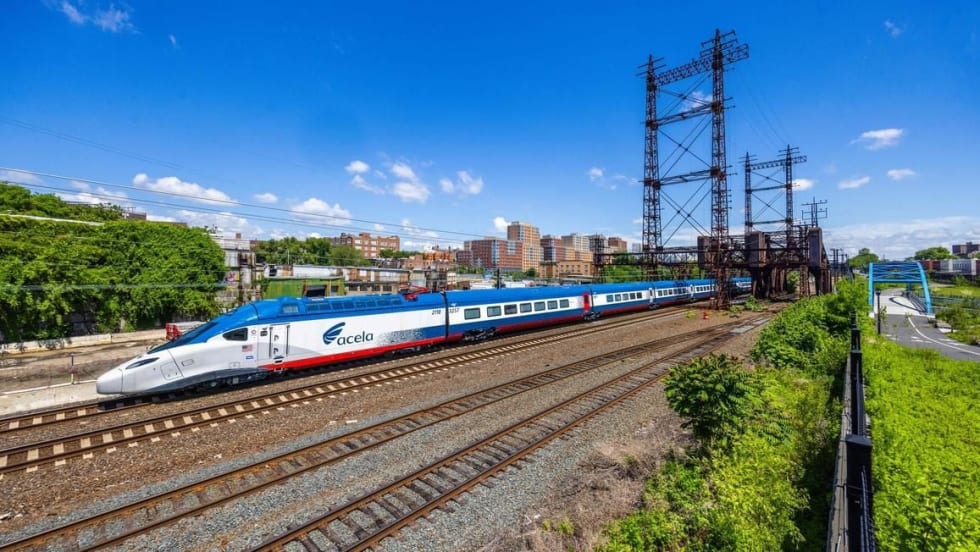
Alstom Partners With Universities to Build Rail Talent Pipeline
The partnerships include a new engineering scholarship fund at Alfred State College in Western New York and collaborations with transportation centers at the University of Pennsylvania and New York University.
Read More →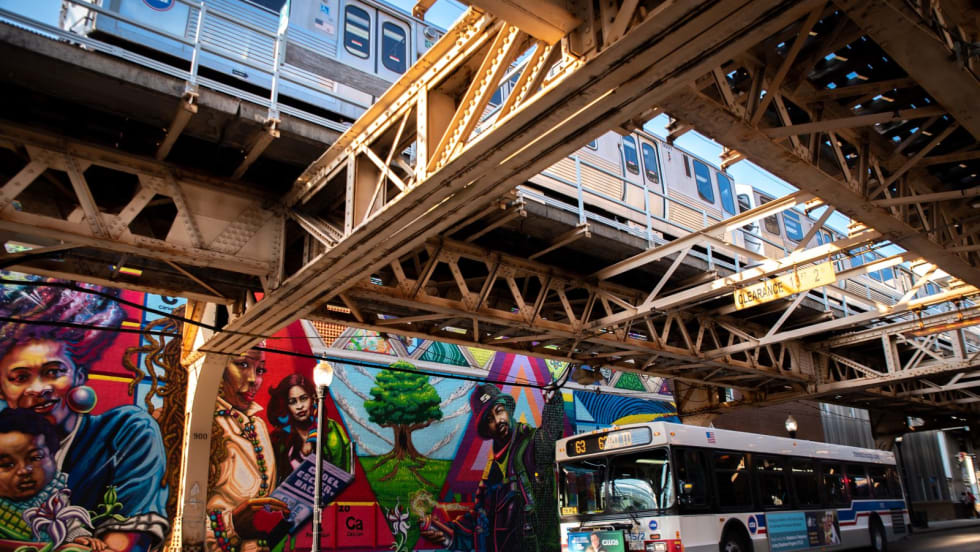
Chicago's NITA Act Moves Into Next Phase as Service Improvements Begin
Rider-focused improvements will begin rolling out across the system immediately as CTA, Metra, and Pace increase service this summer in the six-county region.
Read More →
Seattle’s Sound Transit Adopts Updated ST3 System Plan
The updated system plan incorporates cost savings across the agency, including new revenue sources and financial policies, to set the agency on a sustainable path for the future.
Read More →
Inside Look: EMBARK Expands Fare-Free Transit Program Through New Public-Private Partnership
The OKC transit agency says sponsorship helps subsidize the Third Friday Free initiative while reducing barriers for first-time riders and boosting ridership across buses, streetcars, and river cruises.
Read More →