



Hampton Roads’ light rail launch exceeds expectations
Opened to the public to long lines of excited patrons who arrived at stations one-half hour before the 6 a.m. start of service.
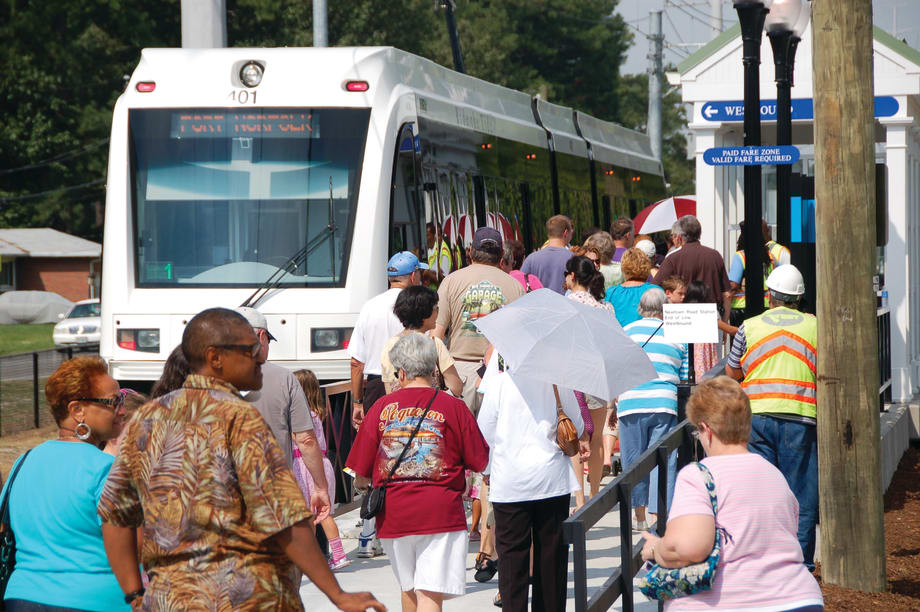
Hampton Roads Transit's The Tide light rail system opened to large crowds, which forced the agency to extend free service through the following weekend in hopes of lessening the initial rush.

More than 30,000 customers rode Hampton Roads Transit's (HRT) new light rail system, The Tide, on its opening day in late August. Approximately 75,000 rode the system altogether over its debut weekend, shattering expectations for the new system.
The Tide opened to the public to long lines of excited patrons who arrived at stations one-half hour before the 6 a.m. start of service. Long lines at many stations persisted throughout the day as customers waited for a chance to ride Virginia's first light rail line.
"It was so crowded opening day that by mid-morning, we announced we were going to extend the free rides through the next weekend in an attempt to get people to spread their test rides out a bit," said HRT CEO/President Philip Shucet. "I was just blown away by the crowds that jammed into these trains for three days straight. It was something."
The 7.4-mile starter line extends from the Eastern Virginia Medical Center complex, through downtown east to the Norfolk-Virginia Beach border at Newtown Road. Eighteen bus routes will provide service to six of the 11 Tide stations.
No system troubles were reported while trains ran at capacity for much of the opening day and into that evening. HRT began the day with six trains in service. As demand intensified, two more trains were added to ease the load. Buses were also pressed into service to provide special connections for those who could not wait long in line, or find a seat on the train.
Aside from the crowds, the opening week was also marked by an earthquake and the arrival of Hurricane Irene.
Once HRT began revenue service, The Tide averaged 6,500 rides a day for the first eight days, which included the Labor Day weekend. Shucet said he expected those initial numbers to decline as the month progressed. HRT estimated The Tide will have about 2,900 boardings on an average weekday.
The system was faced with several issues that delayed its opening, including an initial unrealistic cost-to-complete price tag approved in 2007 of $232 million, which didn't include vital features including a safety signal system, crossing gates at intersections at the east end of the project and a communications system, explained Shucet.
"I wasn't here for the whole history of the project, but in the last 18 months, it's taken day-by-day, hour-by-hour and minute-by-minute attention to get this thing finished," said Shucet. "It was as gratifying to finish and open [the project] as it has been exhausting to get there."
Overall, the project came in at approximately $20 million less than its revised cost-to-complete price tag, Shucet explained.
"When things changed here at HRT, we did a very thorough cost-to-complete with a team of folks that had experience in construction and came up with $338.3 million," he said. "In all sincerity, that was a very good number. It wasn't inflated. We managed it like crazy day-in and day-out and know now that we're not going to spend more than $318.5 million to finish the system."
Currently, an Environmental Impact Statement/Alternatives Analysis report being prepared for a proposed 11-mile extension of The Tide into Virginia Beach, Va., is on hold by the city until it is determined what the actual ridership numbers for the initial 7.4 miles actually are. That report is still slated to be completed by 2012 and will begin the discussion of the best tactic for extending the light rail system, according to HRT officials.
Shucet said that he is fine with the decision to temporarily postpone the work being done on the study, but more importantly, feels that the agency has learned important lessons in the process of completing the initial line.
"I think HRT has learned that to undertake any massive capital construction project, you have to have people on board that have experience in doing that. By that I mean, you have to have somebody that is part of your company that has had experience doing [massive capital construction projects]," he said. "Another thing is that the failure to chart a clear course once you're in construction costs you dollars at an exceedingly quick rate of speed."
More Rail

The Invisible Infrastructure of Passenger Flow
What a seat reservation system on Austria’s Railjet trains reveals about the future of rider experience, and why U.S. agencies should pay attention.
Read More →
Caltrain Board Approves FY27 Budget, Endorses Efficiency Measures
The move ensures Caltrain service will continue operating as usual in the near term, but long-term financial challenges remain for the rail agency absent a new revenue source.
Read More →
Alstom Acquires Delaware Site to Support Amtrak NextGen Acela Fleet
The company is investing more than $55 million to acquire and improve the property and will employ approximately 100 people at this site once it is operational.
Read More →
When Routine Fails: How Public Transit Must Adapt for the World Cup
The 2026 FIFA World Cup will test transit agencies’ ability to manage unpredictable travel patterns, making real-time data and operational flexibility critical to moving millions of visitors efficiently.
Read More →
California Selects Team for Nation’s First True High-Speed Rail Track and Systems Contract
The board action follows completion of track installation at the 150-acre southern railhead in Kern County, which will serve as the staging and distribution hub for high-speed track and systems installation.
Read More →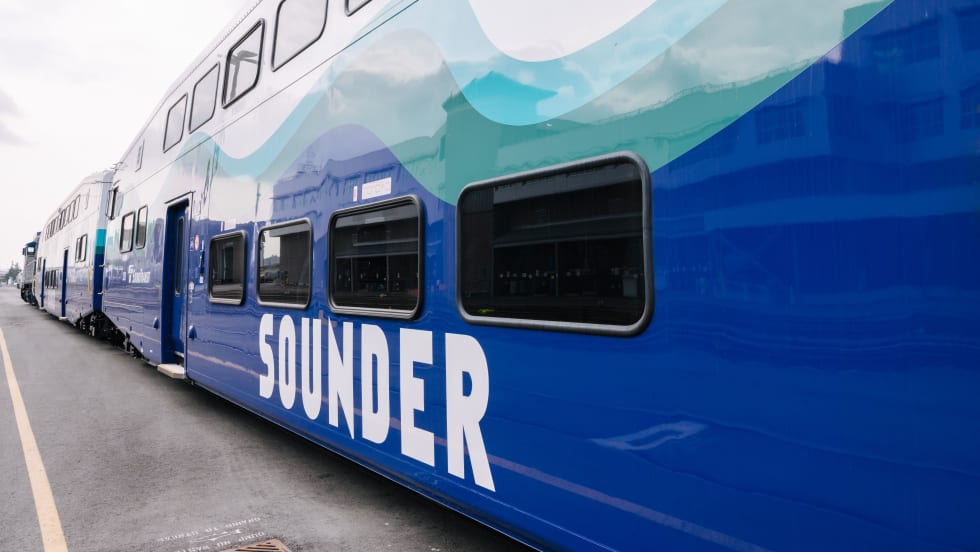
Seattle's Sound Transit Launches New Sounder Railcars into Service
Alstom manufactured all the cars under a $46.5 million contract and came into service in anticipation of summer crowds for soccer and baseball.
Read More →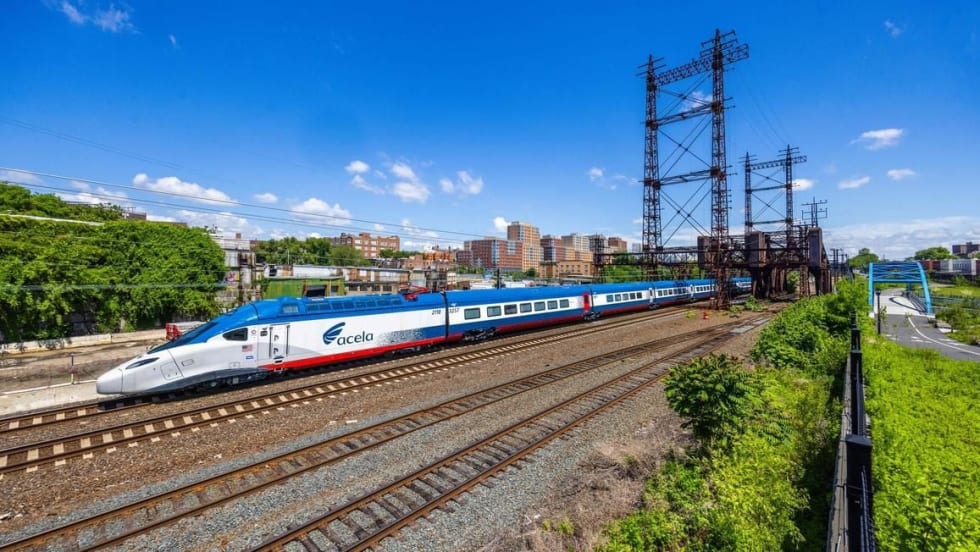
Alstom Partners With Universities to Build Rail Talent Pipeline
The partnerships include a new engineering scholarship fund at Alfred State College in Western New York and collaborations with transportation centers at the University of Pennsylvania and New York University.
Read More →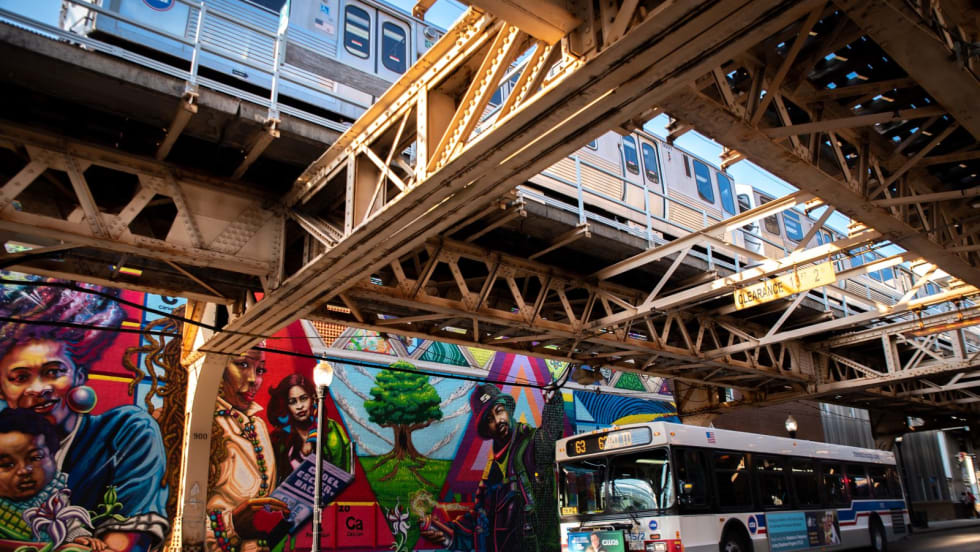
Chicago's NITA Act Moves Into Next Phase as Service Improvements Begin
Rider-focused improvements will begin rolling out across the system immediately as CTA, Metra, and Pace increase service this summer in the six-county region.
Read More →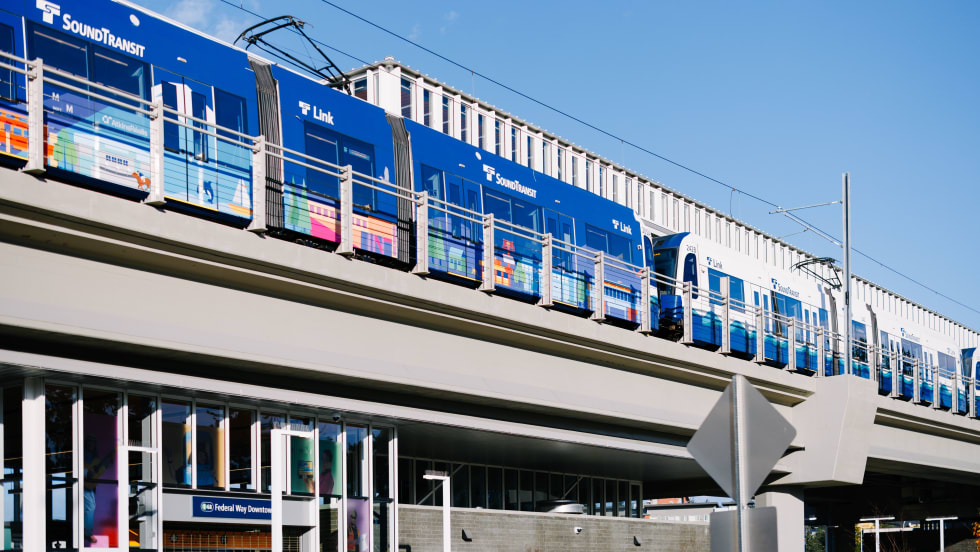
Seattle’s Sound Transit Adopts Updated ST3 System Plan
The updated system plan incorporates cost savings across the agency, including new revenue sources and financial policies, to set the agency on a sustainable path for the future.
Read More →
Inside Look: EMBARK Expands Fare-Free Transit Program Through New Public-Private Partnership
The OKC transit agency says sponsorship helps subsidize the Third Friday Free initiative while reducing barriers for first-time riders and boosting ridership across buses, streetcars, and river cruises.
Read More →