



Making mass transit accessible to the masses
When the Southeastern Pennsylvania Transportation Authority opens its Accessible Travel Center in February, it will mark more than the unveiling of another facility — the authority will celebrate helping people with disabilities experience the freedom of traveling on public transportation independently.

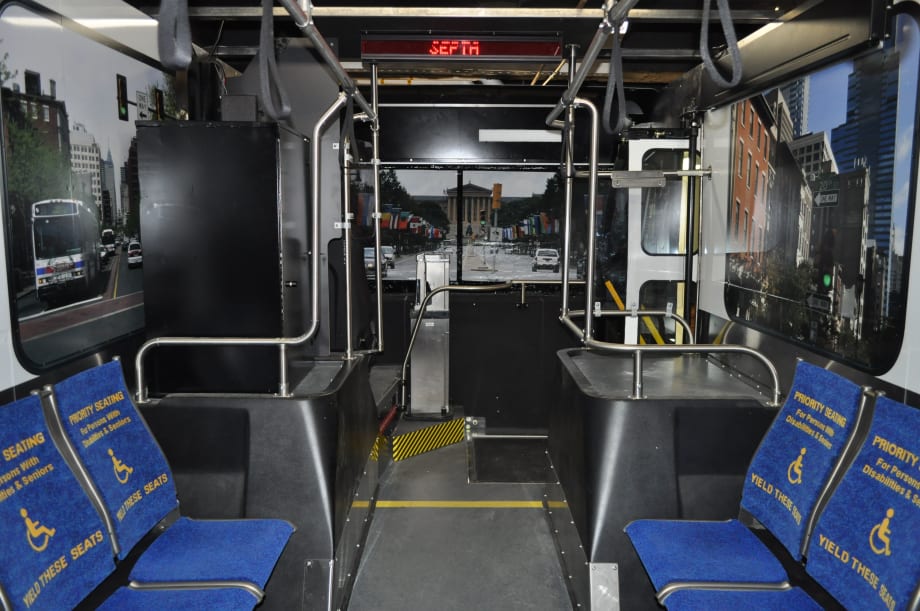
When Southeastern Pennsylvania Transportation Authority (SEPTA) opens its Accessible Travel Center in February, it will mark more than the unveiling of another facility — SEPTA will celebrate helping people with disabilities experience the freedom of traveling on public transportation independently.
Located in a formerly vacant storefront in SEPTA’s Suburban Station in downtown Philadelphia and funded in part by a $140,000 FTA New Freedom Grant, the center is designed to help disabled riders learn how to use and navigate SEPTA’s system in a low-stress environment. For example, simulated subway and regional rail platforms will allow passengers, as well as their aides and companion animals, to practice safe boarding procedures without the pressure of inconveniencing other passengers or the operator. And by using innovative audiovisual teaching materials, such as virtual tours of SEPTA’s vehicles in the Center’s classroom, passengers can familiarize themselves with all SEPTA vehicles and modes before heading to the station or bus stop.

The centerpiece of the facility is the front one-third of a ramp-equipped SEPTA bus, complete with fare box, wheelchair berths, stop announcements and realistic graphics to make it appear as though the vehicle is traveling on a Philadelphia street.

SEPTA is the first East Coast transit agency to have an accessible travel training center of this kind. The center was established due to high demand — SEPTA bus ridership by wheelchair users has increased five-fold since 2004, and the need for bus boarding practice and system orientation by customers with disabilities continues to grow.
“Supporting independence and mobility is our goal,” said Cynthia Lister, SEPTA regulatory coordinator. “Travel training enables passengers with disabilities to use public transportation for specific trips on their own and gives them more personal freedom.”
Rod Powell, chair of SEPTA’s Advisory Committee for Accessible Transportation, adds, “There is no part of our society more dependent on public transportation than people with disabilities. Unemployment is almost 80 percent in my community and we depend on transit to get to jobs and services. The ability to use public transit opens the door to opportunities for employment, increased independence and mobility, more access to community activities and additional independent living skills.”
The new center will make SEPTA’s travel training more user-friendly. Previously, boarding practice was hindered by limited vehicle availability; weather, as sessions were held outdoors; and concerns of privacy, on-street distractions and other passengers’ impatience. Participants need intensive, uninterrupted and repetitive individual practice sessions. At SEPTA’s Accessible Travel Center, for the first time, instruction can be offered by advance appointment, Monday through Friday, during regular business hours, to individuals or small groups, rain or shine. The Center will also be available by appointment for use by professional travel trainers, orientation and mobility instructors and service animal trainers from agencies throughout SEPTA’s service area.
Providing accessibility training not only helps passengers with disabilities gain confidence, it can also spur a region’s economy and ease the burden on paratransit services that are already operating at maximum capacity.
“Travel training benefits the regional economy because it opens the door for people with disabilities to join the workforce,” said Powell. “When people learn to take the bus to the shopping center on their own rather than using separate transportation exclusively for persons with disabilities, they ride with others to job sites. And, because they can use regular SEPTA service rather than ADA paratransit, which requires day-before reservations, they set their own transportation schedule. They can decide to work extra hours or meet friends after work — the choice is theirs.”
With the opening of the Center, SEPTA is also celebrating more than 30 years of providing accessible transportation.
“SEPTA has invested over a billion dollars in programs to make its vehicles, facilities and services accessible to and usable by all our riders,” said Lister. “The authority currently has 97 ADA-accessible stations and will soon have more than 100. The Accessible Travel Center is just the most recent example of how SEPTA continues to listen to its passengers with disabilities and works to meet their needs.”
More Blog Posts

Inside ITF 2026: Transport Reacts to A Challenging World
Transport leaders from around the world gathered in Leipzig, Germany, for the 2026 International Transport Forum to discuss resilience, climate impacts, supply chains and the future of sustainable mobility.
Read More →
Every Ride Tells a Story — But You’re Not Just Selling the Ride
You’re selling the moment, the meaning, and the emotion behind it.
Read More →
How Digital Signage is Reshaping the Traveler Experience at Transportation Hubs
What was once a landscape of static signs has evolved into a responsive, immersive environment powered by real-time visual communication.
Read More →
Latest Trends in Urban Mobility from Polis Conference 2025
Polis comprises cities and regions, as well as corporate partners, from across Europe, promoting the development and implementation of sustainable mobility. This year’s event had over a thousand attendees across various policy forums and an exhibition.
Read More →
Why Transit Leaders Require Better Tools for Operational Clarity In Today’s Tech-Fragmented Environment
Across North America and beyond, transit agency officials are contending with a perfect storm of operational headaches and strategic challenges that hamper daily service and long-term progress.
Read More →
The Powerless Brokers: Why California Can’t Build Transit
It is no secret that transit in the U.S. is slow and expensive to build.
Read More →
Why Transport Sustainability Should Focus on People Instead of Cars
Simply incentivizing electrification is not enough to make a meaningful impact; we must shift our focus toward prioritizing public transportation and infrastructure.
Read More →
Transit ROI & System Efficiencies Will Drive 'Big, Beautiful' Transit Funding
For many years, the narrative surrounding public transit improvements has been heavily weighted toward environmental gains and carbon reduction. While these are undeniably crucial long-term benefits, the immediate focus of this new funding environment is firmly on demonstrable system efficiencies and a clear return on investment.
Read More →
Getting Better on Purpose
The notion of agencies being over- or underfunded, I argued, doesn’t hold up. If an agency wants to turn up the heat — to grow beyond the status quo — it must demonstrate measurable value.
Read More →
The Fiscal Lessons of Goldilocks
Some agencies might suggest they are funded in the public transportation space. Some complain that they are funded too little. I have never heard a public transportation executive proclaim that they are funded too much. And if no public agencies are funded too much, then, by definition, none are funded too little. To steal from Goldilocks’ thinking, they are all funded just right.
Read More →