



LaHood announces availability of TIGER grants
Awards can range from $20 million up to $300 million to support high impact transportation projects.

On Friday, U.S. Transportation Secretary Ray LaHood announced the availability of $1.5 billion in TIGER (Transportation Investment Generating Economic Recovery) Discretionary Grants for capital investment in surface transportation projects.
The grants will be awarded on a competitive basis to projects that have a significant impact on the nation, a region or metropolitan area and can create jobs and benefit economically distressed areas.
“TIGER discretionary funding will open up the door to many new innovative and cutting-edge transportation projects,” said Secretary LaHood. “This is exciting news, and I believe that these projects will promote greater mobility, a cleaner environment and more livable communities.”
The grants can range from $20 million up to $300 million to support high impact transportation projects. Secretary LaHood can waive the minimum grant requirement for beneficial projects in smaller cities, regions or states. The U.S. Department of Transportation will require rigorous economic justifications for projects more than $100 million. To ensure responsible spending, the department will require all fund recipients to report on their activities on a routine basis.
The solicitation published in the Federal Register provides criteria for the department to make merit-based decisions on the new discretionary program.
Primary selection criteria include contributing to the medium- to long-term economic competitiveness of the nation, improving the condition of existing transportation facilities and systems, improving the quality of living and working environments through livable communities, improving energy efficiency and reducing greenhouse gas emissions and improving the safety of U.S. transportation facilities.
The Department will also give priority to projects that are expected to quickly create and preserve jobs and stimulate rapid increases in economic activity, especially projects that will benefit economically distressed areas.
Applications for TIGER discretionary grants must be submitted by September 15, 2009, from state and local governments, including U.S. territories, tribal governments, transit agencies, port authorities and others. Comments on the criteria must be received by June 1, 2009. The Federal Register notice can be accessed by clicking here.
More Paratransit

Indian River Transit’s Community-Focused Approach Earns National Recognition
Named APTA’s 2026 Outstanding Public Transportation System in its size category, Florida’s Indian River County transit system continues to grow ridership through fare-free service and a focus on evolving community needs.
Read More →
Everett Transit, Community Transit Outline Consolidation Agreement
The proposed agreement calls for a 50% increase in bus service in Everett, a new microtransit zone, continued paratransit service, and the transfer of Everett Transit operations to Community Transit.
Read More →
Driving Smarter Paratransit
John Hanlon shares how AlphaRoute is leveraging AI-powered technology to help paratransit providers optimize operations, support frontline staff, and enhance the rider experience.
Read More →
People Movement: Dan Dipert Coaches Adds Third-Generation Leader, Keolis Names New Valley Metro VP/GM, and More
In this edition, we also cover recent appointments and announcements at the Wabtec, SilverRide, HNTB, and more, showcasing the individuals helping to shape the future of transportation.
Read More →
Biz Briefs: RIPTA Unveils New Frontrunners, Clevland RTA Adds New Siemens, and More
In METRO's latest installment, we take a look at recent news from Siemens, Prevost, Dodge, and more partnerships making headlines across the transportation sector.
Read More →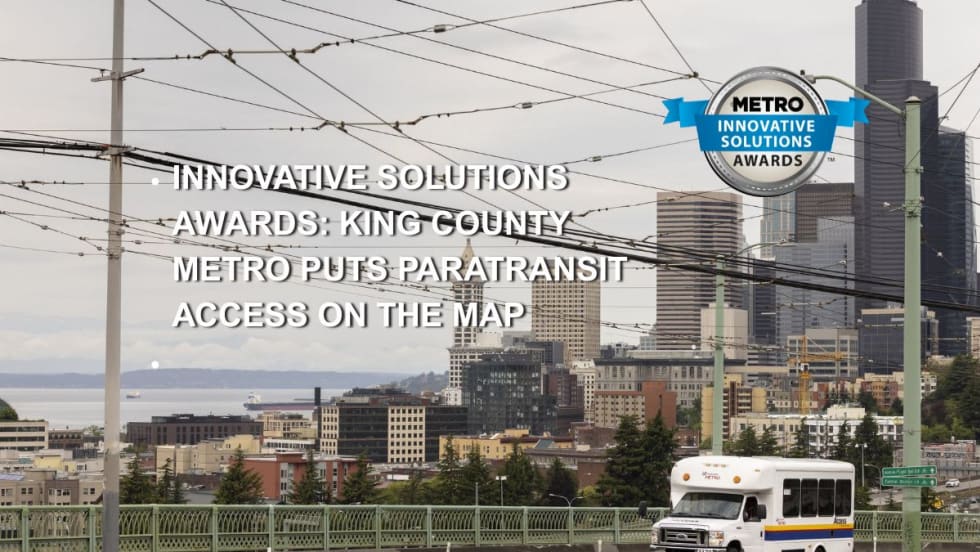
King County Metro Makes ADA Paratransit Easier to Navigate
METRO's Innovative Solutions Award winner replaces complex service-area descriptions with an accessible, interactive map that puts paratransit information directly in customers’ hands.
Read More →
Jacksonville’s NAVI Project Charts a New Course for Autonomous Public Transportation
Through its NAVI program, JTA is showing how autonomous vehicles, intelligent infrastructure, and coordinated operations can work together to deliver everyday public transportation.
Read More →
Driving Smarter Paratransit
John Hanlon shares how AlphaRoute is leveraging AI-powered technology to help paratransit providers optimize operations, support frontline staff, and enhance the rider experience.
Read More →
METRO Magazine Announces 2026 Innovative Solutions Awards Winners
Projects Recognized for Advancing Mobility Through Technology, Accessibility, Workforce Innovation, and Operational Excellence
Read More →
Biz Briefs: STV teams with Amtrak, Motorcoach Operators Boost Fleet and Land Contracts, and More
From manufacturers and suppliers to transit agencies and motorcoach operators, these updates offer a snapshot of the projects, partnerships and business moves driving the industry forward.
Read More →