



APTA: Ridership drop reflects harsh economy
With high unemployment, significant decreases in gasoline prices, and less state and local revenue available for public transportation operations, public transit ridership declined by 3.8 percent in the first nine months of 2009.

With high unemployment, significant decreases in gasoline prices, and less state and local revenue available for public transportation operations, public transit ridership declined by 3.8 percent in the first nine months of 2009 compared to record levels in the same period last year, according to APTA. Trips on all of the major modes of public transportation — bus, light rail, heavy rail and commuter rail — were down; paratransit (demand response) and trolleybus were the only two modes that saw increases in ridership.
“This downturn in public transportation ridership is a reflection of our economic times,” said APTA President William Millar. “Nearly 60 percent of riders take public transportation to commute to and from work, so it is to be expected that public transit ridership would be lower when unemployment is high.”
According to the U.S. Bureau of Labor Statistics, unemployment accelerated monthly from January through September 2009, reaching 9.8 percent in September. This is 58 percent higher than the unemployment rate for September 2008.
Drops in local and state funding have seriously impacted public transit system budgets and in many cases, this has led to reduced service and/or higher fares.
Last June, APTA released a national survey that showed that more than 80 percent of public transit systems had seen flat or decreased funding from state, local and regional revenues. Among transit systems facing this decreased funding, 89 percent of transit systems were forced to raise fares or cut service. Additionally, among those transit systems facing revenue declines, almost one-half of them (47 percent) reported both raising fares and cutting service to address funding shortfalls.
Paratransit (demand response) and trolleybus were the only two modes that saw increases in ridership. Paratransit ridership increased by 3.7 percent and trolleybus ridership increased by 0.7 percent from January through September 2009.
Light rail (streetcars, trolleys) had a slight decrease less than one percent (-0.7). Light rail systems in seven cities reported an increase in the first nine months: Philadelphia (17.5 percent); Oceanside, Calif. (17.3 percent); Baltimore (13.9 percent); Memphis, Tenn. (11.6 percent); Tampa, Fla. (7.0 percent); San Francisco (1.1percent). A new line on the light rail system in Seattle, has led to more than 100 percent growth in the first nine months of 2009.
Heavy rail (subways) declined by three percent. Los Angeles Metro heavy rail continued its trend of increased ridership with an increase of six percent for the first nine months. Ridership on the Washington Metropolitan Transportation Authority (WMATA) increased by 0.6 percent for the same time period.
Commuter rail ridership decreased by 5.1 percent. Commuter rail ridership increases were recorded in the following cities: Boston (2.4 percent); New Haven, Conn. (1.4 percent); and Alexandria, Va. (1.3 percent). A major extension of commuter rail in New Mexico from Albuquerque to Santa Fe led to more than a 100 percent increase from January through September 2009.
Bus ridership declined by five percent in the first nine months of 2009. In the largest bus ridership report, bus trips increased in San Francisco by 1.1 percent. Bus travel in the smallest population area (below 100,000) decreased by only one percent — the smallest percent decrease of all population groups.
To see the complete APTA ridership report, visit this page.
More Paratransit
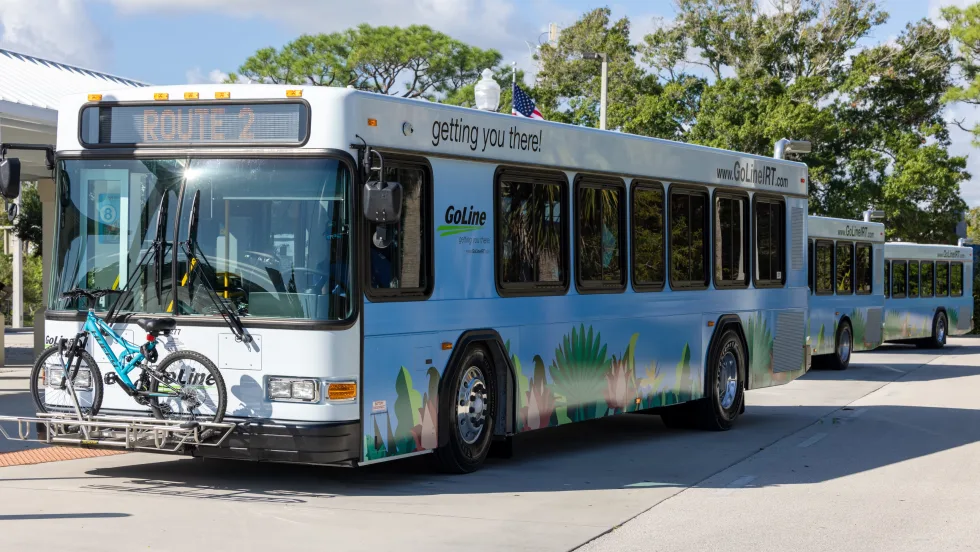
Indian River Transit’s Community-Focused Approach Earns National Recognition
Named APTA’s 2026 Outstanding Public Transportation System in its size category, Florida’s Indian River County transit system continues to grow ridership through fare-free service and a focus on evolving community needs.
Read More →
Everett Transit, Community Transit Outline Consolidation Agreement
The proposed agreement calls for a 50% increase in bus service in Everett, a new microtransit zone, continued paratransit service, and the transfer of Everett Transit operations to Community Transit.
Read More →
Driving Smarter Paratransit
John Hanlon shares how AlphaRoute is leveraging AI-powered technology to help paratransit providers optimize operations, support frontline staff, and enhance the rider experience.
Read More →
People Movement: Dan Dipert Coaches Adds Third-Generation Leader, Keolis Names New Valley Metro VP/GM, and More
In this edition, we also cover recent appointments and announcements at the Wabtec, SilverRide, HNTB, and more, showcasing the individuals helping to shape the future of transportation.
Read More →
Biz Briefs: RIPTA Unveils New Frontrunners, Clevland RTA Adds New Siemens, and More
In METRO's latest installment, we take a look at recent news from Siemens, Prevost, Dodge, and more partnerships making headlines across the transportation sector.
Read More →
King County Metro Makes ADA Paratransit Easier to Navigate
METRO's Innovative Solutions Award winner replaces complex service-area descriptions with an accessible, interactive map that puts paratransit information directly in customers’ hands.
Read More →
Jacksonville’s NAVI Project Charts a New Course for Autonomous Public Transportation
Through its NAVI program, JTA is showing how autonomous vehicles, intelligent infrastructure, and coordinated operations can work together to deliver everyday public transportation.
Read More →
Driving Smarter Paratransit
John Hanlon shares how AlphaRoute is leveraging AI-powered technology to help paratransit providers optimize operations, support frontline staff, and enhance the rider experience.
Read More →
METRO Magazine Announces 2026 Innovative Solutions Awards Winners
Projects Recognized for Advancing Mobility Through Technology, Accessibility, Workforce Innovation, and Operational Excellence
Read More →
Biz Briefs: STV teams with Amtrak, Motorcoach Operators Boost Fleet and Land Contracts, and More
From manufacturers and suppliers to transit agencies and motorcoach operators, these updates offer a snapshot of the projects, partnerships and business moves driving the industry forward.
Read More →