



D.C. Metro to use rail carts for emergency response
First responders will be able to use the vehicles to move equipment along the tracks to the scene of a Metrorail emergency, as well as safely transport people who are unable to walk out of an incident area. The MERVs run on rail tracks up to 10 mph and can turn what could be a 45-minute walk for firefighters loaded with gear into a four-minute ride.

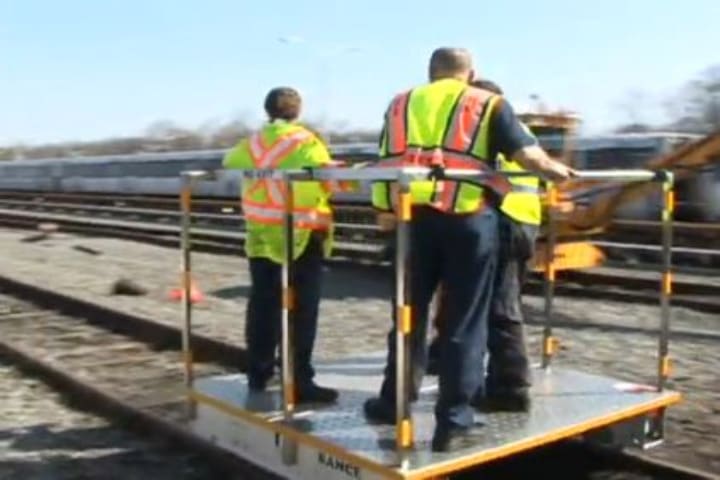
[IMAGE]D-C-Metro-emergency-cart-full.jpg[/IMAGE]The Washington Metropolitan Area Transit Authority (Metro) will use Mobile Emergency Response Vehicles (MERV), new motorized emergency vehicles to help agency and emergency services personnel respond to the scene of an emergency in the Metrorail system quickly and efficiently.
First responders will be able to use the vehicles to move equipment along the tracks to the scene of a Metrorail emergency, as well as safely transport people who are unable to walk out of an incident area. The MERVs run on rail tracks up to 10 mph and can turn what could be a 45-minute walk for firefighters loaded with gear into a four-minute ride.
MERVs are battery-operated, motorized carts that run along Metrorail tracks. They are constructed of lightweight aluminum, are foldable and portable. First responders are able to carry and assemble the cart at the scene of an emergency.
“An emergency situation in the Metrorail system would mean that power has been turned off on the rail. Because the MERV runs on battery power, we would be able to drive the vehicle on the tracks and respond quickly to the scene,” said Metro Director of Emergency Management Peter LaPorte.
Metro currently has four MERVs and is training local fire and emergency response personnel on how to assemble and operate the carts in the Metrorail system. Twenty-two additional units are expected and will be stored at key locations throughout the rail system for use in emergencies.
Metro has evacuation carts stored throughout the system that first responders manually push along the tracks. It first tested an electric cart in 2006 and realized the value in having a motorized response vehicle. Metro worked with area first responders in the region to find a cart that suited the needs of the first responders and Metro personnel.
MERVs were used by the London Fire Brigade in response to the terrorist attack on London transit in 2005. Members of the Council of Government’s Fire Chiefs Passenger Rail Safety Subcommittee saw the motorized rescue carts at a conference designed to evaluate lessons learned in London. The group obtained a prototype of the MERV in 2008 and recommended modifications. The MERVs currently on site have been customized for the Metrorail system.
U.S. Department of Homeland Security Urban Area Security Initiative provided an $860,000 grant to buy 26 MERVs for use in Metrorail tunnels throughout the 106-mile rail system. The grant was obtained by the Metropolitan Washington Council of Governments Fire Chiefs and is managed by the Arlington County Fire Department.
Metro and its regional partners will test the MERVs during an emergency response exercise at the Rosslyn Metrorail station on Sunday, March 28. Fire and rescue personnel from Arlington will take the carts into the Metrorail tunnel between the Rosslyn and Foggy Bottom Metrorail stations in a mock rescue of passengers injured after a simulated explosion on a Metrorail train. The overall exercise is designed to test the integrated response and incident coordination needed to mitigate a major emergency in the Metrorail system.
METRO TV: To watch a video of the MERV in action, click here.
More Rail

Stadler, CapMetro Sign Long-Term Rail Fleet Support Agreement
Beginning in 2027, Stadler will provide on-site technical expertise, spare parts support, training, and obsolescence management to help extend the reliability and longevity of CapMetro’s GTW fleet.
Read More →
Biz Briefs: Alstom Lands Canadian Contract, LYT to Supply California TSP, and More
In METRO's latest installment, we take a look at recent news from Complete Coach Works, Beep, FlixBus, and more partnerships making headlines across the transportation sector.
Read More →
CATS Gold Line Marks 5 Years of Service, 2.8M Passenger Trips
With a six-mile expansion planned, the Charlotte streetcar is positioned to connect more neighborhoods and major transit hubs across the region.
Read More →
Why Simulating Pedestrian Movement Has Become Essential for Modern Rail Stations
Pedestrian microsimulation is helping rail planners identify bottlenecks, test station designs, and prepare complex transit hubs for growing passenger volumes.
Read More →
Amtrak Begins Major Construction at New York’s Sunnyside Yard
The new maintenance facility will support Amtrak’s Airo trainsets while improving maintenance efficiency and turnaround times in New York.
Read More →
Chicago Leaders Unveil Plans for O’Hare Airport Express Train
The privately developed project would offer a 15-minute trip between downtown and O’Hare’s Terminal 2, with trains operating every 15 minutes on a dedicated track. The service would use battery-electric trains and three existing freight rail rights-of-way.
Read More →
OCTA Maps Out 30-Year Strategy to Protect Coastal Rail Corridor
The draft feasibility report identifies strategies to protect the coastal rail line for decades as the agency continues near-term stabilization and sand placement efforts.
Read More →
The Business Voice Behind Public Transportation
As chair of APTA’s Business Members Board of Governors, Ray Melleady explains how more than 850 business members are partnering with transit agencies to advance funding, innovation, and industry-wide collaboration.
Read More →
FRA Announces $5.3B in Rail Investments, Including $2B for Amtrak
Funding will support grade-crossing improvements, infrastructure upgrades, and new Amtrak equipment in 23 states.
Read More →
Finding the ‘Happy Medium’: Optimizing Maintenance Without Sacrificing Reliability
The key to maintenance optimization isn’t doing less work—it’s doing the right work at the right time on the right assets.
Read More →