



Alstom unveils new high-speed train model
The train, designed to reach a maximum speed of 250 mph, relies on 8 traction systems with 8 motors in powered bogies, delivering a total power of 10 MW and is capable of a commercial speed of up to 225 mph.

Alstom unveiled a new model of its Very High Speed train at the international railway exhibition EXPO Ferroviaria in Turin, Italy. The new platform is added to an already extensive portfolio, ranging from the tilting High Speed trains Pendolino, to the Very High Speed trains Duplex and AGV.
In a market environment where very high speed is growing worldwide, operators in various countries have different needs, strategies, and demands. The very high speed market has reached a level of maturity that drives customers to refine the identification of their passengers’ needs and hence to fine-tune their technical specifications, according to Alstom officials.
Applying a logic of continuous progress for its Very High Speed technology, Alstom keeps on developing new offerings in order to provide its customers with the largest range of options, to allow them to configure their specific train. The operators can then position its business on the most relevant market segment for them and address their own targets more precisely, the company stated.
As a result, Alstom is further enlarging its portfolio of Very High Speed trains, adding new options that are combined in a third platform: a new very high speed, high capacity, single deck, fully interoperable train. It is based on the best of Alstom technology, which has proven itself over 30 years of experience with the articulated Very High Speed platforms (TGV, TGV Duplex and AGV) and the non-articulated High Speed platforms (Pendolino), according to the company.
The train, designed to reach a maximum speed of 250 mph , relies on 8 traction systems with 8 motors in powered bogies, delivering a total power of 10 MW and is capable of a commercial speed of up to 225 mph. To free all possible space for passengers, all technical equipment have been placed under the chassis. The interior room for passengers has been maximized per a wide bodyshell design and to the positioning of pantographs, so as to keep constant roof height throughout the length of each car. It offers the best ratio in terms of floor surface, number of seats (600) and total train length (8 cars, 200 m).
The train will be able to travel across European borders: it can be equipped with 3 redundant pantographs of different kinds (1.500 volts DC, 3.000 volts DC, 15.000 volts AC, 25.000 volts AC) and can be equipped on board with 10 different signaling systems.
The train is targeted at a worldwide market, with the first real opportunity being Italy and the Trenitalia tender for 50 very high speed trains. Alstom has submitted its bid to this tender on May 20 2010, proposing a specially customized version.
More Rail

The Invisible Infrastructure of Passenger Flow
What a seat reservation system on Austria’s Railjet trains reveals about the future of rider experience, and why U.S. agencies should pay attention.
Read More →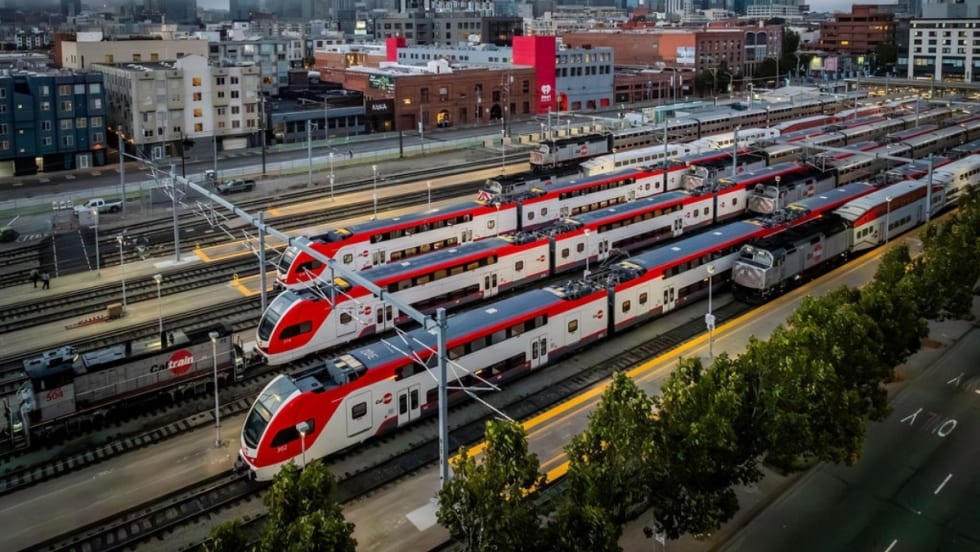
Caltrain Board Approves FY27 Budget, Endorses Efficiency Measures
The move ensures Caltrain service will continue operating as usual in the near term, but long-term financial challenges remain for the rail agency absent a new revenue source.
Read More →
Alstom Acquires Delaware Site to Support Amtrak NextGen Acela Fleet
The company is investing more than $55 million to acquire and improve the property and will employ approximately 100 people at this site once it is operational.
Read More →
When Routine Fails: How Public Transit Must Adapt for the World Cup
The 2026 FIFA World Cup will test transit agencies’ ability to manage unpredictable travel patterns, making real-time data and operational flexibility critical to moving millions of visitors efficiently.
Read More →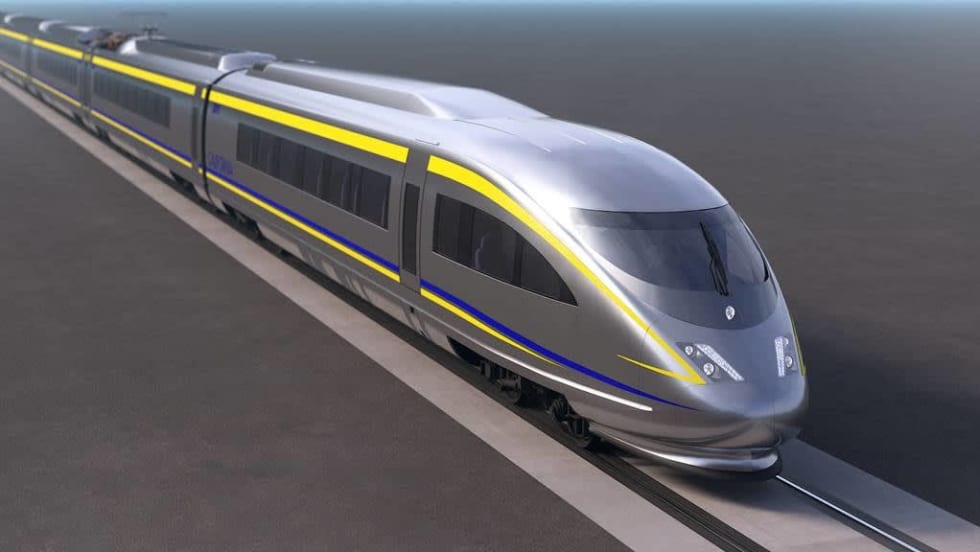
California Selects Team for Nation’s First True High-Speed Rail Track and Systems Contract
The board action follows completion of track installation at the 150-acre southern railhead in Kern County, which will serve as the staging and distribution hub for high-speed track and systems installation.
Read More →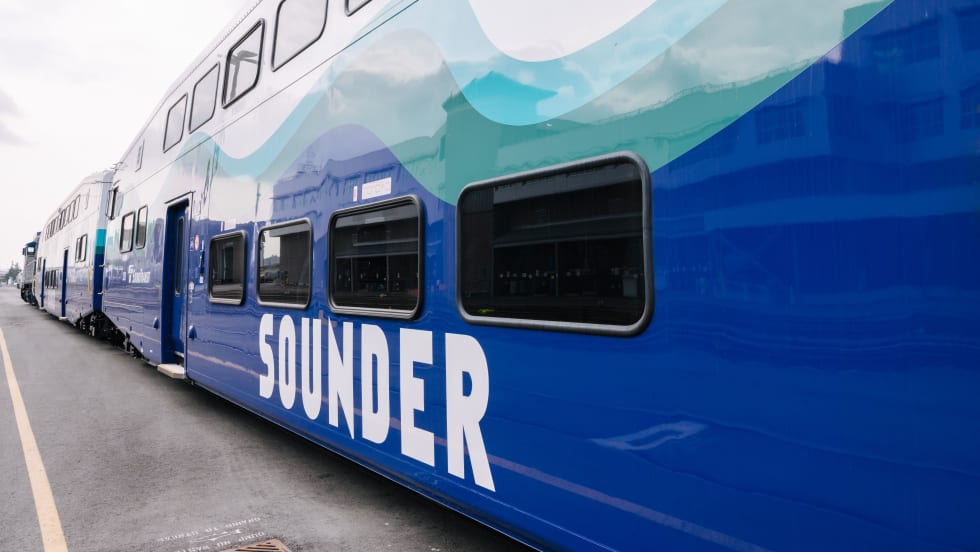
Seattle's Sound Transit Launches New Sounder Railcars into Service
Alstom manufactured all the cars under a $46.5 million contract and came into service in anticipation of summer crowds for soccer and baseball.
Read More →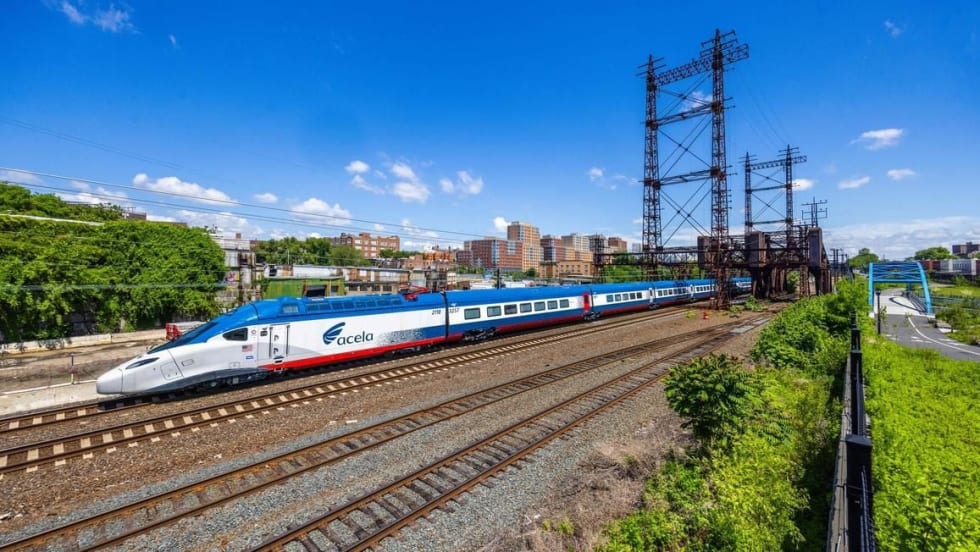
Alstom Partners With Universities to Build Rail Talent Pipeline
The partnerships include a new engineering scholarship fund at Alfred State College in Western New York and collaborations with transportation centers at the University of Pennsylvania and New York University.
Read More →
Chicago's NITA Act Moves Into Next Phase as Service Improvements Begin
Rider-focused improvements will begin rolling out across the system immediately as CTA, Metra, and Pace increase service this summer in the six-county region.
Read More →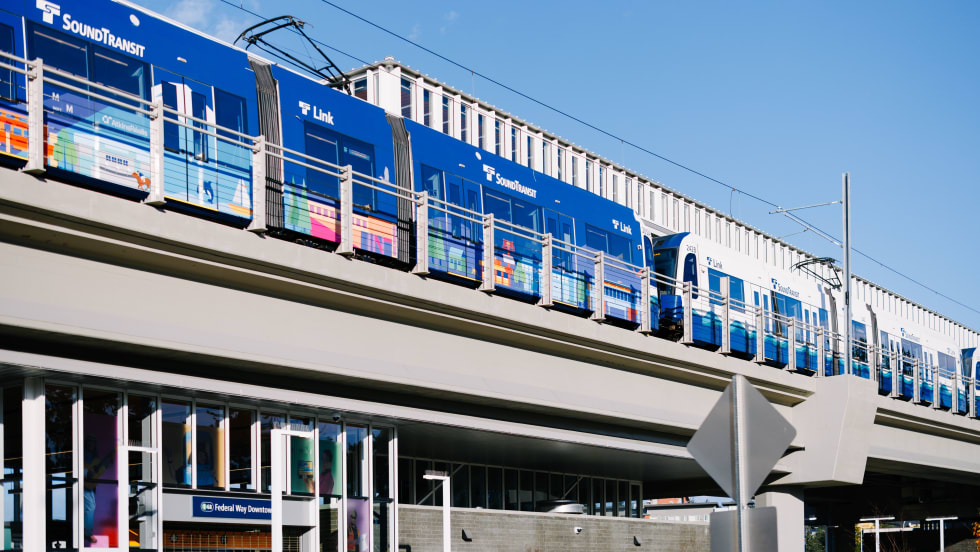
Seattle’s Sound Transit Adopts Updated ST3 System Plan
The updated system plan incorporates cost savings across the agency, including new revenue sources and financial policies, to set the agency on a sustainable path for the future.
Read More →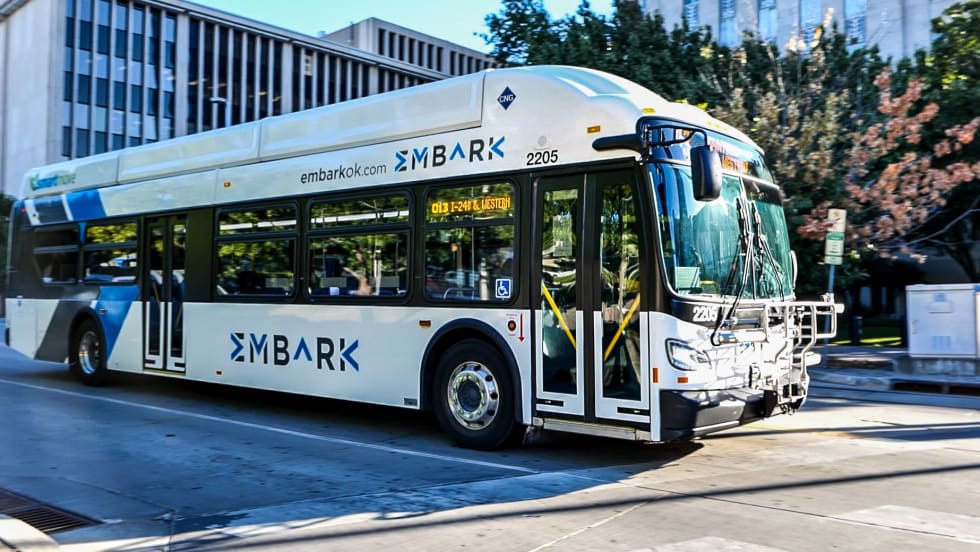
Inside Look: EMBARK Expands Fare-Free Transit Program Through New Public-Private Partnership
The OKC transit agency says sponsorship helps subsidize the Third Friday Free initiative while reducing barriers for first-time riders and boosting ridership across buses, streetcars, and river cruises.
Read More →