



UC Berkeley launches high-tech transit study
The pilot invites the public to use a free online trip planner. Researchers are trying to determine whether commuters will use transit more often if they are provided with accessible, current and information-rich transit, parking and traffic options before they start their journeys.

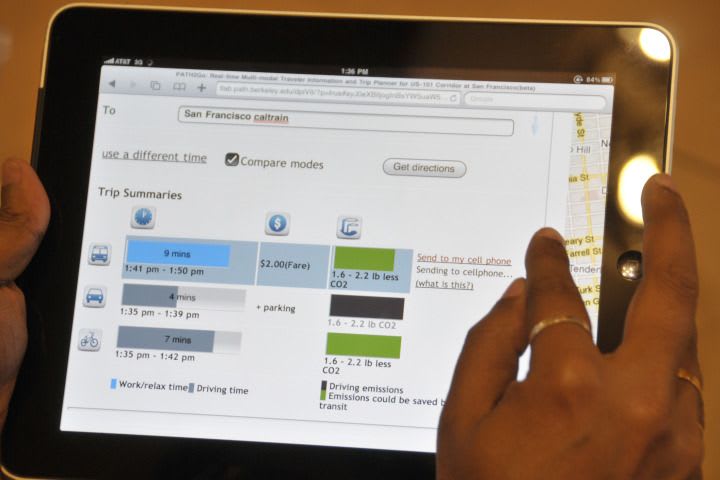
The pre-trip planner compares modes. Photo by Jay Sullivan, California Partners for Advanced Transit and Highways.
[IMAGE]UCBerkeleyPATH2GO2479FULL-2.jpg[/IMAGE] A new pilot project by transportation researchers at the University of California, Berkeley seeks to determine whether commuters will use transit more often if they are provided with accessible, current and information-rich transit, parking and traffic options before they start their journeys.
The field test takes place along the US 101 corridor between San Jose and San Francisco, one of the busiest commute routes in the Bay Area, and provides a comparison of real-time traffic, bus and Caltrain information for custom-selected routes.
The pilot, called the Networked Traveler, formally launched on Tuesday, with an invitation for the public to use the free online trip planner and/or download the mobile phone application, called PATH2Go. The technology allows travelers between San Francisco and San Jose to select the best commute option based on personalized priorities of cost-efficiency, time-efficiency or a low-carbon footprint. The mobile application is also available in the mobile apps section of www.511.org.
Researchers said that the study’s multi-agency cooperation was key to attaining real-time, region-wide data for multiple modes of transportation. “Commuters can compare driving, Caltrain and the bus based on the up-to-the minute status of traffic and transit,” said Liping Zhang, the lead developer on the project, which is being conducted at the California Partners for Advanced Transit and Highways (PATH), a research center at the UC Berkeley Institute of Transportation Studies.
Zhang said Networked Traveler aggregates information from a variety of sources — including live next-train and next-bus information from Caltrain, SamTrans, San Francisco Municipal Railway (Muni), BART, the Santa Clara Valley Transportation Authority (VTA) 522 bus rapid transit line, and real-time traffic conditions from traffic.com and SpeedInfo. “Smart parking” instrumentation that counts and transmits the number of available spots — displays current parking availability at the Millbrae, Redwood City, Menlo Park and Palo Alto Caltrain stations.
Networked Traveler has two main features: a trip planner for multimodal pre-trip planning, and, for people who already know their routes, a menu of transit agencies for quick access to next-bus/next train information. There are also a series of alerts to help transit riders navigate their trips. For driver safety, "geofencing" technology is used to block the cell phone application while a driver is in a moving automobile.
Commuters who register their GPS-activated smart phones at www.networkedtraveler.org can opt to receive a number of in-transit screen alerts – with audio and vibrate options – telling them where the nearest stop is, and, after they are already in transit, how many minutes are left on their trip and when their destination is approaching.
The California Department of Transportation (Caltrans) is sponsoring the pilot with the aim of developing tools that will reduce traffic congestion and alleviate traveler stress. Project partners include the Metropolitan Transportation Commission (MTC), San Mateo County Transit District (SamTrans), Caltrain, VTA, NAVTEQ, ParkingCarma and SpeedInfo.
Sign-up is required to receive the PATH2Go mobile application, so that the research team can contact participants for surveys and feedback. The study will not save cell phone numbers or associate the numbers with user names.
The field test is slated to continue for several months. To learn which information is most likely to influence traveler behavior, researchers will study how and when people use the services and which services people find most helpful.
More Bus
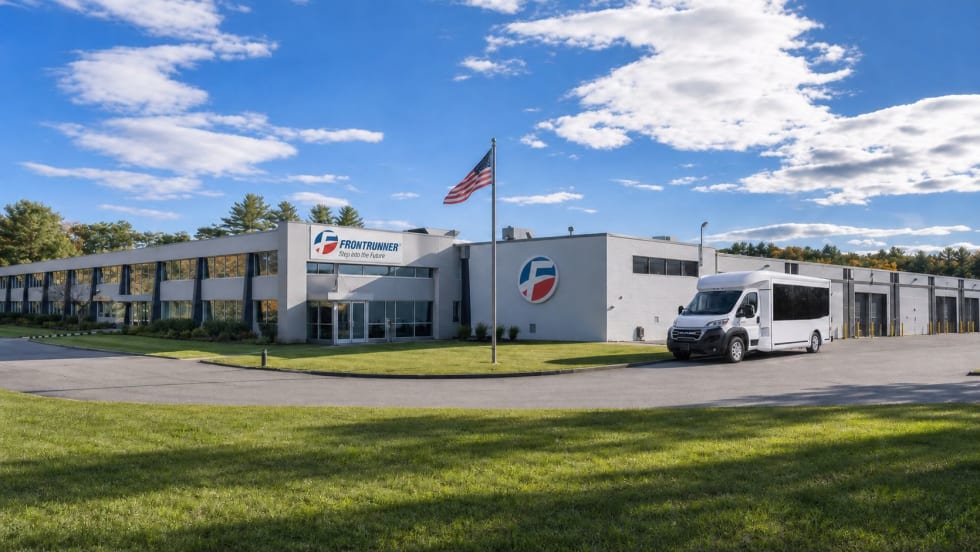
Frontrunner Bus Group Expands with New Massachusetts Headquarters
The significantly larger facility will provide the infrastructure needed to support the company’s growing workforce, advanced technologies, and expanding product line.
Read More →
Joshua Schank on Transportation Innovation, Risk, and the Future of Mobility
In this edition of METROspectives, Joshua Schank discusses lessons from launching LA Metro’s Office of Extraordinary Innovation, the challenges of advancing new mobility technologies, and much more.
Read More →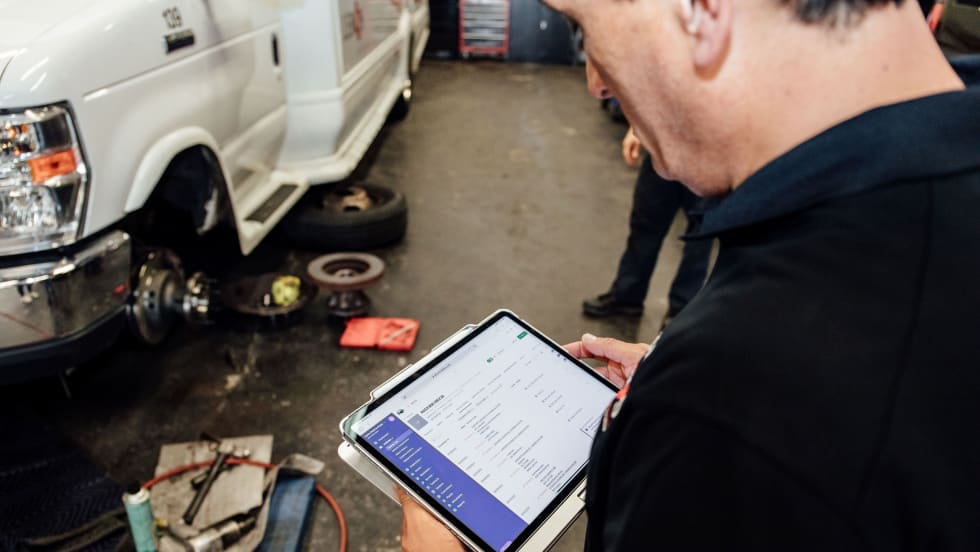
Reinventing Fleet Maintenance with Real-time Visibility and AI
Transit leaders need to know what needs fixing, where to look, who is responsible, when work is completed, and what it costs without having to chase information across disconnected systems.
Read More →
SamTrans Sets Priorities for Potential Connect Bay Area Revenue
The board-approved framework allocates future funding to maintaining service, rider improvements, equity initiatives, and infrastructure repairs.
Read More →
When Routine Fails: How Public Transit Must Adapt for the World Cup
The 2026 FIFA World Cup will test transit agencies’ ability to manage unpredictable travel patterns, making real-time data and operational flexibility critical to moving millions of visitors efficiently.
Read More →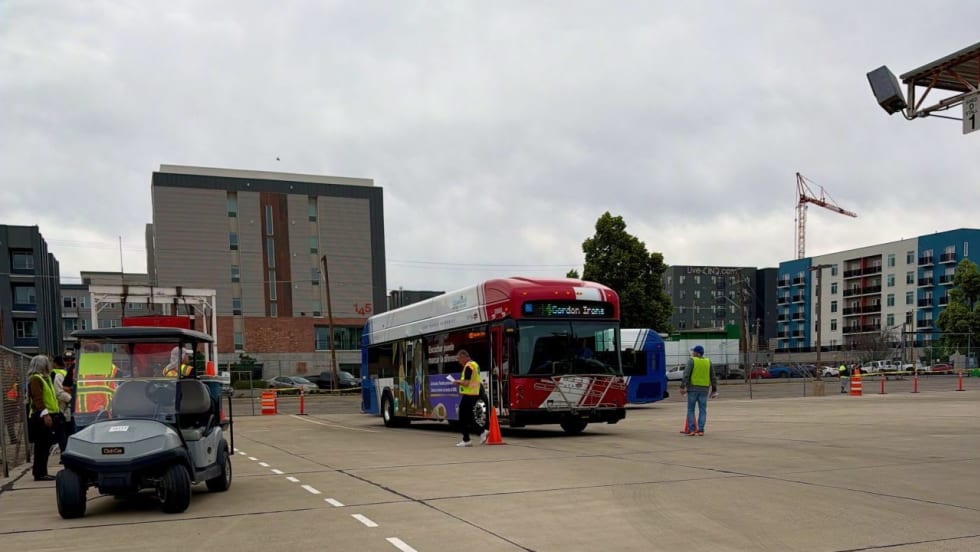
Photo Highlights from APTA's 2026 Mobility Conference
The photo gallery captures scenes from the conference, including the International Bus Roadeo, exhibit hall activities, the Bus Showcase, and much more.
Read More →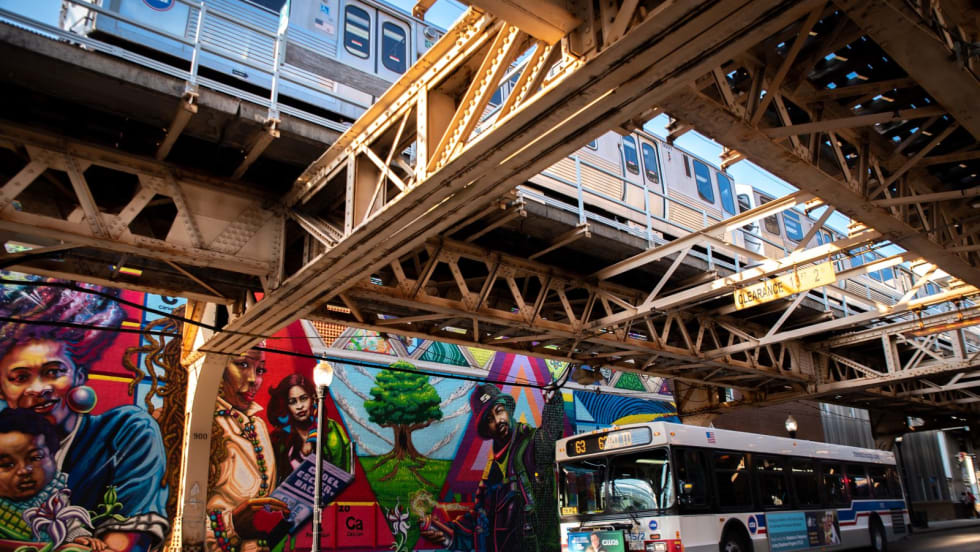
Chicago's NITA Act Moves Into Next Phase as Service Improvements Begin
Rider-focused improvements will begin rolling out across the system immediately as CTA, Metra, and Pace increase service this summer in the six-county region.
Read More →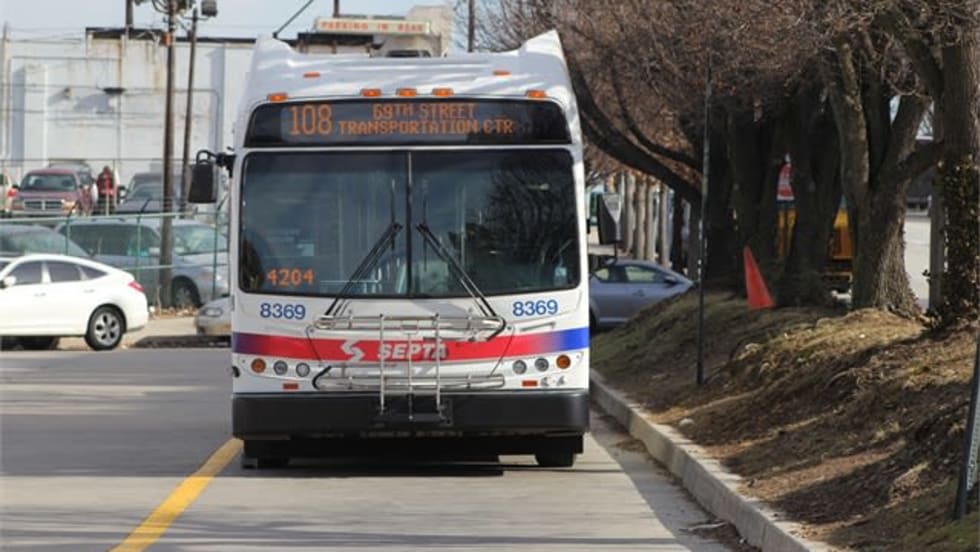
Philadelphia's SEPTA Approves Annual Transit Service Plan
Between 2021 and 2024, SEPTA held more than 200 public meetings — including 144 in-person sessions — throughout the SEPTA service region.
Read More →
A True Low-Floor Minibus Design Delivers Better Accessibility and Efficiency for Everyone
As transit demands evolve, so should your fleet. Download the whitepaper to see how the Low-Floor Frontrunner Minibus compares to traditional options.
Read More →
WMATA Debuts 'Fares Pay for Service' Awareness Campaign
The campaign was highlighted during a media event at the Paul S. Sarbanes Transit Center in Silver Spring, where WMATA’s GM/CEO Randy Clarke joined Metro Transit Police officers, WMATA management team, board members, and staff to expand fare enforcement and customer education efforts on Metro Bus routes throughout the region.
Read More →