



Study: Greater investment could revive U.S.' leadership in world rail industry
Case studies of Germany, Spain, Japan and China illuminate a set of common principles that those countries have used to nurture and grow some of the largest, most successful railroad manufacturing companies in the world.

In terms of investment in rail infrastructure, the United States currently lags far behind countries like Austria, the Netherlands, and Russia, and just ahead of Turkey. China alone is investing as much as $149 billion every year for the next five years.
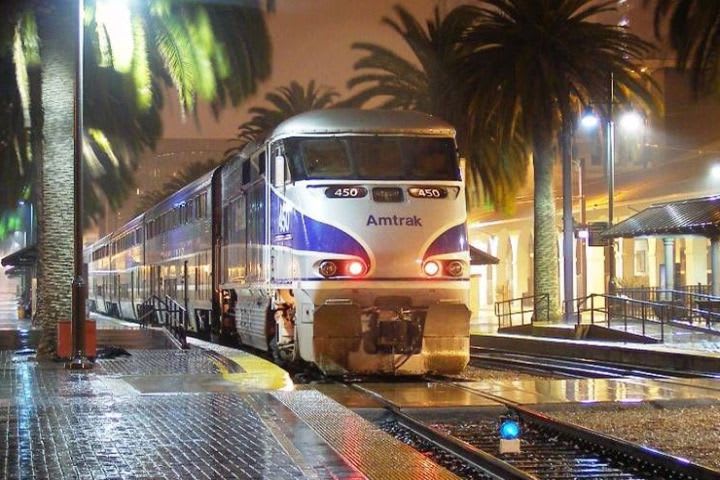
[IMAGE]Amtrak-full-3.jpg[/IMAGE]Greater investment in the U.S. rail industry could revive America’s former leadership in the world rail industry — and potentially create hundreds of thousands of jobs, according to a new report prepared by the Worldwatch Institute and the Apollo Alliance.
The report, Global Competitiveness in the Rail and Transit Industry, draws on lessons from dominant international rail manufacturing countries.
“Rail and transit is a fast-growing international market in which the U.S. currently has little role,” said Worldwatch senior researcher and lead author of the report, Michael Renner. “Our study shows the path forward if the U.S. is to reclaim some of its past glory as a railroad pioneer.”
Case studies of four of the leading countries in intercity rail and urban transit — Germany, Spain, Japan and China — illuminate a set of common principles that those countries have used to nurture and grow some of the largest, most successful railroad manufacturing companies in the world. Among them are:
Sustained, long-term national investment in rail and transit far and above the one-time injection of $8.3 billion provided by the 2009 American Recovery and Reinvestment Act. In terms of investment in rail infrastructure, the U.S. currently lags far behind countries like Austria, the Netherlands and Russia, and just ahead of Turkey. China alone is investing as much as $149 billion every year for the next five years.
Commitment to protecting and nurturing young industries until they have achieved the economies of scale necessary to compete globally. All of the countries in the report were served for decades by strong and competent national rail monopolies, which helped ensure robust demand for rail products and technologies.
A national vision that ensures that rail development will be linked with other forms of urban transit; use an integrated, uniform system of operations; provide extensive geographic coverage; and be well run. The report shows that systems that do this help produce a strong domestic market for rail transit, thus ensuring continued growth.
“Growing a strong rail transit industry demands large and sustained capital investment combined with national vision. Rail ridership in the U.S. is going up, but that demand alone won’t generate the private investment necessary to compete globally,” Renner said. “The federal government needs to be committed to building a strong, national system with competitive prices, solid geographic reach, and reliable trains. If it does that, not only will people ride it, but the United States will create hundreds of thousands of new jobs as well as internationally competitive companies.”
The report contains a wealth of facts and statistics that show the U.S. position relative to other countries, as well as the potential for growth.
Facts at a Glance
Global Market and Competition
The global market for passenger and freight rail equipment, infrastructure, and related services was $169 billion in 2007 and is projected to grow to $214 billion by 2016.
China invests far and above the most money in its rail network relative to its economy, spending $12.5 dollars for every $1,000 of GDP. In contrast, the United States spends $0.8 dollars per $1,000 of GDP.
By 2015, the number of high-speed train sets in operation worldwide is expected to rise by 70 percent.
United States
In 2009, the U.S. was the single largest national rail market, with 15 percent of the global share; however, this was oriented primarily to freight rail operations. The United States is home to not a single leading passenger railcar manufacturer.
Europe
European high-speed rail travel grew from 9.3 billion passenger miles in 1990 to 61 billion passenger miles in 2008.
Measured in passenger miles, Spanish rail travel increased 55 percent between 1990 and 2008, far outstripping population growth.
Spain will double the length of its high-speed rail network over the next three years, to 2,136 miles by 2012. Government plans call for an expansion to 6,200 miles of high-speed track by 2020.
Some 600 Spanish companies generate products or provide services for the Spanish rail sector.
Spain’s rail network managing agency, ADIF, estimates that the Spanish rail expansion has created 600,000 jobs during the last five years.
Germany’s rail transit and related construction and operations industries employ some 580,000 people.
Asia
Total passenger miles for rail transit in Japan increased 29 percent between 1980 and 2007, while population expanded by just 9.1 percent.
China’s intercity rail system carries a quarter of the world’s rail traffic on just 6 percent of the world’s rail track length, making it the largest conveyor of rail passengers in the world.
Chinese investment in rail construction has been growing steadily, from $14 billion in 2005 to $26 billion in 2007, $49 billion in 2008, and $88 billion in 2009. China’s investment in intercity rail, subway infrastructure, and rail transit vehicles is set to climb even more in coming years.
More Rail
OCTA Declares Emergency to Protect Rail Corridor From Coastal Erosion
The California agency is accelerating shoreline protection and plans to place approximately 690,000 cubic yards of sand along the San Clemente coast to protect a key passenger and freight rail link.
Read More →
More Than a Summer Job: Building the Next Generation of Transit Talent
The Delaware River Port Authority and PATCO have transformed their internship program into a hands-on professional development experience that introduces students to the breadth of transportation careers — and creates a pipeline for future employees.
Read More →
Airo Trains Make Their Amtrak Cascades Debut in the Pacific Northwest
Effective immediately, two cutting-edge Airo trainsets will join the Amtrak Cascades route, operating four daily trips between Vancouver, B.C., Seattle, Portland, and Eugene, Oregon, marking the first introduction of Airo trains into passenger service anywhere in the country.
Read More →
Florida's Brightline Announces Financial Restructuring
Brightline Florida says train operations will continue as normal as certain parent entities enter Chapter 11 and financial stakeholders provide $490 million in new long-term capital.
Read More →
ENC Lands MATA Contract and More in Biz Briefs
In this edition of Biz Briefs, we spotlight the latest developments shaping the future of mobility.
Read More →
Strada360’s Steve Lassey on Turning Transit Data Into Better Decisions
From breaking down data silos to preparing for AI, Strada360 CEO Steve Lassey discusses how transit agencies can use technology to improve operations, customer information, and long-term decision-making.
Read More →
SEPTA Details Accelerate Vision for Transit System
The plan outlines investments in trolley modernization, new Metro and Regional Rail vehicles, accessible stations, and more frequent bus and rail service.
Read More →
FTA Ends Direct Oversight of MBTA Safety Actions
The federal agency closed its remaining special directive to the Massachusetts Department of Public Utilities following a safety review that began in 2022.
Read More →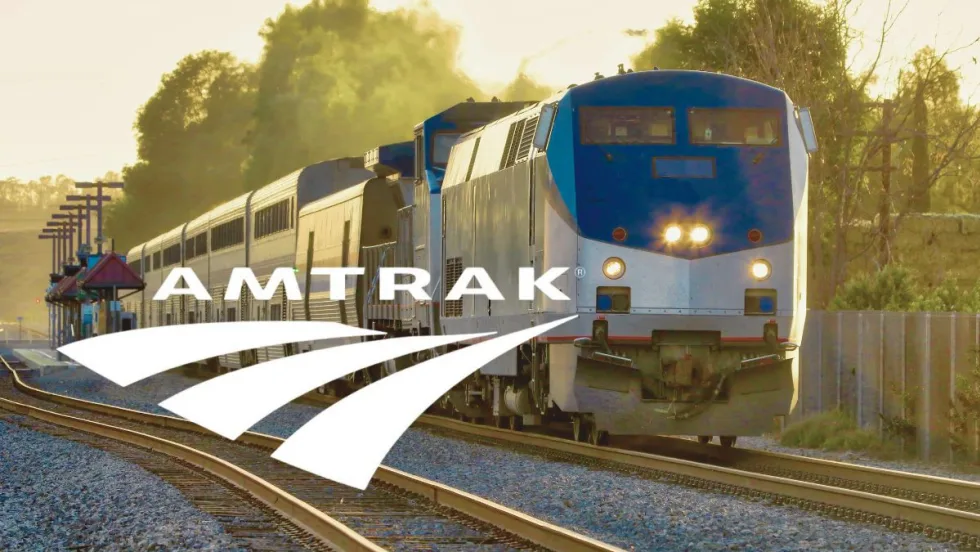
Amtrak, CN Reach Agreements to Strengthen Passenger Rail Service, Safety
The agreement resolves a more than decade-long proceeding before the Surface Transportation Board concerning the terms and conditions for Amtrak services, such as the City of New Orleans, Illini/Saluki, and Wolverine.
Read More →
New York MTA Advances Final Contract for Second Avenue Subway Expansion
Contract Four is the largest in the Second Avenue Subway Phase 2 project and includes construction of station infrastructure, tracks, and signals for the subway expansion, MTA officials said. Work on Contract Four will begin in 2027.
Read More →