



Survey: Americans view transit as better option than driving
Higher gas prices and convenience are the biggest factors when making public transit decisions, according to HNTB's latest America THINKS survey.

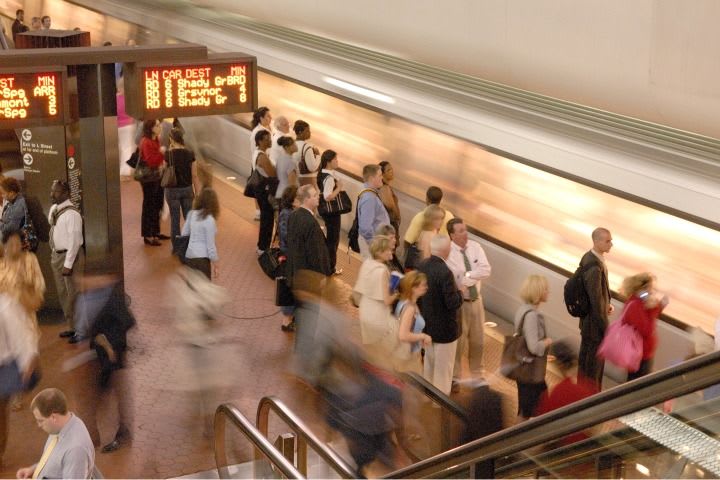
Approximately 1 in 4 respondents think the most valuable feature of public transportation is that it reduces traffic congestion (28 percent), or saves users money (24 percent), while about 1 in 7 (13 percent) say it’s most valuable feature is the environmental benefit. WMATA photograph by Larry Levine.
[IMAGE]WMATA-subway-crowd-full-2.jpg[/IMAGE]Nearly nine in 10 (87 percent) Americans who have access to public transportation where they work or live take advantage of it, according to a new survey conducted by HNTB Corp. In addition, almost seven in 10 (69 percent) Americans feel there are many times when public transit is a better option than driving, and nearly three in ten of them choose higher gas prices (29 percent) and convenience (29 percent) as the biggest motivators for riding public transportation.
The new HNTB America THINKS transit survey, takes a look at public transportation and what Americans think about using, improving and paying for it.
“Whether it’s buses, commuter trains, light rail or streetcars, public transportation is an essential element for our communities,” said Elizabeth Rao, chair, public transit services, for HNTB. “People like transit and successful cities deliver it.”
Approximately one in 4 respondents think the most valuable feature of public transportation is that it reduces traffic congestion (28 percent), or saves users money (24 percent), while about one in seven (13 percent) say it’s most valuable feature is the environmental benefit.
“Healthy transportation infrastructure is economically and environmentally sound. It spurs job creation, stimulates the economy, reduces dependence on foreign oil and enhances quality of life,” said Rao. “Unfortunately decades of underinvestment have taken their toll.”
The nation’s largest public transit agencies face an $80 billion maintenance backlog just to bring their rail systems to a state of good repair. Within the next six years, almost every transit vehicle (55,000 vehicles) in rural America will need to be replaced.
Even amid budget and service cutbacks due to the recession, 68 percent of Americans say the overall quality of public transportation in their area has stayed the same or improved during the last five years. Among respondents with public transportation in their area, 58 percent say it has stayed about the same, while 25 percent think it has improved.
Fortunately, transit is entering something of a “golden age” of funding in America. The Obama administration has set aside more money for transit development than any other time in the past 20 years, including Transportation Investment Generating Economic Recovery, sustainability and planning grants — literally hundreds of millions of dollars waiting to be awarded. Rao said the problem is that those federal monies require a local match, and many cities, already forced to cut basic services, don’t have the revenue to ante up their share.
While using existing taxes is the most popular method of funding better public transportation, the survey showed millions also are willing to pay a little more for a convenient ride.
“Economically viable cities will make transit a priority because they realize they can generate multiple, positive economic outcomes with a single investment,” said Rao. “There has never been a better time for cities to build, improve or expand their public transit systems.”
Nearly half (46 percent) of Americans think local, state and federal governments don’t spend enough money on public transportation in their area. Almost three in 10 (28 percent) think these governments should rely on a greater share of gas tax to help fund improved public transportation options. Approximately two in 10 think private investors (21 percent) or local sales taxes (20 percent) should be the primary source of public transit funding. Just one in 10 (10 percent) think property taxes are the answer.
More Bus

From Surviving to Thriving: Building Stronger Transportation Organizations
Bus Business Consultants founder Brian Dickson shares lessons on leadership, organizational health, and creating options for long-term success in a changing transportation industry.
Read More →
Everett Transit, Community Transit Outline Consolidation Agreement
The proposed agreement calls for a 50% increase in bus service in Everett, a new microtransit zone, continued paratransit service, and the transfer of Everett Transit operations to Community Transit.
Read More →
SEPTA Details Accelerate Vision for Transit System
The plan outlines investments in trolley modernization, new Metro and Regional Rail vehicles, accessible stations, and more frequent bus and rail service.
Read More →
Report: Transit Bus Manufacturing Supports 34,100 Jobs, $5.1B in GDP
The “Buses Mean Business” report examines the transit bus manufacturing industry’s economic footprint, supply chain, and rising demand for vehicle replacements.
Read More →
Biz Briefs: New Flyer Delivers in Columbus, Houston, Beep and Freebee Merge, and More
In this edition of Biz Briefs, we spotlight the latest developments shaping the future of mobility.
Read More →
People Movement: Dan Dipert Coaches Adds Third-Generation Leader, Keolis Names New Valley Metro VP/GM, and More
In this edition, we also cover recent appointments and announcements at the Wabtec, SilverRide, HNTB, and more, showcasing the individuals helping to shape the future of transportation.
Read More →
New York MTA Plans Largest Bus Fleet Upgrade in More Than a Decade
The agency is seeking manufacturers for 650 new CNG buses to replace aging vehicles, improve reliability, and advance its broader fleet modernization strategy.
Read More →
Building a Flexible Path to Transit Electrification
John Hroncich discusses BAE Systems’ modular and scalable approach, lessons learned from decades of real-world operations, and how agencies can identify electrification strategies that fit their fleets.
Read More →
Bus Tech Talk: Keeping Transit Technicians Ahead of the Technology Curve
LA Metro’s Obed Mejia discusses technician training, evolving maintenance technology, fleet replacement, and strategies for getting the most out of today’s transit fleets.
Read More →
Biz Briefs: RIPTA Unveils New Frontrunners, Clevland RTA Adds New Siemens, and More
In METRO's latest installment, we take a look at recent news from Siemens, Prevost, Dodge, and more partnerships making headlines across the transportation sector.
Read More →