



Report identifies high-speed rail corridors with greatest ridership potential
Corridors connecting populous regions with large job centers, rail transit networks, and existing air markets were found to have the greatest potential to attract ridership.

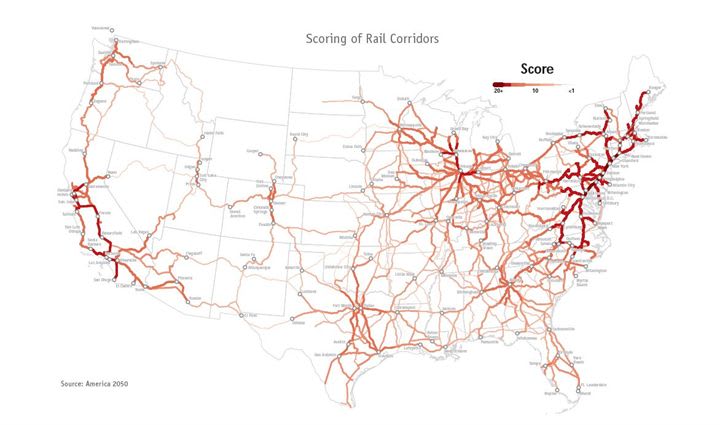
The top performing corridors in each region determined to have the greatest potential demand for high-speed rail ridership include corridors, such as: New York-Washington, D.C.; Chicago-Milwaukee; Los Angeles-San Diego; Tampa, Fla. (via Orlando) to Miami; Dallas-Houston; Atlanta-Birmingham, Ala.; Portland, Ore.- Seattle; and Denver-Pueblo, N.M. Image courtesy America 2050.
[IMAGE]U-S-HSR-corridor-map-2.jpg[/IMAGE]High-speed rail corridors connecting populous regions with large job centers, rail transit networks, and existing air markets were found to have the greatest potential to attract ridership, according to a new study.
The study, released Tuesday by America 2050, identifies the high-speed rail corridors with the greatest potential to attract ridership in each of the nation's "megaregions" — networks of metropolitan regions that collectively contain more than 70 percent of U.S. population and jobs.
Corridors connecting populous regions with large job centers, rail transit networks, and existing air markets scored best. The study also recommends that the federal government adopt a quantitative approach to evaluating future investment in high-speed rail.
[IMAGE]America-2050-mega-region-map-2.jpg[/IMAGE]
The 56-page study, entitled "High-Speed Rail in America," cites ridership potential as the number one factor in determining if a corridor is suitable for investment, identifies the specific conditions that generate ridership demand and scores each corridor according to strength in those areas.
The top performing corridors in each region determined to have the greatest potential demand for high-speed rail ridership include corridors, such as:
New York-Washington, D.C.;
Chicago-Milwaukee;
Tampa, Fla. (via Orlando) to Miami;
Dallas-Houston;
Atlanta-Birmingham, Ala.;
Portland, Ore.- Seattle;
and Denver-Pueblo, N.M.
Scoring was based on factors that have contributed to rail ridership in other systems around the world: regional and city population size and density, employment concentrations, rail transit accessibility, air travel markets, and the composition of job markets by sector.
Based on the analysis, the report proposes that the federal government adopt a similar approach to evaluating where to invest future dollars and calls for prioritizing investments where the potential for ridership demand is greatest.
It also calls for a new nationwide study of long-distance travel in America, the majority of which takes place by auto. The last nationwide study of this kind — the American Travel Survey — was completed in 1995 and is outdated, according to the report.
The report only examined corridors of up to 600 miles in length — the range of miles at which high-speed rail can compete effectively with automobiles and airplanes — and collected data for every metropolitan region along each corridor. The scoring methodology was designed so that corridors with large central business districts, regional populations, existing transit systems, and regional air markets scored highest in the study.
Short corridors that concentrate multiple major cities and employment centers tended to score highly in the study.
The report is a follow-up study to America 2050's 2009 report, "Where High-Speed Rail Works Best," which analyzed 27,000 potential corridors or "city pairs" and ranked them according to a weighted average of the six survey criteria, but did not consider the alignment of the corridors or the cities in between each pairing. "High-Speed Rail in America" refines this analysis by accounting for the network benefits of having multiple stations along a corridor.
To view the full report, click here.
More Rail
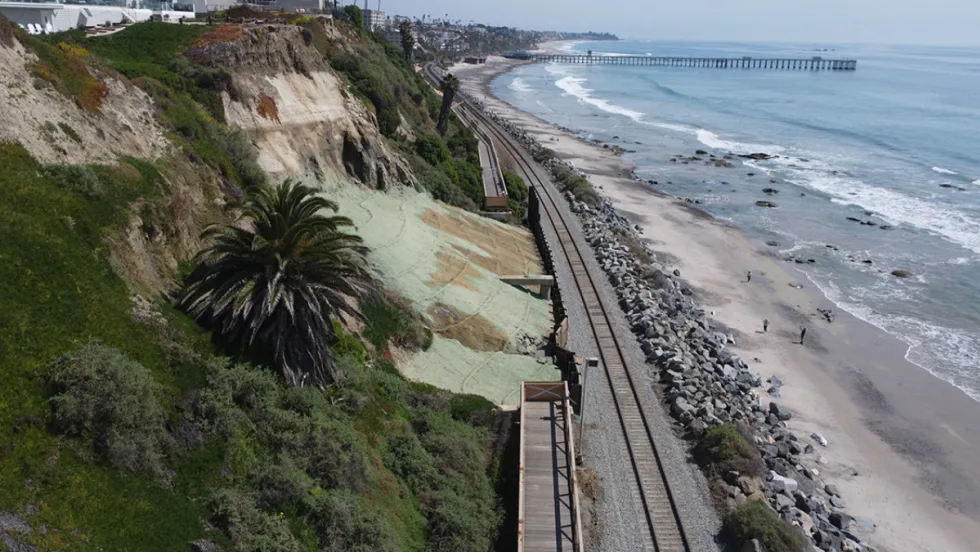
OCTA Declares Emergency to Protect Rail Corridor From Coastal Erosion
The California agency is accelerating shoreline protection and plans to place approximately 690,000 cubic yards of sand along the San Clemente coast to protect a key passenger and freight rail link.
Read More →
More Than a Summer Job: Building the Next Generation of Transit Talent
The Delaware River Port Authority and PATCO have transformed their internship program into a hands-on professional development experience that introduces students to the breadth of transportation careers — and creates a pipeline for future employees.
Read More →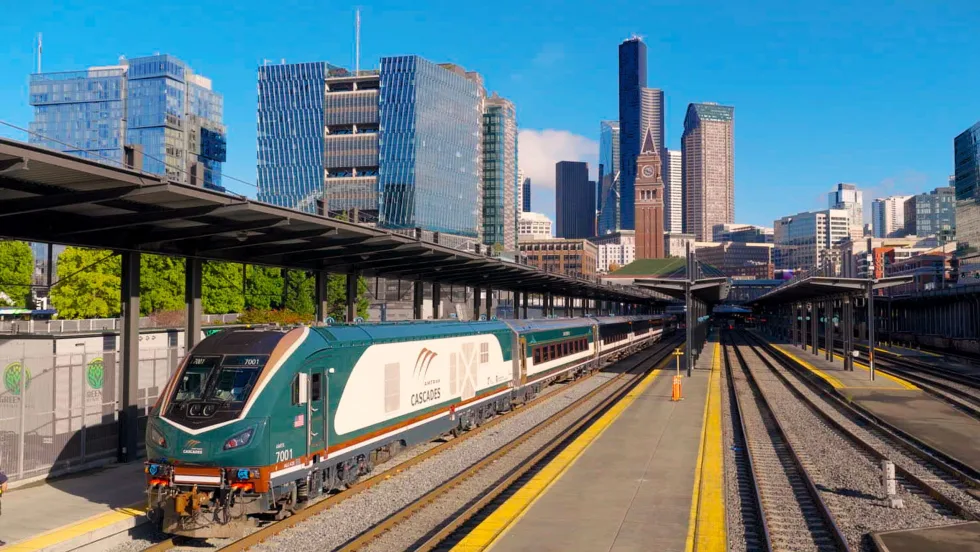
Airo Trains Make Their Amtrak Cascades Debut in the Pacific Northwest
Effective immediately, two cutting-edge Airo trainsets will join the Amtrak Cascades route, operating four daily trips between Vancouver, B.C., Seattle, Portland, and Eugene, Oregon, marking the first introduction of Airo trains into passenger service anywhere in the country.
Read More →
Florida's Brightline Announces Financial Restructuring
Brightline Florida says train operations will continue as normal as certain parent entities enter Chapter 11 and financial stakeholders provide $490 million in new long-term capital.
Read More →
ENC Lands MATA Contract and More in Biz Briefs
In this edition of Biz Briefs, we spotlight the latest developments shaping the future of mobility.
Read More →
Strada360’s Steve Lassey on Turning Transit Data Into Better Decisions
From breaking down data silos to preparing for AI, Strada360 CEO Steve Lassey discusses how transit agencies can use technology to improve operations, customer information, and long-term decision-making.
Read More →
SEPTA Details Accelerate Vision for Transit System
The plan outlines investments in trolley modernization, new Metro and Regional Rail vehicles, accessible stations, and more frequent bus and rail service.
Read More →
FTA Ends Direct Oversight of MBTA Safety Actions
The federal agency closed its remaining special directive to the Massachusetts Department of Public Utilities following a safety review that began in 2022.
Read More →
Amtrak, CN Reach Agreements to Strengthen Passenger Rail Service, Safety
The agreement resolves a more than decade-long proceeding before the Surface Transportation Board concerning the terms and conditions for Amtrak services, such as the City of New Orleans, Illini/Saluki, and Wolverine.
Read More →
New York MTA Advances Final Contract for Second Avenue Subway Expansion
Contract Four is the largest in the Second Avenue Subway Phase 2 project and includes construction of station infrastructure, tracks, and signals for the subway expansion, MTA officials said. Work on Contract Four will begin in 2027.
Read More →