



Report: Biking increases use, efficiency of transit
The report focused on five communities — Boulder/Denver, Colo.; Chicago; Ithaca, N.Y.; Portland, Ore.; and Santa Clara County, Calif. The results from seven focus groups within those communities also were included.

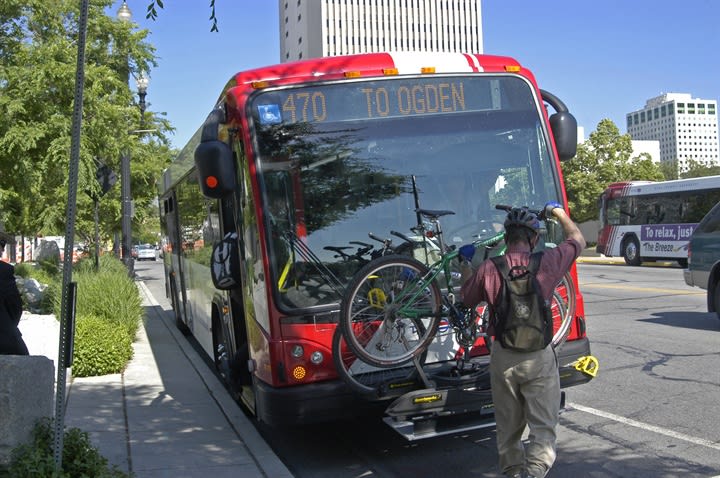
Photo courtesy Utah Transit Authority
[IMAGE]Utah-Bike-on-Bus-2.jpg[/IMAGE]A newly released study evaluates various ways to integrate bicycle riding with transit in a way that maximizes the cost-effective use of both travel modes. The report, “Bicycling Access and Egress to Transit: Informing the Possibilities” was conducted by the Mineta Transportation Institute (MTI).
In conducting the research, principal investigator Kevin J. Krizek, Ph.D., focused on five communities — Boulder/Denver, Colo.; Chicago; Ithaca, N.Y.; Portland, Ore.; and Santa Clara County, Calif. The results from seven focus groups within those communities also were included.
"When effectively integrated with transit services, bicycling can bring various benefits to communities and will likely increase the use and efficiency of both modes," said Dr. Krizek. "A core problem exists in that the predominant approach for this integration — that is, allowing bicycles aboard transit vehicles — frequently runs up against capacity restraints. Before we can successful integrate both modes on a broader scale, we must analyze a broad range of alternatives that considers the travel patterns and needs of individuals as well as the accompanying urban form characteristics."
To help develop a framework to evaluate the cost effectiveness of different strategies to address the problem, this project included three facets. First, it reviewed the current knowledge and, second, it proposed an analysis framework for communities and transit agencies to consider as they try to maximize bicycle and transit integration. Third, it conducted focus groups with cyclists from five case study communities to gauge integration strategy preferences.
A key part of the project was to develop a preliminary application to evaluate four integration strategies based on the focus group discussions and use of the Analytic Hierarchy Process (AHP). These evaluation measures were applied to the five communities.
The AHP ranked cyclists' preferences for four integration strategies in order of preference:
(1) "Bike on transit" (transporting the owner's bicycle aboard — inside or outside — the transit vehicle)
(2) "Bike to transit" (using and parking the owner's bicycle at a transit access location)
(3) "Shared bike" (sharing a bicycle, which would be based at either the transit access or egress point)
(4) "Two bikes" (using an owner's two bicycles at the access and egress location)
Results of the cost effectiveness assessment suggest that "Bike on transit" ranked most cost effective overall, followed by "Bike to transit," "Two bikes," and "Shared bike" strategies.
Much of the concern about the three lesser preferred options centers on security issues. Minor adjustments in terms of security could address the current challenge of "Bike on transit" capacity limitations and make the less cost effective strategies comparable to "Bike on transit."
This research revealed several examples of secure bicycle parking efforts. Chicago has built bicycle parking inside transit stations and several communities have integrated bicycle lockers as part of its bicycle parking. Boulder County is developing bicycle corrals at transit access and egress points as a way to increase transit ridership and reduce congestion on a state highway. These corrals provide an alternative to the "Bike on transit" capacity limitation problem while addressing security and weather concerns.
New approaches such as these may help to overcome the apparent challenges of security that plague the three less preferred strategies and help to increase bicycle and transit integration.
More Bus
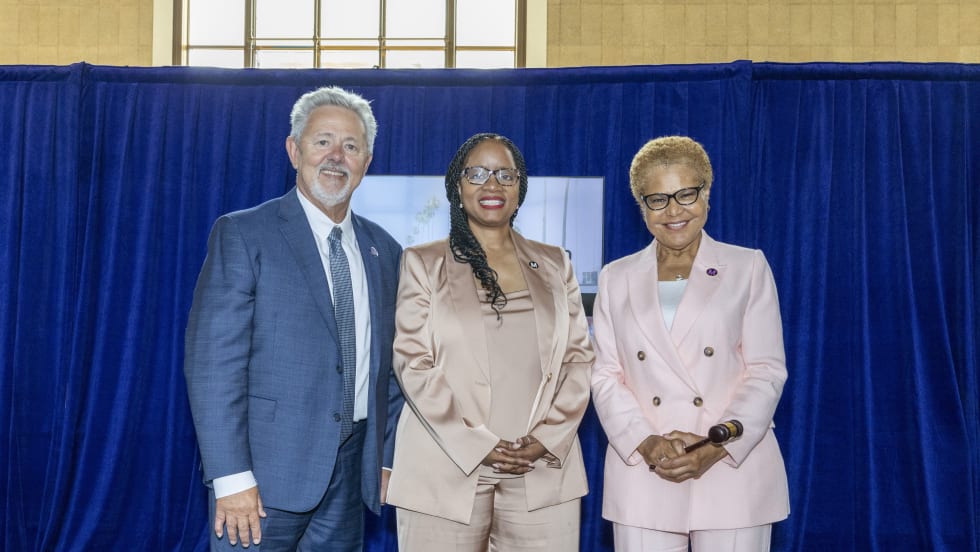
LA Metro Marks Banner Year, Sets Ambitious Goals for New Fiscal Year
Incoming LA Metro Board Chair and Los Angeles Mayor Karen Bass joined outgoing Board Chair Fernando Dutra and LA Metro CEO Stephanie Wiggins to review accomplishments from fiscal year 2026, which included the opening of new rail extensions, advancement of major transit projects, expanded safety programs, and new rider amenities.
Read More →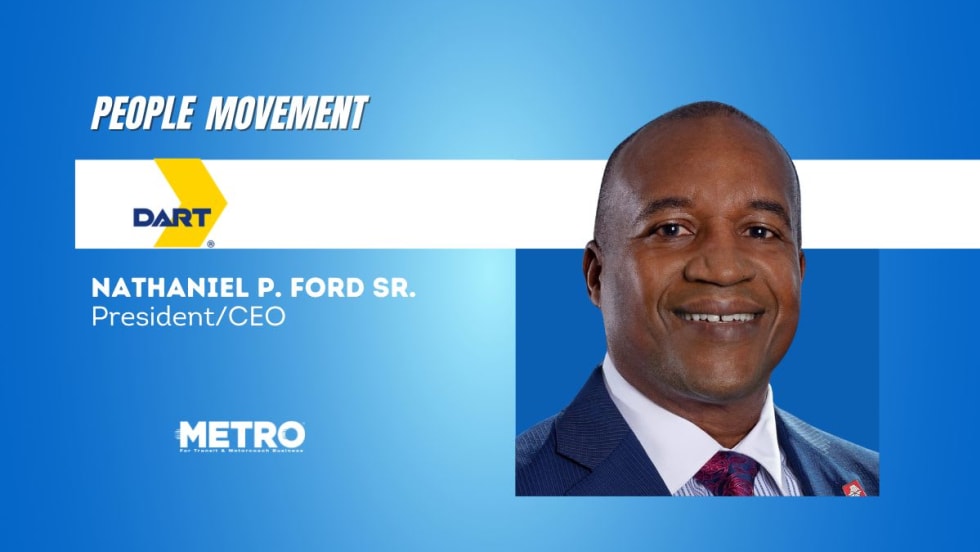
DART Taps Nathaniel P. Ford Sr. as Next President/CEO
Since 2012, Ford has served as the CEO of the Jacksonville Transportation Authority
Read More →
AC Transit’s Cecil Blandon on Building the Next Generation of Transit Maintenance Leaders
The agency’s maintenance chief discusses leadership, workforce development, zero-emission technology, and preparing technicians for the future of public transportation.
Read More →
Building the Next Generation of Transit Technology
In this edition of METROspectives, Luminator CEO Magnus Friberg discusses the company's transformation, the growing role of AI and software, and what's next for transit technology.
Read More →
June LA Metro Ridership Surges 2 Million Year Over Year
Total June ridership increased for both weekdays and weekends. Weekday ridership was 953,820, which grew 8.4% from June 2025; Saturdays increased nearly 13% year-over-year to 708,826; and Sundays increased 7.7% to 611,534 from June 2025, according to LA Metro.
Read More →
Washington's Pierce Transit Board Sends Transit Funding Measure to November Ballot
With the adoption of Resolution 2026-006, the measure moves to the Pierce County Auditor, giving voters in the Pierce Transit service area the decision on whether to fund an expansion of local transit service within the agency’s service area.
Read More →
New York Unveils Sweeping Plan to Modernize City Bus Service
Next Stop: Fast Buses, Better Service identifies 50 priority bus corridors for improvements across the five boroughs and launches the City’s next generation of rapid bus service along five key routes.
Read More →
CTDOT Taps STV for Electric Bus Facility Design
The firm will work with CTDOT and RVT to define the facility layout, operational requirements, and long-term flexibility for RVT’s growing electric fleet.
Read More →
Ford to Leave JTA After More Than 10 Years as CEO
He plans to continue his work advancing innovative mobility solutions to improve the quality of life in communities across the nation. He did not announce specific plans.
Read More →
Transit Leaders Push for Bus Procurement Reforms to Reduce Costs
Industry experts said reducing unnecessary bus customization and modernizing purchasing practices could help transit agencies buy more vehicles, improve reliability, and make better use of limited funding.
Read More →