



Web Extra: Syracuse U., Centro debut GPS tracking system
The cost of the new system is approximately $2.8 million and is being funded through $2.25 million in SAFETEA-LU grant monies from Sen. Charles E. Schumer (D-NY), along with 10 percent matches provided by both Syracuse University and the New York State DOT.

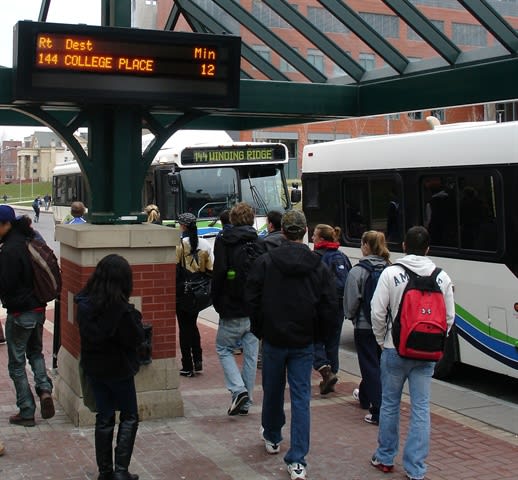
Syracuse University Students board a Centro bus at College Place, the main bus stop on campus. The stop is equipped with Bus Time GPS signage. Photo Courtesy: Centro
[IMAGE]CENTRO-2.jpg[/IMAGE]In a public-private partnership with Syracuse University, the Central New York Regional Transportation Authority (Centro) debuted a GPS tracking system that will provide predictive bus arrival times for customers.
The system, "Bus Time," has been installed along Syracuse's Connective Corridor, which links the Syracuse University campus with many of the city's cultural venues. More than a dozen Bus Time LED signs have been installed at bus stops along the corridor, with each providing visual and audible information on the arrival time of the next scheduled bus.
Customers can also access the information via text message / email, or by accessing Centro's website on their smart phone or personal computer.
"It really is part of our collaborative working relationship with Syracuse University, explained Steven Koegel, director, marketing & communications for Centro. "Chancellor Nancy Cantor has spearheaded a concept called the Connective Corridor, which is an effort to integrate Syracuse University students in the fabric of the city of Syracuse by increasing student awareness and accessibility to downtown Syracuse and its cultural venues. The first step in this process was establishing a bus route connecting the campus and downtown."
The university inquired about GPS bus technology and secured federal grants to pay for Bus Time. The project was then awarded to Clever Devices through a competitive bid process and has been working with Centro and Syracuse University to implement the system, added Koegel.
The cost of the new system is approximately $2.8 million and is being funded through $2.25 million in SAFETEA-LU grant monies from Sen. Charles E. Schumer (D-NY), along with 10 percent matches provided by both Syracuse University and the New York State Department of Transportation.
The ITS (intelligent transportation system) technology in Syracuse is unique because it is converging network technologies and VoIP (voice over Internet protocol) on each bus while connecting these technologies via a cellular signal to a centralized command center, according to Centro.
Customers are now able to wait at an equipped bus stop and receive information on exactly when their bus will arrive at that stop. Each sign will visually count down the arrival of the next scheduled bus and can provide audio announcements of the same information for sight-impaired users.
The Bus Time system also includes LED signs on 20 buses that operate along the corridor. Each provide automated stop announcements and other important bus route information for riders. The project is an 18-month pilot program. Once complete, Centro will evaluate whether to pursue Bus Time technology for other aspects of its bus services.
"We are hopeful the system proves to be accurate and reliable for our customers and for our drivers and dispatchers. It not only helps the rider by providing predictive information, but it also helps our dispatchers and bus operators maintain a timely product," said Koegel. "If all works well, we would look to install the system on more bus routes in coming years."
Clever Devices produced and installed the Bus Time system and has provided similar technology for transit systems in Chicago, New York City, Chattanooga and Richmond.
More Bus
Frontrunner Bus Group Expands with New Massachusetts Headquarters
The significantly larger facility will provide the infrastructure needed to support the company’s growing workforce, advanced technologies, and expanding product line.
Read More →
Joshua Schank on Transportation Innovation, Risk, and the Future of Mobility
In this edition of METROspectives, Joshua Schank discusses lessons from launching LA Metro’s Office of Extraordinary Innovation, the challenges of advancing new mobility technologies, and much more.
Read More →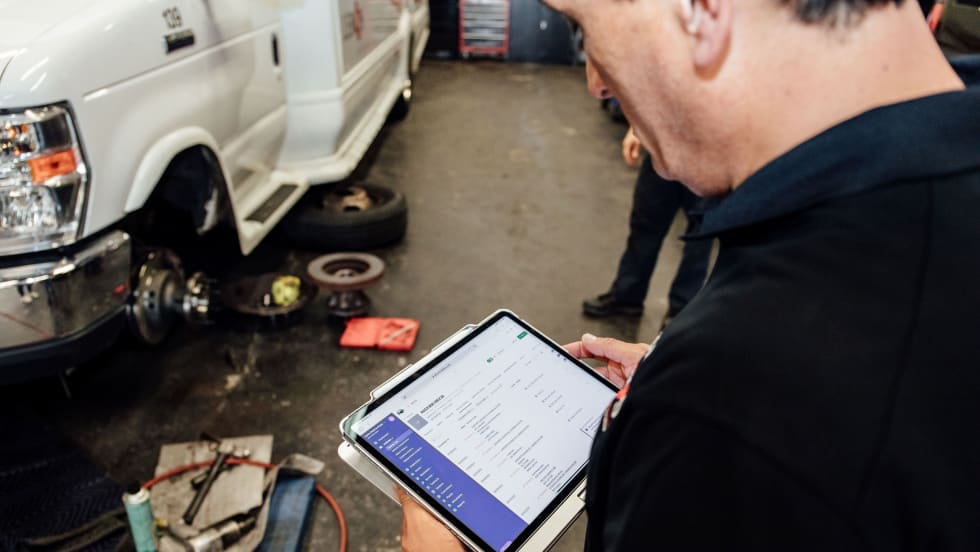
Reinventing Fleet Maintenance with Real-time Visibility and AI
Transit leaders need to know what needs fixing, where to look, who is responsible, when work is completed, and what it costs without having to chase information across disconnected systems.
Read More →
SamTrans Sets Priorities for Potential Connect Bay Area Revenue
The board-approved framework allocates future funding to maintaining service, rider improvements, equity initiatives, and infrastructure repairs.
Read More →
When Routine Fails: How Public Transit Must Adapt for the World Cup
The 2026 FIFA World Cup will test transit agencies’ ability to manage unpredictable travel patterns, making real-time data and operational flexibility critical to moving millions of visitors efficiently.
Read More →
Photo Highlights from APTA's 2026 Mobility Conference
The photo gallery captures scenes from the conference, including the International Bus Roadeo, exhibit hall activities, the Bus Showcase, and much more.
Read More →
Chicago's NITA Act Moves Into Next Phase as Service Improvements Begin
Rider-focused improvements will begin rolling out across the system immediately as CTA, Metra, and Pace increase service this summer in the six-county region.
Read More →
Philadelphia's SEPTA Approves Annual Transit Service Plan
Between 2021 and 2024, SEPTA held more than 200 public meetings — including 144 in-person sessions — throughout the SEPTA service region.
Read More →
A True Low-Floor Minibus Design Delivers Better Accessibility and Efficiency for Everyone
As transit demands evolve, so should your fleet. Download the whitepaper to see how the Low-Floor Frontrunner Minibus compares to traditional options.
Read More →
WMATA Debuts 'Fares Pay for Service' Awareness Campaign
The campaign was highlighted during a media event at the Paul S. Sarbanes Transit Center in Silver Spring, where WMATA’s GM/CEO Randy Clarke joined Metro Transit Police officers, WMATA management team, board members, and staff to expand fare enforcement and customer education efforts on Metro Bus routes throughout the region.
Read More →