



RIPTA debuts hybrid trolleys
Manufactured by Gillig Bus, in partnership with Cable Car Classics, each vehicle seats approximately 32 passengers and cost $696,959.50. FTA grants funded the base cost of the trolleys, and ARRA covered the incremental cost of the hybrid propulsion system.

The Rhode Island Public Transit Authority (RIPTA) received two new classic hybrid diesel trolleys manufactured by Gillig LLC, in partnership with Cable Car Classics.
The new trolleys are powered by clean diesel hybrid electrical propulsion systems that reduce emissions, save fuel and are smoother and quieter than conventional buses.
Nearby states are already seeing results from switching over to hybrid buses. Results in the Connecticut Department of Transportation Hybrid Bus Testing Project Report showed that “the hybrid buses demonstrated about 10 percent improved fuel economy compared to the base clean-diesel buses. The buses were popular among passengers and operators, who cited their quiet vibration-free ride.”
The red and gold trolleys, which each seat approximately 32 passengers, will replace traditional diesel buses. Each trolley costs $696,959.50. Federal Transit Administration grants funded the base cost of the trolley, while the American Recovery and Reinvestment Act covered the incremental cost of the hybrid propulsion system. A 20 percent local match was provided by State General Obligation Bonds.
The new trolleys are part of RIPTA’s normal fleet replacement plan to maintain their fleet in top condition; these represent two of ten purchased in 2010. Replacement of CNG trolleys and diesel buses to a hybrid system will yield approximately a 20 percent savings on fuel for RIPTA.
More Rail
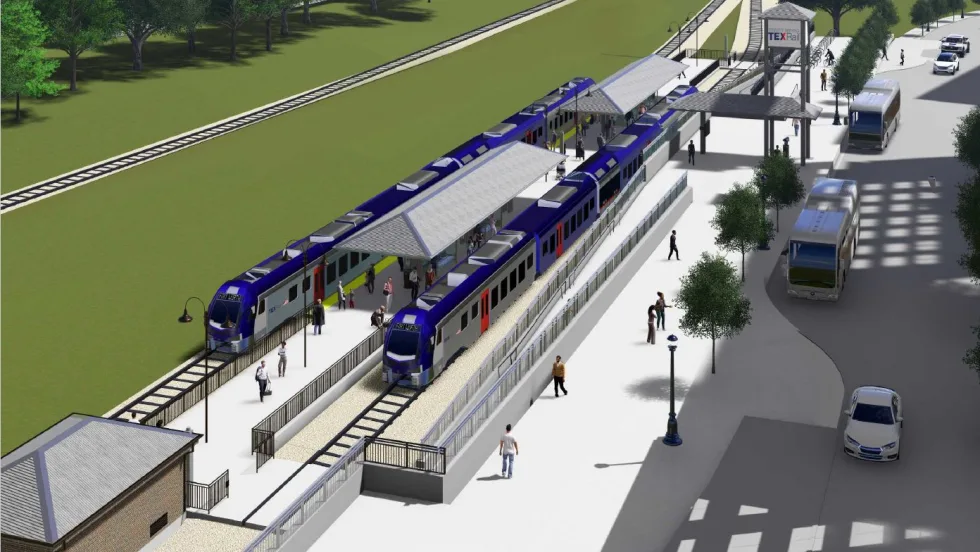
Trinity Metro Breaks Ground on $270M TEXRail Extension
The 2.1-mile extension will connect Fort Worth’s Medical District and Near Southside to downtown, surrounding communities, and Dallas-Fort Worth International Airport.
Read More →
Bringing Austin’s First Light Rail System to Life
Austin Transit Partnership CEO Greg Canally discusses the city's nearly 10-mile light rail project, its collaborative approach to project delivery, the importance of community engagement, and the milestones ahead as construction approaches in 2027.
Read More →
Metra Draft Plan Outlines Costs, Service Improvements for Regional Rail
The Systemwide Network Plan identifies infrastructure needs and potential investments to expand all-day, bidirectional rail service across the Chicago region.
Read More →
Amtrak Completes First Street Tunnel Upgrades, Restores Service
The nine-day construction project included replacing aging track infrastructure and modernizing switch systems near Washington Union Station.
Read More →
FRA Announces $2.3B for Passenger, Freight Rail Projects Nationwide
The CRISI Grant Program funding will support rail infrastructure improvements, safety upgrades, and projects aimed at improving freight and passenger rail service across 45 states and Washington, D.C.
Read More →
Caltrain’s Electrification Drives a New Era of Ridership Growth
The railroad’s shift to electric service has brought more frequent trains, stronger customer satisfaction, and increased ridership, earning it APTA’s Outstanding Public Transportation System award.
Read More →
FTA Advances $164M Broward County Commuter Rail Project
The proposed 10.5-mile commuter rail extension would connect Fort Lauderdale and Aventura, expanding passenger rail options in South Florida.
Read More →
New York MTA Launches Historic $1.9B Signal, Track Modernization Project
Funded in part by congestion pricing revenue, the project will replace nearly century-old signals along the A and C lines in Brooklyn and Queens.
Read More →
LA Metro Breaks Ground on East San Fernando Valley Light Rail Project
The 6.7-mile line will add 11 stations along Van Nuys Boulevard, expand access to jobs and regional transit connections, and support Metro’s broader efforts to improve mobility as rail ridership grows.
Read More →
CSA Group Releases Climate Resilience Standard for Transit, Passenger Rail
Developed with support from the Standards Council of Canada, CSA D700 guides assessing climate-related risks and planning adaptation measures for transit and passenger rail systems.
Read More →