



Wash. Metro Transit to debut BRT line
The RapidRide B Line, featuring 60-foot articulated buses built by New Flyer, will connect the cities of Bellevue and Redmond.

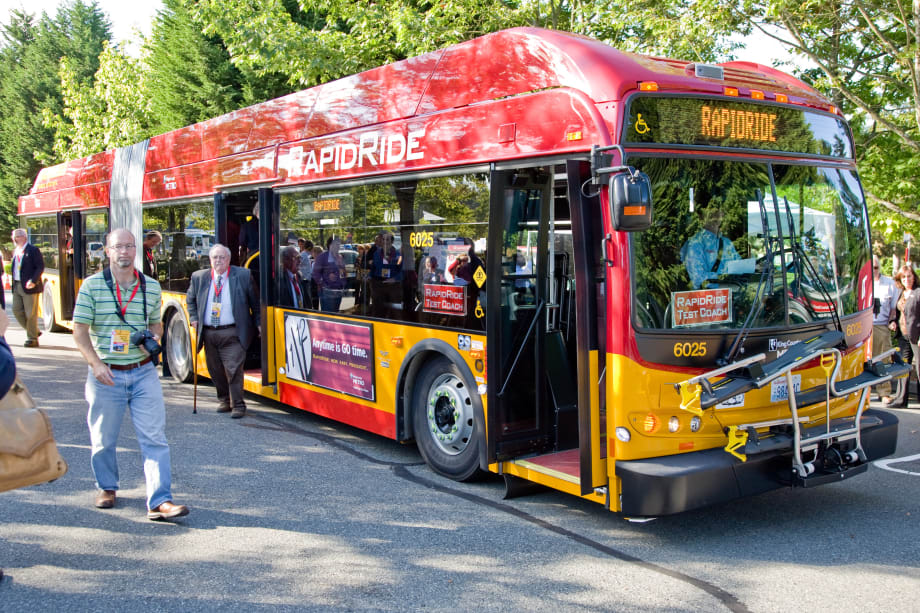
Photo credit Ned Ahrens
Washington's King County Metro Transit will debut its new bus rapid transit (BRT) service this weekend. The RapidRide B Line, which features newly designed buses, shelters and signs, will connect the cities of Bellevue and Redmond.
The B Line will start carrying passengers at 6 a.m. this Saturday, and rides will be free all weekend. It is the second of Metro’s six planned RapidRide routes.
The A Line debuted a year ago has increased bus ridership by 30 percent to 40 percent in its corridor. Similar results are expected for the B Line, according to transit officials, with Eastside RapidRide ridership projected to increase to nearly 2.2 million passenger trips a year by 2016.
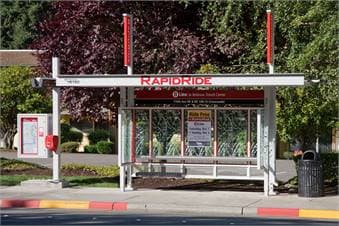
Photo
Ned Ahrens
The service includes newly designed buses, shelters and signs. The distinctive red and yellow buses are energy efficient, low-emission hybrid vehicles with low floors and three doors for easier, faster boarding. The B Line was funded with $20.2 in federal funding in addition to local dollars.
The service, which travels between the Bellevue and Redmond transit centers, features 60-foot articulated buses with three doors for faster boarding. The vehicles, built by New Flyer, have free Wi-Fi, interior and exterior stop announcements, security cameras, and a passive restraint system to speed boarding time for those using wheelchairs and other mobility devices.
The B Line is expected to operate about 20 percent faster than the current routes in those corridors. This is achieved by combining bus stops, quicker fare collection with off-board payment at major stations, and transit signal priority that either extends or provides green lights for arriving B Line buses, according to officials.
The B Line has 19 RapidRide stations installed at locations that currently have the most transit use. Station amenities include: large shelters with interior lighting; real-time arrival information; ORCA card readers; benches; and a lighted signal that passengers can activate to let bus drivers know there is someone waiting. The remaining 28 stops along the line also have benches and the passenger-activated lights.
Buses are scheduled to arrive every 10 minutes on weekdays during the busiest travel hours, and every 15 minutes during most other times of the day and week before 10 p.m. During the late-night and early-morning hours, it operates every 30 minutes. On weekdays, it operates from 4:30 a.m. to approximately 1 a.m.
Because of the way the B Line connects the Eastside, Metro is also restructuring much of its bus service in Bellevue, Redmond and Kirkland to improve the efficiency of the transit network and to integrate with the new RapidRide service. The revisions also begin Oct. 1 and include: significantly revised routing for 11 routes; elimination of 12 routes to avoid duplication of service; and three new routes to fill in the network.
More Bus
Biz Briefs: New Flyer Delivers in Columbus, Houston, Beep and Freebee Merge, and More
In this edition of Biz Briefs, we spotlight the latest developments shaping the future of mobility.
Read More →
People Movement: Dan Dipert Coaches Adds Third-Generation Leader, Keolis Names New Valley Metro VP/GM, and More
In this edition, we also cover recent appointments and announcements at the Wabtec, SilverRide, HNTB, and more, showcasing the individuals helping to shape the future of transportation.
Read More →
New York MTA Plans Largest Bus Fleet Upgrade in More Than a Decade
The agency is seeking manufacturers for 650 new CNG buses to replace aging vehicles, improve reliability, and advance its broader fleet modernization strategy.
Read More →
Building a Flexible Path to Transit Electrification
John Hroncich discusses BAE Systems’ modular and scalable approach, lessons learned from decades of real-world operations, and how agencies can identify electrification strategies that fit their fleets.
Read More →
Bus Tech Talk: Keeping Transit Technicians Ahead of the Technology Curve
LA Metro’s Obed Mejia discusses technician training, evolving maintenance technology, fleet replacement, and strategies for getting the most out of today’s transit fleets.
Read More →
Biz Briefs: RIPTA Unveils New Frontrunners, Clevland RTA Adds New Siemens, and More
In METRO's latest installment, we take a look at recent news from Siemens, Prevost, Dodge, and more partnerships making headlines across the transportation sector.
Read More →
People Movement: Holly Arnold Joins Transdev and More
In this edition, we also cover recent appointments and announcements at Pace, CamTran, MCI, and more, showcasing the individuals helping to shape the future of transportation.
Read More →
The High Cost of Transit Buses: Industry Leaders Look to Procurement Reform
Transit leaders and policymakers examine how standardized bus designs, streamlined procurement, and predictable funding could help agencies stretch budgets and deliver better service.
Read More →
The Business Voice Behind Public Transportation
As chair of APTA’s Business Members Board of Governors, Ray Melleady explains how more than 850 business members are partnering with transit agencies to advance funding, innovation, and industry-wide collaboration.
Read More →
From Surviving to Thriving: Building Stronger Transportation Organizations
Bus Business Consultants founder Brian Dickson shares lessons on leadership, organizational health, and creating options for long-term success in a changing transportation industry.
Read More →