



Smoking ban on N.Y. rail platforms takes effect
Ban on Metro-North and Long Island Railroad station platforms began November 13. Notable New Yorkers including former New York Jet Joe Namath and former New York Yankee Tommy John lent their voices to a public education campaign letting customers know about the rules.

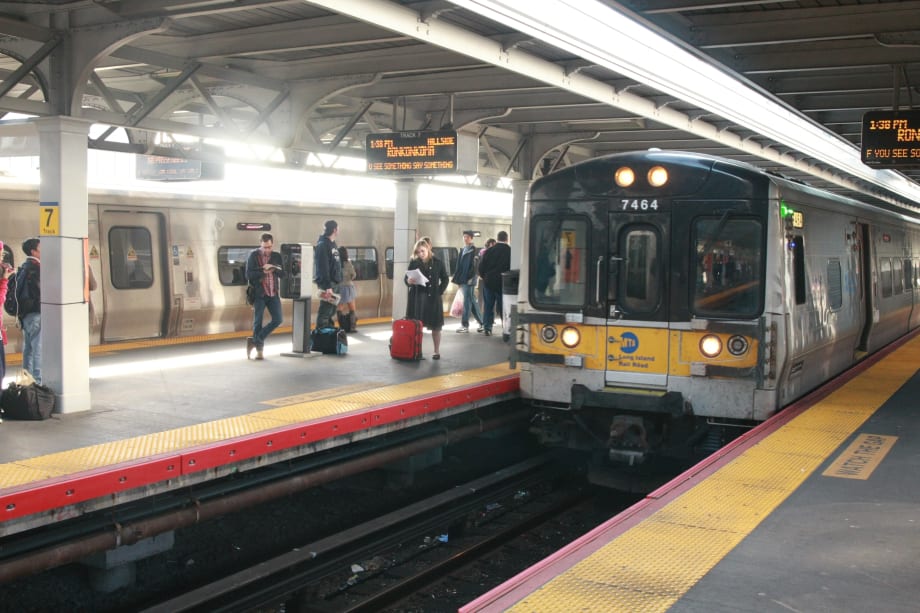
Photo courtesy New York Metropolitan Transportation Authority.
Photo courtesy New York Metropolitan Transportation Authority.
Web poll: Is your system considering banning smoking on rail platforms or at bus stops? Click here, to let us know.
New York State’s new smoking ban on MTA Long Island Rail Road (LIRR) and MTA Metro-North Railroad (Metro-North) outdoor platform, ticketing and boarding areas of terminals and stations went into this week.
To help get the word out, an All-Star lineup of New Yorkers volunteered to record public address announcements for Metro-North and the LIRR, including New York Jets Super Bowl hero Joe Namath, New York Ranger Hall of Famer Rod Gilbert, former New York Yankee Tommy John, WFAN sports commentator Ann Liguori, and Long Island native and former Miami Dolphins quarterback Jay Fiedler.
“The new law is a benefit to our customers, helping us in our efforts to provide a healthier and cleaner environment on our platforms and in our ticketing and boarding area," said Metro-North President Howard Permut said.
In addition to the public service announcements, customer education campaigns to raise awareness of the new smoking ban will include seat drops on trains, posters in stations, customer email alerts, and postings on Facebook and Twitter. Permanent signage will also be installed at all LIRR stations in New York City, Nassau County and Suffolk County and all Metro-North stations in New York City, Westchester, Rockland, Putnam, Orange and Dutchess Counties.
MTA Police will be issuing warnings to violators rather than summonses during a grace period while the education campaign is underway and both railroads amend their Rules of Conduct and those rules are approved by the MTA Board.
The current rules prohibit smoking on any train and in any indoor area within a terminal or station. The new state law extends the prohibition on smoking to the outdoor railroad platforms, ticketing and boarding areas. When the Rules of Conduct are amended for both railroads, it will provide the MTA Police with the authority to enforce the new law.
Additionally, Austin, Texas' Capital Metro is planning to prohibit smoking and other tobacco use within 15 feet of a bus stop, statesman.com reported. However, because the agencty does not have lawmaking authority, the tobacco ban at bus stops would be voluntary. For the full story, click here.
More Rail

New York MTA Advances Final Contract for Second Avenue Subway Expansion
Contract Four is the largest in the Second Avenue Subway Phase 2 project and includes construction of station infrastructure, tracks, and signals for the subway expansion, MTA officials said. Work on Contract Four will begin in 2027.
Read More →
San Diego MTS Breaks Monthly Trolley Ridership Record
Agency officials said July’s ridership indicates MTS’s continued recovery from the pandemic.
Read More →
Report Examines NJ TRANSIT Reliability, Funding Challenges
The Garden State Initiative analysis examines the roles of Amtrak infrastructure, fleet management, and agency operations while recommending a more performance-based approach to improving reliability.
Read More →
Stadler, CapMetro Sign Long-Term Rail Fleet Support Agreement
Beginning in 2027, Stadler will provide on-site technical expertise, spare parts support, training, and obsolescence management to help extend the reliability and longevity of CapMetro’s GTW fleet.
Read More →
Biz Briefs: Alstom Lands Canadian Contract, LYT to Supply California TSP, and More
In METRO's latest installment, we take a look at recent news from Complete Coach Works, Beep, FlixBus, and more partnerships making headlines across the transportation sector.
Read More →
CATS Gold Line Marks 5 Years of Service, 2.8M Passenger Trips
With a six-mile expansion planned, the Charlotte streetcar is positioned to connect more neighborhoods and major transit hubs across the region.
Read More →
Why Simulating Pedestrian Movement Has Become Essential for Modern Rail Stations
Pedestrian microsimulation is helping rail planners identify bottlenecks, test station designs, and prepare complex transit hubs for growing passenger volumes.
Read More →
Amtrak Begins Major Construction at New York’s Sunnyside Yard
The new maintenance facility will support Amtrak’s Airo trainsets while improving maintenance efficiency and turnaround times in New York.
Read More →
Chicago Leaders Unveil Plans for O’Hare Airport Express Train
The privately developed project would offer a 15-minute trip between downtown and O’Hare’s Terminal 2, with trains operating every 15 minutes on a dedicated track. The service would use battery-electric trains and three existing freight rail rights-of-way.
Read More →
OCTA Maps Out 30-Year Strategy to Protect Coastal Rail Corridor
The draft feasibility report identifies strategies to protect the coastal rail line for decades as the agency continues near-term stabilization and sand placement efforts.
Read More →