



Calif. high-speed authority continues progress
Five Design-Build teams qualified for a short list and will compete for contracts to build the backbone of the high-speed rail system in the Central Valley. MOU outlines a shared commitment to development of high-speed rail in Southern California while providing funding for local early investment projects that will improve rail service immediately.

The California High-Speed Rail Authority (CHSRA) approved terms and conditions to be issued with a Request for Proposal (RFP), a process that allows Design-Build teams to bid on construction of the first high-speed rail project in California.
Five Design-Build teams qualified for a short list and will compete for contracts to build the backbone of the high-speed rail system in the Central Valley. Proposals will be scored on whether they meet strict guidelines for technical competence, deadline schedules, methods of operation and costs. The winning bid will include a CHSRA policy and goal that says 30% of the work will go to small businesses.
CHSRA agreed to award a $2 million stipend to Design-Build teams that submit bids but are not awarded the contract. Stipends are a common engineering industry practice that partially compensates companies that participate in the RFP process.
The first segment of the high-speed rail project will extend 25 miles from near the city of Madera to south of the city of Fresno. It will create an estimated 100,000 job-years over the next five years and one million job-years over the next 20 years, according to the agency.
The Federal Railroad Administration (FRA) will pay for half of the $1.5 to $2 billion project. Proposition 1A, the High-Speed Passenger Train Act, approved by voters in 2008, will supply money for CHSRA's portion of the funding.
The CHSRA board of directors also voted to support the development of a Memorandum of Understanding (MOU) with Southern California transportation agencies. It outlines a shared commitment to development of high-speed rail in Southern California while providing funding for local early investment projects that will improve rail service immediately.
Agencies that have already approved the MOU include Southern California Association of Governments, Los Angeles County Metropolitan Transportation Authority, Riverside County Transportation Commission, San Diego Association of Governments, San Bernardino Associated Governments and the Southern California Regional Rail Authority (Metrolink).
Specifically, the CHSRA would identify $1 billion in Prop 1A or other funds that could be used for early investment projects along the high-speed rail corridors, as defined in the authority's Business Plan. Meanwhile, regional agencies would work with the CHSRA to find matching funds in order to improve existing railways and deliver the high-speed rail system sooner to Southern California. The coordinated effort defines a new interagency partnership that further promotes intermodal connectivity.
All agencies will coordinate to develop a Candidate Project list for early investment in Southern California by 2020. In addition, the agencies will prepare performance criteria for selecting and prioritizing the projects from the Candidate Project list. These projects will be recommended to the Legislature, which is uniquely responsible for approval and appropriation.
More Rail
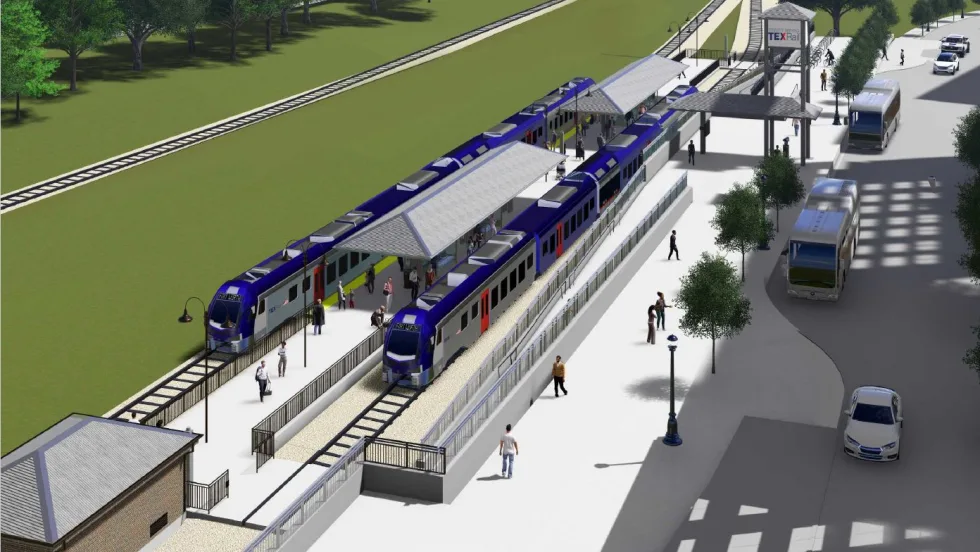
Trinity Metro Breaks Ground on $270M TEXRail Extension
The 2.1-mile extension will connect Fort Worth’s Medical District and Near Southside to downtown, surrounding communities, and Dallas-Fort Worth International Airport.
Read More →
Bringing Austin’s First Light Rail System to Life
Austin Transit Partnership CEO Greg Canally discusses the city's nearly 10-mile light rail project, its collaborative approach to project delivery, the importance of community engagement, and the milestones ahead as construction approaches in 2027.
Read More →
Metra Draft Plan Outlines Costs, Service Improvements for Regional Rail
The Systemwide Network Plan identifies infrastructure needs and potential investments to expand all-day, bidirectional rail service across the Chicago region.
Read More →
Amtrak Completes First Street Tunnel Upgrades, Restores Service
The nine-day construction project included replacing aging track infrastructure and modernizing switch systems near Washington Union Station.
Read More →
FRA Announces $2.3B for Passenger, Freight Rail Projects Nationwide
The CRISI Grant Program funding will support rail infrastructure improvements, safety upgrades, and projects aimed at improving freight and passenger rail service across 45 states and Washington, D.C.
Read More →
Caltrain’s Electrification Drives a New Era of Ridership Growth
The railroad’s shift to electric service has brought more frequent trains, stronger customer satisfaction, and increased ridership, earning it APTA’s Outstanding Public Transportation System award.
Read More →
FTA Advances $164M Broward County Commuter Rail Project
The proposed 10.5-mile commuter rail extension would connect Fort Lauderdale and Aventura, expanding passenger rail options in South Florida.
Read More →
New York MTA Launches Historic $1.9B Signal, Track Modernization Project
Funded in part by congestion pricing revenue, the project will replace nearly century-old signals along the A and C lines in Brooklyn and Queens.
Read More →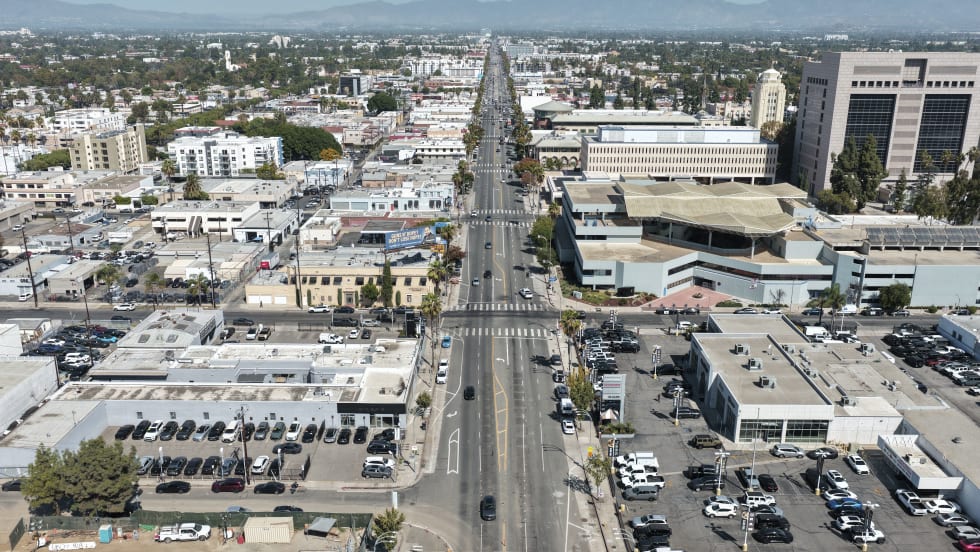
LA Metro Breaks Ground on East San Fernando Valley Light Rail Project
The 6.7-mile line will add 11 stations along Van Nuys Boulevard, expand access to jobs and regional transit connections, and support Metro’s broader efforts to improve mobility as rail ridership grows.
Read More →
CSA Group Releases Climate Resilience Standard for Transit, Passenger Rail
Developed with support from the Standards Council of Canada, CSA D700 guides assessing climate-related risks and planning adaptation measures for transit and passenger rail systems.
Read More →