



Web Extra: Streetcar project adds to U of Arizona's transit options
The Tucson streetcar line will serve a population of more than 85,000 people who live and work within walking distance of 17 planned stops. The service also fills a gap by offering direct, high-capacity transit connections between downtown Tucson, the University of Arizona, the Arizona Health Sciences Center and points in between.

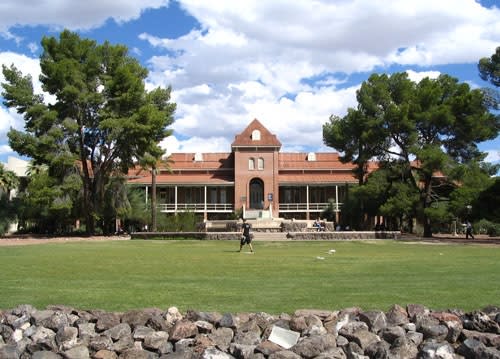
Earlier this month, Tucson, Ariz. broke ground on a new 3.9-mile modern streetcar line project that will directly connect thousands of commuters with the University of Arizona (UA) and Tucson’s major downtown employers, health care facilities and regional attractions.
“We’re excited for the streetcar for a number of reasons,” said David Heineking, CPP, director of UA’s Parking & Transportation Services (PTS). “One of the largest benefits of the streetcar for the University community is that it will connect major centers of activities, including major research and health care facilities. This is especially true of the programs located in downtown Tucson.”
The Tucson streetcar line will serve a population of more than 85,000 people who live and work within walking distance of 17 planned stops. The service also fills a gap by offering direct, high-capacity transit connections between downtown Tucson, the University of Arizona, the Arizona Health Sciences Center and points in between. Travel times between the University District and downtown are expected to improve significantly over current bus service, once the streetcar line is operational.
“As a University, we are also excited at the potential for expansion that the streetcar will open up for us — not only for our programs, but also for our student housing,” said Heineking. “We predict that the streetcar will also alleviate the demand for on-campus parking and, by encouraging members of the community to use alternative modes of transportation, reduce greenhouse gases.”
The U.S. Department of Transportation (U.S. DOT) committed $78.7 million to the $196.6 million project thus far, including $63 million in TIGER funds awarded in 2010 and $15.7 million from other U.S. DOT funding sources. It is slated to open in late 2013.
The streetcar project will become another aspect of UA’s transportation program, which includes car sharing, carpool/vanpool, and bicycle programs, as well as a U-Pass program with Sun Tran, Tucson’s local transit agency.
“Our department subsidizes the U-Pass program; PTS pays for 40% of the U-Pass,” said Heineking. “Students and employees may buy passes at PTS.”
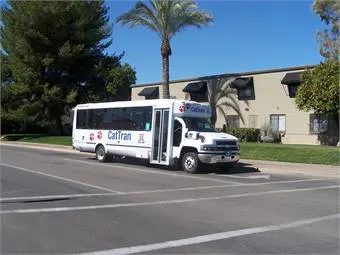
The largest service providing campus transportation, perhaps, is UA’s Cat Tran, which has 16 shuttles and 6 routes — the Orange, Purple, Teal, Green, USA and Nightcat Route. The shuttles run Monday thru Friday, with service running from about 6:30 am — 6:30 pm, depending on the route. The Night Cat late evening shuttle runs from 6:00 pm to 12:30 am, with a break from 8:00 am to 8:30 pm, according to Heineking.
“Our Cat Tran program currently has Schedules and routes on the Cat Tran are usually modified once a year,” he said. “This year, however, with the streetcar, we have to modify as we go along. As of right now there are no major changes planned for next year.”
The growth of public transportation to UA’s campus could be right on time. Over the past decade the average number of miles driven by people younger than 35 fell by almost 25%, according to survey data compiled by the U.S. DOT. The same group walked, biked and rode transit more.
Additionally, two-thirds of Y-Generation respondents said they preferred living in walkable or transit-connected urban neighborhoods, the Urban Land Institute and the National Association of Realtors independently reported last year.
The trend is also taking shape in Arizona, however it is less pronounced, according to the state’s Department of Transportation.
“If it is true, we’re glad to hear it,” said Heineking. “One of our main missions at PTS is to increase sustainable practices throughout the community. We are committed to reducing congestion and increasing air quality through the promotion of alternative transportation programs and expanding the use of commuter options.”
More Bus

New York MTA Plans Largest Bus Fleet Upgrade in More Than a Decade
The agency is seeking manufacturers for 650 new CNG buses to replace aging vehicles, improve reliability, and advance its broader fleet modernization strategy.
Read More →
Building a Flexible Path to Transit Electrification
John Hroncich discusses BAE Systems’ modular and scalable approach, lessons learned from decades of real-world operations, and how agencies can identify electrification strategies that fit their fleets.
Read More →
Bus Tech Talk: Keeping Transit Technicians Ahead of the Technology Curve
LA Metro’s Obed Mejia discusses technician training, evolving maintenance technology, fleet replacement, and strategies for getting the most out of today’s transit fleets.
Read More →
Biz Briefs: RIPTA Unveils New Frontrunners, Clevland RTA Adds New Siemens, and More
In METRO's latest installment, we take a look at recent news from Siemens, Prevost, Dodge, and more partnerships making headlines across the transportation sector.
Read More →
People Movement: Holly Arnold Joins Transdev and More
In this edition, we also cover recent appointments and announcements at Pace, CamTran, MCI, and more, showcasing the individuals helping to shape the future of transportation.
Read More →
The High Cost of Transit Buses: Industry Leaders Look to Procurement Reform
Transit leaders and policymakers examine how standardized bus designs, streamlined procurement, and predictable funding could help agencies stretch budgets and deliver better service.
Read More →
The Business Voice Behind Public Transportation
As chair of APTA’s Business Members Board of Governors, Ray Melleady explains how more than 850 business members are partnering with transit agencies to advance funding, innovation, and industry-wide collaboration.
Read More →
From Surviving to Thriving: Building Stronger Transportation Organizations
Bus Business Consultants founder Brian Dickson shares lessons on leadership, organizational health, and creating options for long-term success in a changing transportation industry.
Read More →
Finding the ‘Happy Medium’: Optimizing Maintenance Without Sacrificing Reliability
The key to maintenance optimization isn’t doing less work—it’s doing the right work at the right time on the right assets.
Read More →
LA Metro, City of West Hollywood, and Partners Advance Smarter Bus Lane Enforcement
The award-winning partnership combines AI-powered detection with human oversight to improve bus reliability, accessibility, and enforcement efficiency.
Read More →