



UT Survey: Student government crucial to university transit systems
Student groups in the forms of the student Senate, board, Resident Housing Association and advisory committees work closely with transit planners on routes, frequencies, and levels of service.

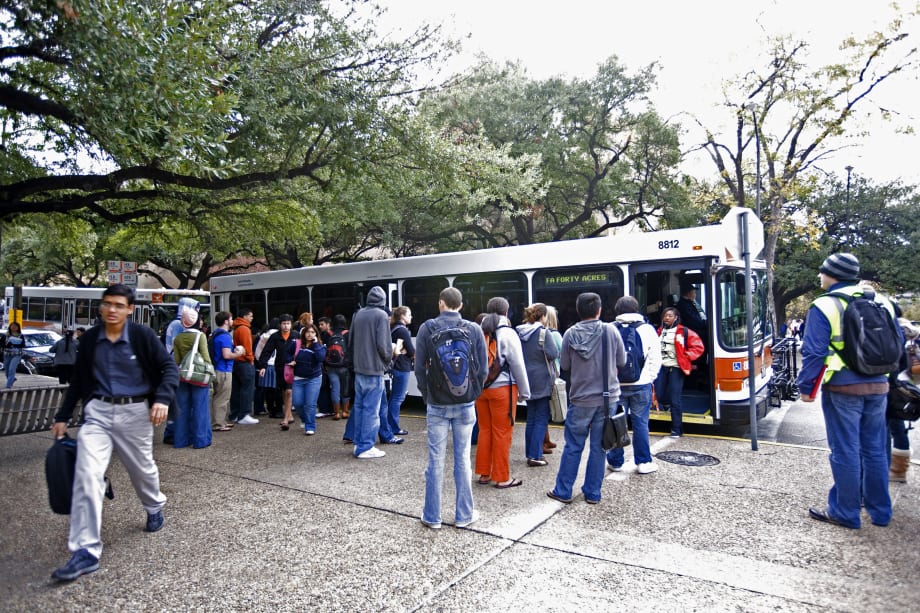
The most important step in planning bus route service and fees for university and college transit systems is considering the needs of students and how to tap their feedback. How do universities seek this out? We asked a handful of university transit system operators about the role student government plays in their planning process.
Here are their responses:
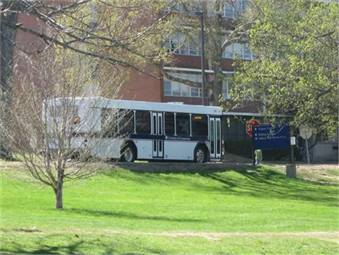
“The Undergraduate Student Government and Graduate Student Senate have representation on the Parking Advisory Committee. Before we make any major changes, as we are doing with four of our six routes for the upcoming academic year, we always present our thoughts, plans and data to this committee well in advance. We also have an ongoing/open line of communication with them for feedback throughout the academic year.”
Janet Freniere, manager, transportation services
University of Connecticut
Storrs, Conn.
“At the University of Texas at Austin, Parking and Transportation Services works very closely with Student Government representatives to provide a more efficient and effective shuttle bus service for the campus community. The student government representatives that are appointed to the shuttle bus committee provide valuable feedback to transit planners regarding routes, frequencies and levels of service each academic year. With the help of student government, Parking and Transportation Services is able to operate a program that has grown into one of the largest collegiate shuttle bus programs in the nation.”
Blanca Juarez, alternative transportation manager, parking and transportation services
The University of Texas at Austin
Austin, Texas
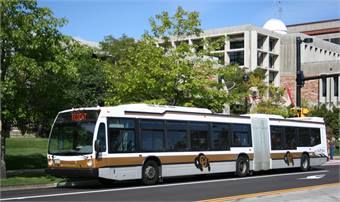
“Our Transportation Services division coordinates with the Resident Housing Association, which is the student government for residence halls on campus. Our Buff Bus service specifically services students living in off-campus dormitories. Transportation coordinates frequently to ensure quality service. Parking Services hosts an organization called Parking Management Advisory Committee, on which two Colorado University Student Government members serve. This committee is responsible for the oversight and input of amendments to parking regulations and other systematic structural implementation.”
Jena Cafiero, communications manager, parking & transportation services
University of Colorado Boulder
Boulder, Colo.
“We are run by student government. We have an eight-member student board. Two of the members are part of the student senate and the rest are students at large. This office is run on a $30 per semester student fee. A small portion of our funding comes from Main Hall — $35,000 annually. Otherwise the funding is a direct student fee overseen by students. This is a great way to run university transit and other transportation options on campus.”
Nancy Wilson, director, Associated Students of The University of Montana, Office of Transportation
University of Montana
Missoula, Mont.
RELATED ARTICLE: Click here, to read our previous UT survey on how universities are creating bike-friendly campuses.
More Bus

New York MTA Plans Largest Bus Fleet Upgrade in More Than a Decade
The agency is seeking manufacturers for 650 new CNG buses to replace aging vehicles, improve reliability, and advance its broader fleet modernization strategy.
Read More →
Building a Flexible Path to Transit Electrification
John Hroncich discusses BAE Systems’ modular and scalable approach, lessons learned from decades of real-world operations, and how agencies can identify electrification strategies that fit their fleets.
Read More →
Bus Tech Talk: Keeping Transit Technicians Ahead of the Technology Curve
LA Metro’s Obed Mejia discusses technician training, evolving maintenance technology, fleet replacement, and strategies for getting the most out of today’s transit fleets.
Read More →
Biz Briefs: RIPTA Unveils New Frontrunners, Clevland RTA Adds New Siemens, and More
In METRO's latest installment, we take a look at recent news from Siemens, Prevost, Dodge, and more partnerships making headlines across the transportation sector.
Read More →
People Movement: Holly Arnold Joins Transdev and More
In this edition, we also cover recent appointments and announcements at Pace, CamTran, MCI, and more, showcasing the individuals helping to shape the future of transportation.
Read More →
The High Cost of Transit Buses: Industry Leaders Look to Procurement Reform
Transit leaders and policymakers examine how standardized bus designs, streamlined procurement, and predictable funding could help agencies stretch budgets and deliver better service.
Read More →
The Business Voice Behind Public Transportation
As chair of APTA’s Business Members Board of Governors, Ray Melleady explains how more than 850 business members are partnering with transit agencies to advance funding, innovation, and industry-wide collaboration.
Read More →
From Surviving to Thriving: Building Stronger Transportation Organizations
Bus Business Consultants founder Brian Dickson shares lessons on leadership, organizational health, and creating options for long-term success in a changing transportation industry.
Read More →
Finding the ‘Happy Medium’: Optimizing Maintenance Without Sacrificing Reliability
The key to maintenance optimization isn’t doing less work—it’s doing the right work at the right time on the right assets.
Read More →
LA Metro, City of West Hollywood, and Partners Advance Smarter Bus Lane Enforcement
The award-winning partnership combines AI-powered detection with human oversight to improve bus reliability, accessibility, and enforcement efficiency.
Read More →