



N.Y. MTA revises advertising standards
The modification was prompted by a recent federal court decision that determined that MTA's "no demeaning standard" — a standard that had prohibited ads containing "images or information that demean an individual or group of individuals on account of race, color, religion, national origin, ancestry, gender, age, disability or sexual orientation" — was unconstitutional.

At a regularly scheduled meeting, the New York Metropolitan Transportation Authority (MTA) board modified the MTA's Advertising Standards, which were last addressed in 1997.
The modification was prompted by a recent federal court decision that determined that MTA's "no demeaning standard" — a standard that had prohibited ads containing "images or information that demean an individual or group of individuals on account of race, color, religion, national origin, ancestry, gender, age, disability or sexual orientation" — was unconstitutional.
In determining how best to respond to the court's decision, the MTA considered limiting the use of ad spaces in and on buses, subways, trains and stations across the board to ads of a commercial nature. However, many board members believed that ad space on the transportation system, in addition to serving as a very important source of supplemental revenues to support transportation, should continue to serve as a vehicle for a wide variety of communications, including ads of a non-commercial nature that express viewpoints on matters of public concern.
Accordingly, the MTA board decided to continue its policy of permitting both commercial and noncommercial advertisements, including ads expressing viewpoints on issues of the day. Of course, paid viewpoint ads contain the views of their sponsors, and the agency wants to make sure that its customers do not confuse them with expression of MTA's views.
To underscore the point, MTA’s revised advertising policy will require sponsors who submit viewpoint ads on political, religious, or moral issues or related matters to include a disclaimer on each such ad that makes this clear. Each such ad will be required to prominently include this disclaimer:
“This is a paid advertisement sponsored by [Sponsor]. The display of this advertisement does not imply MTA's endorsement of any views expressed.”
To be clear, the MTA said it does not believe the First Amendment compels the MTA to open up its ad spaces in this way to a wide range of expressive communications. MTA could, for example, adopt a narrower commercially oriented ad policy, one that limited the range of ads it will display to those selling a product or service, and by doing so, avoid having to run demeaning or divisive ads such as the AFDI ad that resulted in litigation. But, the MTA, for decades, has permitted its ad spaces to serve a broader communicative function than mere commercial advertising, and the board, reaffirms that tradition of tolerating a wide spectrum of types of ads, including ads that express views on a wide range of public matters.
More Bus
Biz Briefs: New Flyer Delivers in Columbus, Houston, Beep and Freebee Merge, and More
In this edition of Biz Briefs, we spotlight the latest developments shaping the future of mobility.
Read More →
People Movement: Dan Dipert Coaches Adds Third-Generation Leader, Keolis Names New Valley Metro VP/GM, and More
In this edition, we also cover recent appointments and announcements at the Wabtec, SilverRide, HNTB, and more, showcasing the individuals helping to shape the future of transportation.
Read More →
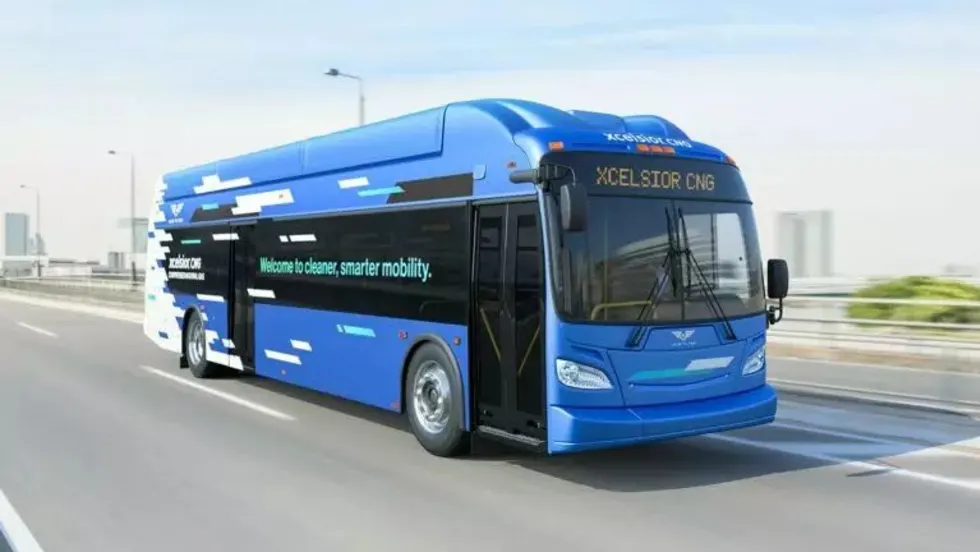
New York MTA Plans Largest Bus Fleet Upgrade in More Than a Decade
The agency is seeking manufacturers for 650 new CNG buses to replace aging vehicles, improve reliability, and advance its broader fleet modernization strategy.
Read More →
Building a Flexible Path to Transit Electrification
John Hroncich discusses BAE Systems’ modular and scalable approach, lessons learned from decades of real-world operations, and how agencies can identify electrification strategies that fit their fleets.
Read More →
Bus Tech Talk: Keeping Transit Technicians Ahead of the Technology Curve
LA Metro’s Obed Mejia discusses technician training, evolving maintenance technology, fleet replacement, and strategies for getting the most out of today’s transit fleets.
Read More →
Biz Briefs: RIPTA Unveils New Frontrunners, Clevland RTA Adds New Siemens, and More
In METRO's latest installment, we take a look at recent news from Siemens, Prevost, Dodge, and more partnerships making headlines across the transportation sector.
Read More →
People Movement: Holly Arnold Joins Transdev and More
In this edition, we also cover recent appointments and announcements at Pace, CamTran, MCI, and more, showcasing the individuals helping to shape the future of transportation.
Read More →
The High Cost of Transit Buses: Industry Leaders Look to Procurement Reform
Transit leaders and policymakers examine how standardized bus designs, streamlined procurement, and predictable funding could help agencies stretch budgets and deliver better service.
Read More →
The Business Voice Behind Public Transportation
As chair of APTA’s Business Members Board of Governors, Ray Melleady explains how more than 850 business members are partnering with transit agencies to advance funding, innovation, and industry-wide collaboration.
Read More →
From Surviving to Thriving: Building Stronger Transportation Organizations
Bus Business Consultants founder Brian Dickson shares lessons on leadership, organizational health, and creating options for long-term success in a changing transportation industry.
Read More →