



Pittsburgh bus to help fill commuter service gap
Costing $69 each way, the new Steel City Flyer service between Pittsburgh and Harrisburg launched successfully in November.
Travelers to and from Pennsylvania were given a new transportation option for a route that had been mainly dominated by automobiles. In late November, the Steel City Flyer, a business-class bus service between Pittsburgh and Harrisburg, was launched.
Henry Posner III, chairman of Railroad Development Corp. (RDC), which focuses on international rail investments, along with Robert Pietandrea, president, founded the service with Robert DeBolt of bus travel company DeBolt Unlimited.
The Steel City Flyer will serve two separate markets: trips to Harrisburg as an actual destination and connections to Amtrak at the Harrisburg Transportation Center.
Amtrak has started running faster and more frequent service to destinations east of Harrisburg, and the Flyer will supplement the less-serviced route to and from Pittsburgh.
A frequent traveler himself, Posner has had to coordinate his own intermodal transportation routes due to flight cancellations. US Airways cut the only direct flights between the two cities in September, leaving travelers with the options of several Greyhound buses and a once-daily Amtrak train. Most travelers opt to drive between the cities through the Pennsylvania Turnpike. “A light bulb finally went off that this might be worth doing in the Pittsburgh market,” he said.
The first routes will run on two 50-passenger Daimler Buses North America Setra S417 buses, leased until permanent buses are custom-ordered. The service offers amenities similar to those in airplanes, such as attendant service, reading lights, reclining seats, pillows and movies. Marketed toward businesspeople with limited time, it also offers Wi-Fi and laptop desks, enabling travelers to work while on the bus.
The bus service’s inaugural run in November was deemed a success. After “the start-up phase,” the trio plans to expand the business, with hopes to integrate their service into the Amtrak Website. “The objective is…when you go to the Website, you will see us as one of the Amtrak options out of
Pittsburgh,” said Posner. “There would be coordinated schedules and true pricing, and we would become part of the Amtrak network.”
Currently, tickets cost $69 each way in comparison to a $70 round-trip ticket with Greyhound and a $36 one-way train ticket with Amtrak.
However, Posner figures the Flyer isn’t competing with either of these — it’s going after a different market. He estimates the competition to be air travel and the personal automobile, but since direct flights have been canceled between the two cities, travelers find themselves with fewer choices. The Flyer hopes to offer travelers another alternative.
“Most travelers are not interested or able to put the pieces [of intermodal transport] together. We’re creating value by putting the pieces together for them. More importantly, we’re coming up with the biggest missing piece, which is the scheduled bus service built around the Amtrak schedule,” said Posner. “It should be an attractive alternative.”
More Management
Joshua Schank on Transportation Innovation, Risk, and the Future of Mobility
In this edition of METROspectives, Joshua Schank discusses lessons from launching LA Metro’s Office of Extraordinary Innovation, the challenges of advancing new mobility technologies, and much more.
Read More →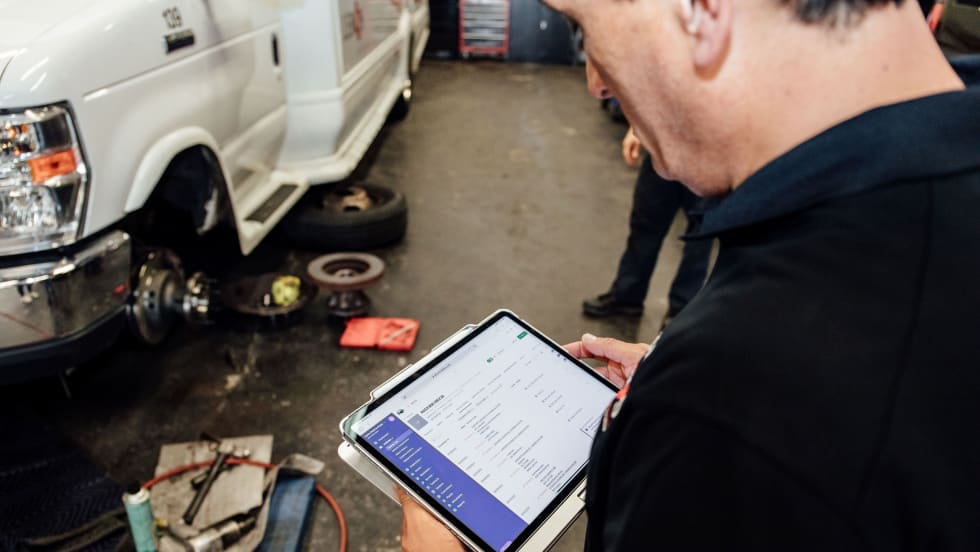
Reinventing Fleet Maintenance with Real-time Visibility and AI
Transit leaders need to know what needs fixing, where to look, who is responsible, when work is completed, and what it costs without having to chase information across disconnected systems.
Read More →
Alstom Acquires Delaware Site to Support Amtrak NextGen Acela Fleet
The company is investing more than $55 million to acquire and improve the property and will employ approximately 100 people at this site once it is operational.
Read More →
SamTrans Sets Priorities for Potential Connect Bay Area Revenue
The board-approved framework allocates future funding to maintaining service, rider improvements, equity initiatives, and infrastructure repairs.
Read More →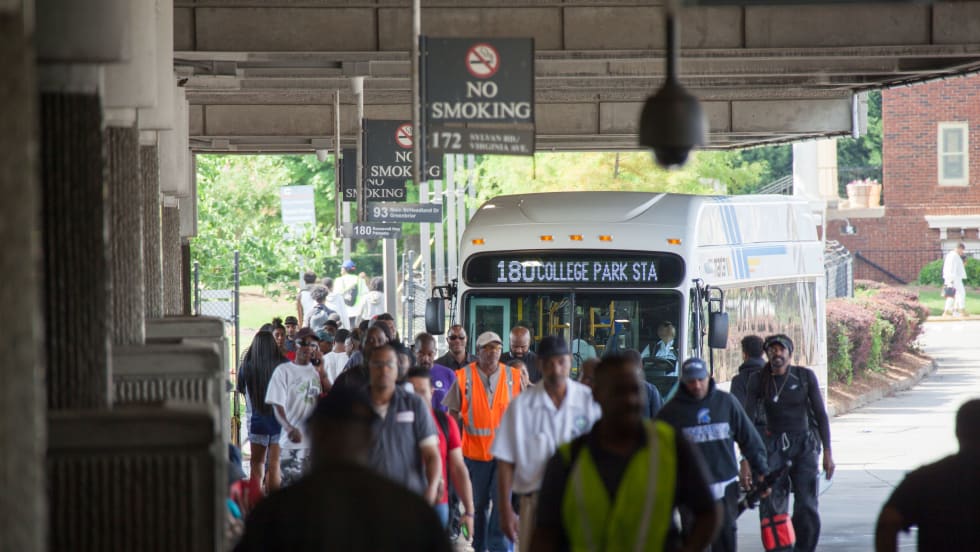
Federal Transit Officials Launch MARTA Safety Probe
FTA has given MARTA 15 days to provide records on crime prevention, fare evasion enforcement, and security funding as part of a broader safety investigation.
Read More →
ABA's Ferguson Testifies in Support of BUS Act, National Standards for Bus Operators
The BUSES Act would create a nationwide framework preventing state and local governments from enforcing bus idling restrictions of less than 15 minutes, a threshold consistent with existing Environmental Protection Agency guidance.
Read More →
When Routine Fails: How Public Transit Must Adapt for the World Cup
The 2026 FIFA World Cup will test transit agencies’ ability to manage unpredictable travel patterns, making real-time data and operational flexibility critical to moving millions of visitors efficiently.
Read More →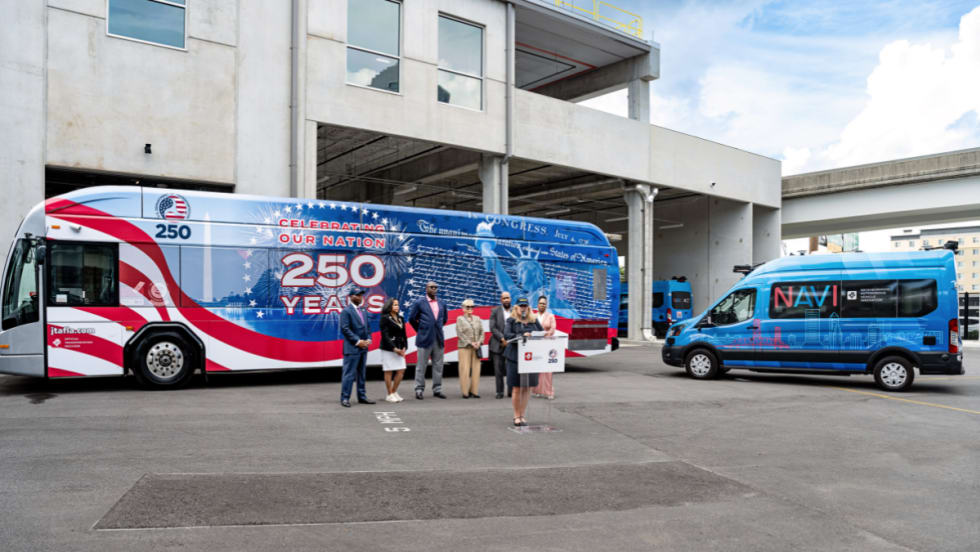
Florida’s JTA Puts Innovation in Motion Ahead of America250
The agency unveiled a commemorative America250 bus during a visit from U.S. DOT's Seval Oz and showcased its autonomous mobility programs.
Read More →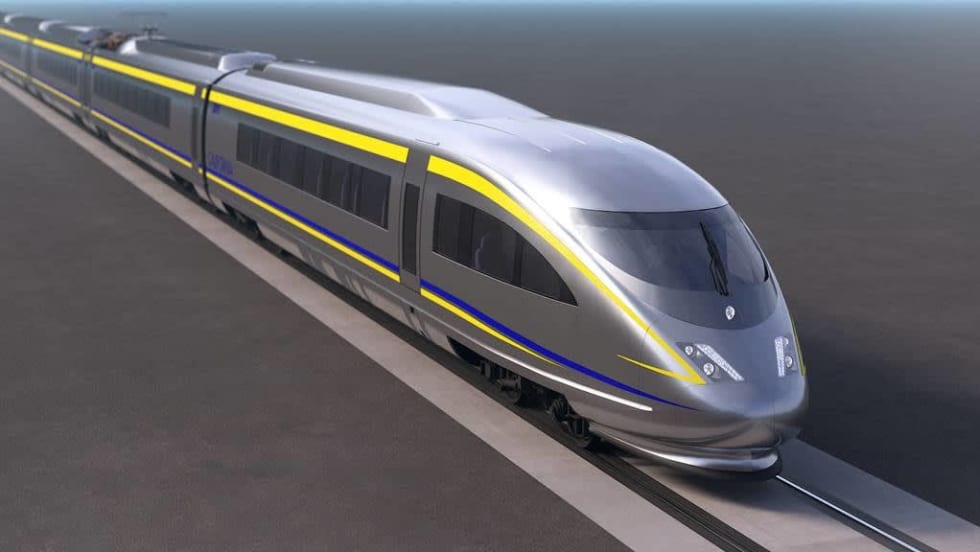
California Selects Team for Nation’s First True High-Speed Rail Track and Systems Contract
The board action follows completion of track installation at the 150-acre southern railhead in Kern County, which will serve as the staging and distribution hub for high-speed track and systems installation.
Read More →
IndyGo, Cleveland RTA Expand Digital Fare Payment Options with Masabi
The new systems combine mobile apps, smart cards, and automatic fare capping to simplify payments, expand flexibility, and help riders access the lowest available fares.
Read More →