



Greyhound Leads the Way by Equipping Fleet with Seat Belts
The North American carrier recently added advanced seating technology, which combines three-point lap-and-shoulder belts with compartmentalization, further enhancing the safety of their Northeastern fleets.

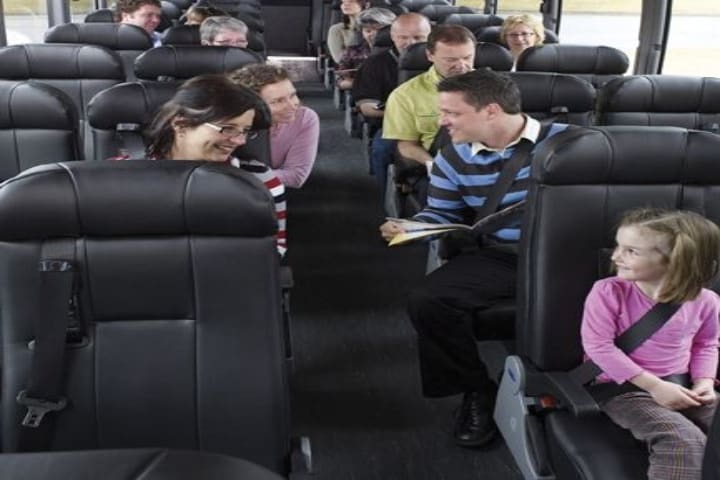
[IMAGE]MET6Seatbelts.jpg[/IMAGE]There are currently an estimated 35,000 motorcoaches on the road in the U.S., according to the American Bus Association (ABA). As the National Highway Transportation Safety Administration (NHSTA) completes crash and rollover testing, an increasing number of carriers are looking to install seat belts on their coaches, if they haven't done so already. Greyhound recently equipped its fleet of 140 Prevost X3-45 motorcoaches with belted seats supplied by SafeGuard, a division of Westfield, Ind.-based IMMI. Thirty-eight of the newly equipped vehicles will be used for the carrier's BoltBus service.
The new Premier seats, featuring lap-shoulder belts and exclusive SmartFrame technology, offer full compartmentalization protection in frontal crashes, even for unbelted passengers. The seat has two structures: the inner structure provides lap-and-shoulder belts and absorbs crash energy for the belted passenger, while the outer seatback structure remains vertical and then yields as it cushions and absorbs the energy of anyone in the seat behind who isn't wearing a seat belt.
The Premier debuted on the coaches ordered by Greyhound in early April. The first coaches in the new fleet are assigned to the New York-to-Montreal, New York-to-Toronto and New York-to-Boston routes. Eventually, Greyhound plans to replace the entire nationwide fleet.
Greyhound spokeswoman Abby Wambaugh explained that IMMI did the testing on the buses, ensuring that the seat belt and seat structures worked both in conjunction with each other and separately.
As Greyhound prepared to order new coaches, they revisited all areas of the coach, including different safety features newly available. "As coaches have updated, there are more features available, different things that work better together. As technology improves, so do aspects of safety and environmental impact," she says.
Wambaugh adds that the older seats also feature compartmentalization, but the latest seats have the additional feature of the seat belts.
While the federal government does not yet require seat belts in large buses, Greyhound is the first line haul carrier in the industry to equip its coaches with belted seats, addressing one of five federal highway safety priorities on the National Transportation Safety Board (NTSB) Most Wanted List of Transportation Safety Improvements for 2008.
"The entire seat, all parts of it, is made to be the safest seat out there. And that's what we want, as we purchase new buses, the best of each area, and that includes the safest seats as well," Wambaugh says.
Premier, now available on Prevost coaches, is available to the motorcoach market through a partnership between SafeGuard and Grand Rapids, Mich.-based American Seating.
Testing partnership
Through SafeGuard's work in the yellow school bus industry, they have a long-standing relationship with First Group, the company that owns Greyhound. Since both companies had struggled for years with the dilemma over whether to install seat belts, they decided to team up. "Nobody had stepped up and performed any testing," says James Johnson, director of sales, SafeGuard, IMMI. Through their relationship with First Group, SafeGuard met with engineers at Greyhound, who wanted to know more about their school bus seating system and the potential for the technology to be used in motorcoaches. That partnership ushered in an entirely new set of challenges that started SafeGuard's safety development protocol.
[PAGEBREAK]
Steps to safer seating
Johnson explains that when working with Greyhound or any other carrier, the manufacturer employs detailed safety development protocol for any new safety product that they develop, using four major steps.
The first step, he says, is to understand the problem. "How are passengers being injured and killed in the vehicle you are evaluating? We look at trends and statistics, [examine] the insides of vehicles after crashes and look for sharp objects, footrests, armrests, tray tables and their placement, which could cause injury," says Johnson.
Second, they review the ridership population, which means finding out the range of occupants that need protection. In a school bus, the typical riders are children, from approximately age six to 17. However, in motorcoaches, the possibility of passengers' sizes to range from infants through very large adult riders is an everyday occurrence, so the ridership population requires a wider range of protection.
The third step is to assess the current level of safety. The partners reviewed the current safety level in motorcoach travel, what the seating suppliers offered, and what would happen in a severe frontal collision or rollover then began a baseline evaluation. In this particular case, they looked at the type of crash forces passengers would experience in a severe frontal collision, based on what NHTSA derived from crash testing a motorcoach in December 2007. "We duplicated that with dynamic sled tests," says Johnson.
What was concluded from those results and in comparing what they found to the definition of compartmentalization in Federal Motor Vehicle Safety Standard 222 (FMVSS 222) for school buses was that the motorcoach seating systems that they evaluated did not demonstrate any form of compartmentalization.
In addition to considering the variety of ages and sizes of passengers, another factor is whether those passengers are restrained. "Here in the U.S., seat belt usage is at a record all-time high, but it's [still] only 83 percent. We know there's a strong possibility that passengers will get in a motorcoach and not buckle up. The compartmentalization became an important element," Johnson says.
SafeGuard took all the results and started work last July on the SmartFrame seat, realizing step four of their safety protocol: developing a product that can demonstrably improve safety.
Offering flexible protection
SmartFrame technology combines lap-and-shoulder belts to provide additional protection for restrained passengers from four-year-olds to large adults, yet maintains the compartment, taking care of the unrestrained passengers as well. With the adjustable lap-and-shoulder belt, even children can sit in the adult belt, because an adjustor enables it to properly fit the child. No booster seat is required.
Johnson describes how the technology works in a collision. "If I'm wearing a lap-and-shoulder belt in a severe frontal collision, I'm going to pull the seat away from the passenger in the back. If he's not wearing his seat belt, then he loses his compartmentalization protection. With SmartFrame, the inner frame with the belts attached [can] rotate forward and absorb the energy of the belted occupant, and leave the outer frame upright." The outer frame cushions and absorbs the energy of the possibly unrestrained passenger in the seat behind.
The only other belts that had ever been available before were lap belts, which were not designed to improve vehicle crashworthiness (defined as how well the vehicle protects occupants in a crash). While lap belts are designed to simply keep a rider in the vehicle, lap-and-shoulder belts absorb the upper-body energy, and are designed to improve vehicle crashworthiness, to mitigate injuries and fatalities.
[PAGEBREAK]
Positive Response
However, any type of seat belt will provide some protection in rollovers. The danger in rollovers is ejection. "With every vehicle that [used] lap-and-shoulder belts, injuries and fatalities have been reduced by 45 percent," says Johnson. The same statistic proved true for truck drivers when they started wearing lap-and-shoulder belts. Heavy Class A trucks now offer lap and shoulder belts as a standard. "Our testing indicates you'd expect the same thing [for motorcoach riders]." Johnson says. "You see much lower injury numbers with crash test dummies in lap-and-shoulder belts."
Up until now, however, the technology hasn't been available to motorcoach carriers. "The main concern [in the industry] is...if you pull the seat back away, you're going to lose protection for the unrestrained, but whenever we showed the industry SmartFrame technology, the response has been overwhelmingly positive," says Johnson.
Following Greyhound's lead, a few other charter manufacturers have made purchases of new Prevost buses with the Premier seat, and IMMI has commitments from four other manufacturers to include the Premier as an option. "We applaud Greyhound for their leadership position, and this whole endeavor. We're excited about moving forward as we strive to continually change the discussion about motorcoach safety," says Johnson.
More Motorcoach
Reinventing Fleet Maintenance with Real-time Visibility and AI
Transit leaders need to know what needs fixing, where to look, who is responsible, when work is completed, and what it costs without having to chase information across disconnected systems.
Read More →
ABA's Ferguson Testifies in Support of BUS Act, National Standards for Bus Operators
The BUSES Act would create a nationwide framework preventing state and local governments from enforcing bus idling restrictions of less than 15 minutes, a threshold consistent with existing Environmental Protection Agency guidance.
Read More →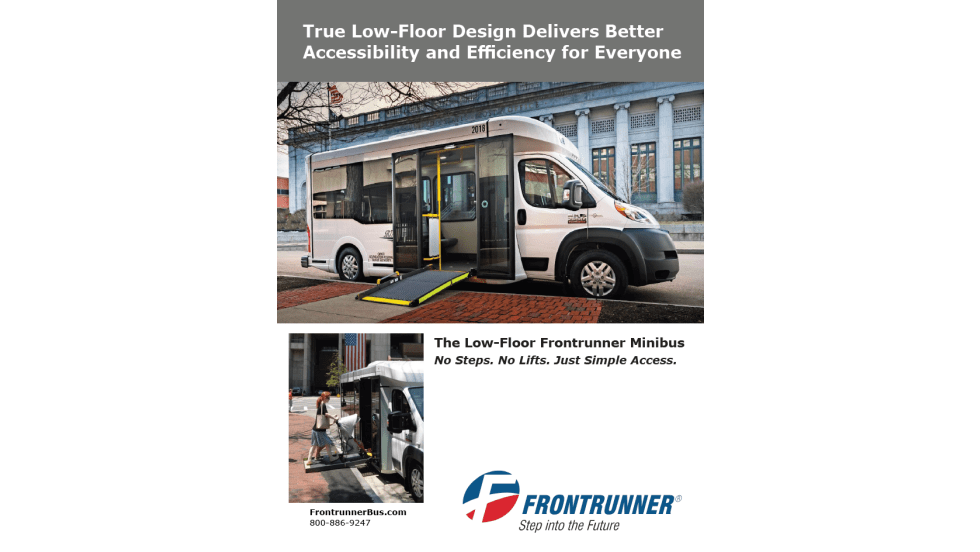
A True Low-Floor Minibus Design Delivers Better Accessibility and Efficiency for Everyone
As transit demands evolve, so should your fleet. Download the whitepaper to see how the Low-Floor Frontrunner Minibus compares to traditional options.
Read More →
2026 METRO Buyer’s Guide & Directory
Searching for the right vehicles, technology, equipment, or services for your public transit or motorcoach operation? This industry guide brings together manufacturers and suppliers from across the transportation market — all in one place. Download it to connect with the companies that help agencies and operators improve mobility, enhance operations, and move their organizations forward.
Read More →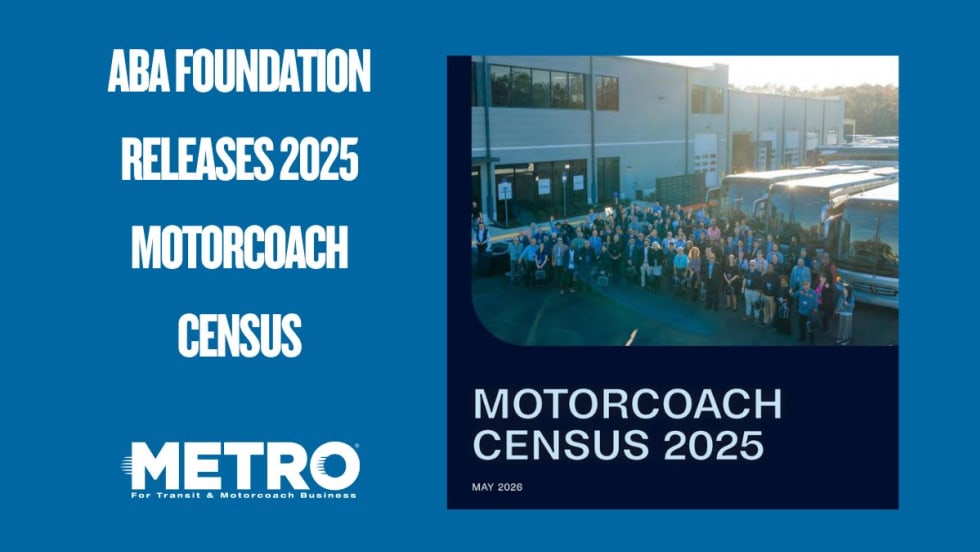
ABA Foundation’s 2025 Motorcoach Census Highlights Industry Growth, 77K Jobs
Conducted annually by Tourism Economics, the study found that 1,769 companies operating 49,543 motorcoaches are based in the US, while 122 companies operating 1,425 motorcoaches are located in Canada.
Read More →
ENC Lands Additional 10-Bus Order From Academy Bus
The latest purchase brings Academy Bus’ AXESS fleet orders to 35 vehicles as ENC continues expanding its heavy-duty transit lineup.
Read More →
American Bus Association Files Lawsuit Against NYC Over Bus Idling Rules
The lawsuit, filed in the U.S. District Court for the Southern District of New York, challenges the City’s use of its Citizens Air Complaint program.
Read More →
Avoiding Mid-Season Breakdowns: A Fleet Readiness Q&A
John Hatman, COO of Master’s Transportation, breaks down the priorities, warning signs and common mistakes fleet managers should address now to stay ahead of summer demand.
Read More →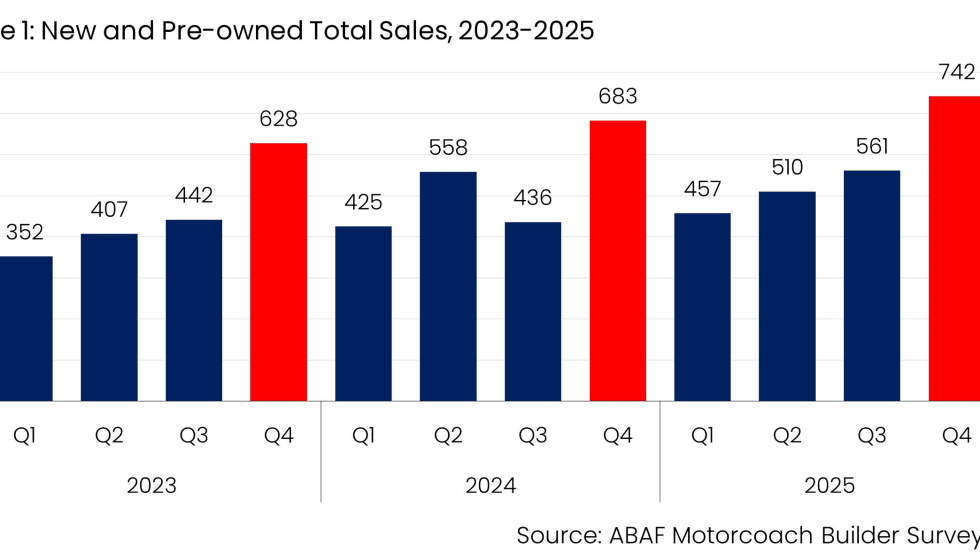
ABA Report: Motorcoach Sales Tick Up in Q1 2026 as Market Stabilizes
The Foundation produces the report each quarter, using data collected from surveys of major motorcoach manufacturers that sell vehicles in the US and Canada.
Read More →
How the Motorcoach Industry Supports Disaster Response and National Preparedness
Fred Ferguson, president and CEO of the American Bus Association (ABA), discussed how the industry prepares for emergencies, the growing recognition of motorcoaches as critical infrastructure, and steps operators can take to strengthen disaster readiness.
Read More →