



Transit Art Optimizes Form and Function
From initial station design to final installation and opening to the public, the process of incorporating works of art into transit systems involves both transit and art professionals, as well as community members.
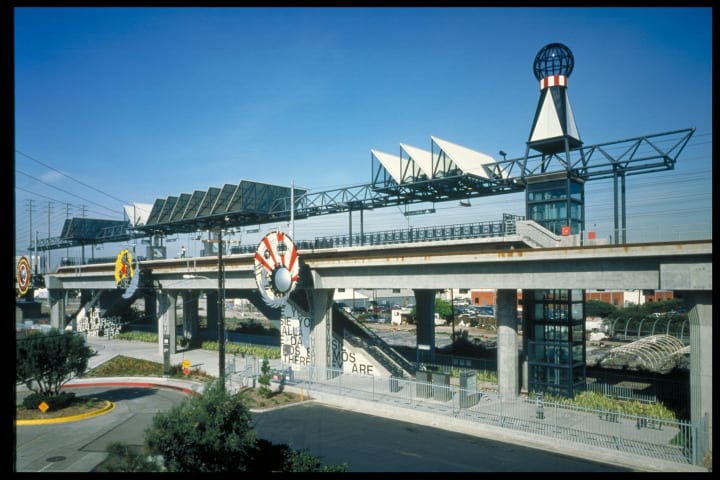
[IMAGE]Art1.jpg[/IMAGE]Transit stations and stops provide the ideal venue for public art, but the process of selecting works to install is lengthy. This does not deter transit agency staff members, who share a common goal in picking artwork that reflects the local community and makes riding transit a more enjoyable experience.
Getting started
Harvey Berliner, a consultant with InfraConsult in Honolulu, gives a presentation called "Art in Transit" at transit association conferences; and as chief facilities engineer in the rapid transit division for the city of Honolulu, he is working with the local government to include art in the design and construction of the local transit system.
Berliner says that attention to budget requirements is a necessary first step in transit art planning. "Most cities require that a certain percentage of the station cost be allocated to art," he explains. The source of funding in some cases determines the scope and theme of art projects, but also plays a role in artist selection. Maya Emsden, deputy executive officer of Los Angeles County Metropolitan Transportation Authority's (L.A. Metro) creative services department, says the agency maintains a database of about 3,000 artists from across the U.S. "If it's federally funded, we do a national call [for artist qualifications], if it's purely state funded, we do a California call," she says.
At TriMet in Portland, Ore., Public Art Manager Mary Priester says that every budget for transit construction includes money for art, as long as the project budget totals more than $100,000. "The real money for our work is generated through the large capital projects," she says.
Working with artists
In order to contact artists with art opportunities, Priester says she uses a mailing list maintained by the Regional Arts and Culture Council in Portland and posts a notice in their newsletter and bulletins. Artists can also sign up via the TriMet Website to receive e-mail notifications of any upcoming commissions.
Berliner has experience working with transit art projects in New Jersey, including the Hudson-Bergen light rail system and Newark City Subway extension. "What I've done in the past and hope to do here in Honolulu is have a lead artist for each station or station group, and that lead artist would be able to help guide the other artists."
Many transit agencies put together a committee to lead the art selection process, typically involving people from a municipal arts agency, transit staff and community members who support arts in the community. Berliner says that this committee makes the major decisions about art selected for each project, but that day-to-day organizational duties might be assigned to an art coordinator hired by the transit agency.
"A transit art project administrator would be responsible for writing up the program, working with the architects, identifying potential art projects and working on the budget," he explains. "The administrator would make sure the artists are proceeding according to schedule and work with contractors."
At TriMet, the committee process generally takes three or four years, Priester says. "We get together at the beginning of final design for the whole project, which is a year-long process. Then there are a couple years of construction, with art installation at the tail end," she says. "The people on the committee are our heroes because they're all volunteers and they're committed to the arts and their communities and making sure the work that goes in is of the highest quality."
MB Finnerty is the public art administrator for Phoenix's Valley Metro light rail system. Each city the rail line goes through contributed a percentage of funding for the project, as well as representatives to sit on the system's Regional Rail Arts Committee (RRAC). Community members and art professionals also served as committee members. "We divided the line into five sections and selected five artists to work with the architectural teams for each section," Finnerty says.
Together, the design team created a theme for their section and identified art opportunities at each station, such as designated sites for integrated artwork and stand-alone sculptural pieces. Following the same schedule as that laid out for the architects, the art proposals would go through an internal Valley Metro review for safety and maintenance, a review by the RRAC, then to a public meeting. Finnerty also made presentations on the art proposals to different city groups along the way.
Working with other agencies
Local agencies can guide artist selection and connect transit agency staff with art professionals and other resources. In his experience, Berliner has worked with both state and municipal art agencies. "In New Jersey, you have the State Council on the Arts (SCA), and we worked closely with the representative from the SCA, who helped guide us through artist selection," he says. "In Honolulu, they have a mayor's council on culture and the arts responsible for art on the island of Oahu."
As L.A. Metro's Emsden sees it, the expertise of both transit and art professionals is needed to successfully plan and install public art. "We as staff know what works in the transit system and what doesn't, so we're the ones developing the appropriate materials and locations for artwork within our system," she says. "We have hundreds of art organizations here in L.A., so we engage them either as part of our art advisory groups or our artist selection panels. So, the selection is done entirely by peer review with community input, not by staff."
Thus, transit employees are able to identify materials, location, and engineering and maintainability standards, while local museum curators, nonprofit arts organization staff and working artists provide input, along with community members to guide the creative and interpretive role of the artworks.
For agencies with dedicated public art staff positions, communicating with other departments within the transit agency is important, according to Priester, who keeps in contact with designers, capital project staff, maintenance, landscape and operations staff. "It's been important for us to be embedded and understand all the concerns of other staff, especially with the safety and maintenance issues that are unique to transit," she explains.
[PAGEBREAK]
Integrating into facilities
In Honolulu, Berliner wants artwork to be integrated into the transit stations. "You want the art to define the community to give people a sense of belonging to the station," he says. "We don't want plop-in art; we want integrated art."
The philosophy of integrated art is fairly universal among transit professionals. "When we hire an artist to design artwork for a station, one of their primary tasks is to get to know the community around the station," Priester says. "Our belief has always been very strong that the art needs to be a reflection of the place."
Indian School station on the Valley Metro light rail line features artwork that tells the story of the place's history, according to Finnerty. "It's right across the street from Indian School Park, which originally was a Native American boarding school with a very controversial history," she explains. "The artist from Tucson took time to interview tribe members in the area and took a lot of photos. She took their interviews with comments on their lives and reflections on how things used to be and incorporated that into the station."
While project staff members aim to integrate artwork into station designs, the artists and designers are often limited due to space constraints and other physical aspects of transit construction. "Because it's a transit space, there are a lot of rules and regulations in terms of the number of people the station has to accommodate," Finnerty explains. In addition, transit agency staff must also take outdoor temperature conditions, the possibility of graffiti, and safety and security concerns into consideration. On top of that, the goal is to keep transit users entertained and interested, she says.
Artists who contributed designs for the Phoenix system incorporated elements that would take advantage of the environment. "Several of the artists worked with our sun, creating pieces that cast amazing shadows during the different times of day," Finnerty says. "One team created a solar calendar, so on the twenty-first of every month, the sun shines through holes cut into metal fins and hits a metal disk in the entryway. At each station, the art was integrated in with a lot of little hidden discoveries like that."
"We're very fortunate to have our own in-house staff because we're able to deal with things very specific to the transportation industry, like maintainability," says L.A. Metro's Emsden. "A transit station is very different from the lobby of an office building, where things are more protected from the elements, whereas our stations are sat on, leaned against and heavily used. That's the staff's role - ensuring that maintainability and longevity are addressed."
Function of transit art
Artists designing for TriMet brought to light the history of the region, Priester says. For example, a project at the Expo Center consists of timber gate structures that memorialize the Japanese Americans interned at the site in 1942 during World War II. The gates mimic traditional Japanese structures, which mark the entrance to a sacred location. "They remind visitors and the local community, who may have lost track or never even knew this happened here," Priester says. The gates are also decorated with metal tags that resemble the identification tags internees wore around their necks; there is one tag for each detainee who was interned at the site. "They move and catch the light, making sound and providing a full-dimensional, active experience," Priester says.
However, sometimes transit art is more embedded and doesn't always jump out at you, she says.
Completion and celebration
When the long design and construction process is over, it's time for celebration and welcoming the public to view the new works of art. While most new transit lines receive a grand opening of some sort, Valley Metro wanted to highlight the art in a separate ceremony.
"We had a grand opening for Metro, but we knew that it was going to be a really humongous event and I felt that it was going to be so crowded and so huge that the artwork might be lost," Finnerty explains. "So, I worked with people here at Metro, and we created an art opening where I invited essentially all of the volunteers because they numbered in the hundreds by the time we were done."
Attendees had the opportunity to ride the trains before they were opened to the public, and enjoyed a reception, where they received a glossy catalogue with photos of all the art installations along the light rail line and had the chance to meet the artists.
More Bus

Finding the ‘Happy Medium’: Optimizing Maintenance Without Sacrificing Reliability
The key to maintenance optimization isn’t doing less work—it’s doing the right work at the right time on the right assets.
Read More →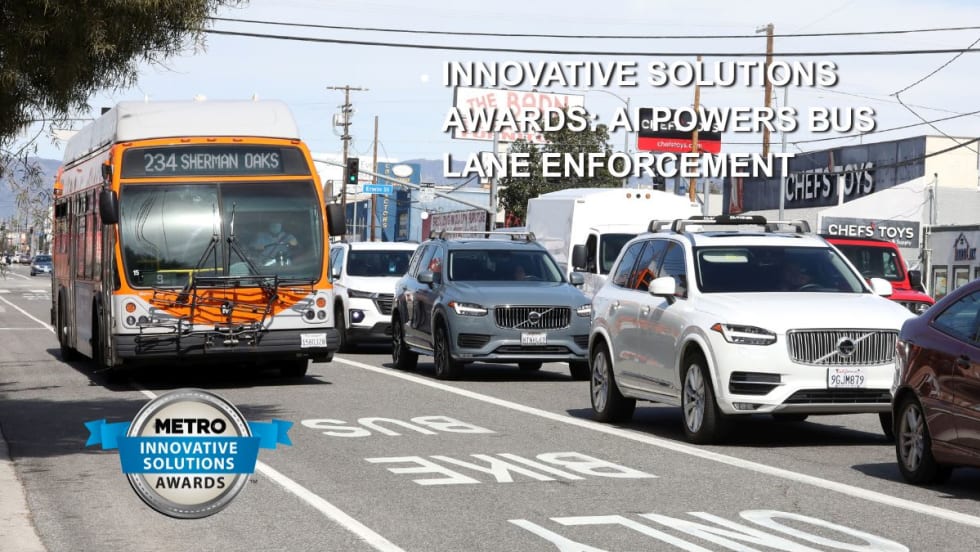
LA Metro, City of West Hollywood, and Partners Advance Smarter Bus Lane Enforcement
The award-winning partnership combines AI-powered detection with human oversight to improve bus reliability, accessibility, and enforcement efficiency.
Read More →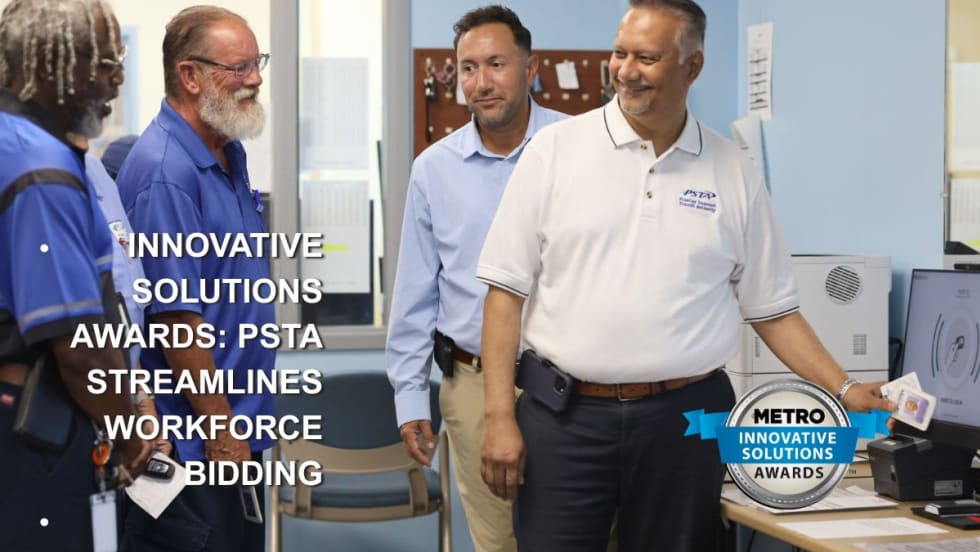
PSTA Modernizes Workforce Management with Digital Bidding System
The award-winning Workforce Transit Modernization project replaced paper bidding with a transparent digital platform, cutting administrative effort while improving access for operators.
Read More →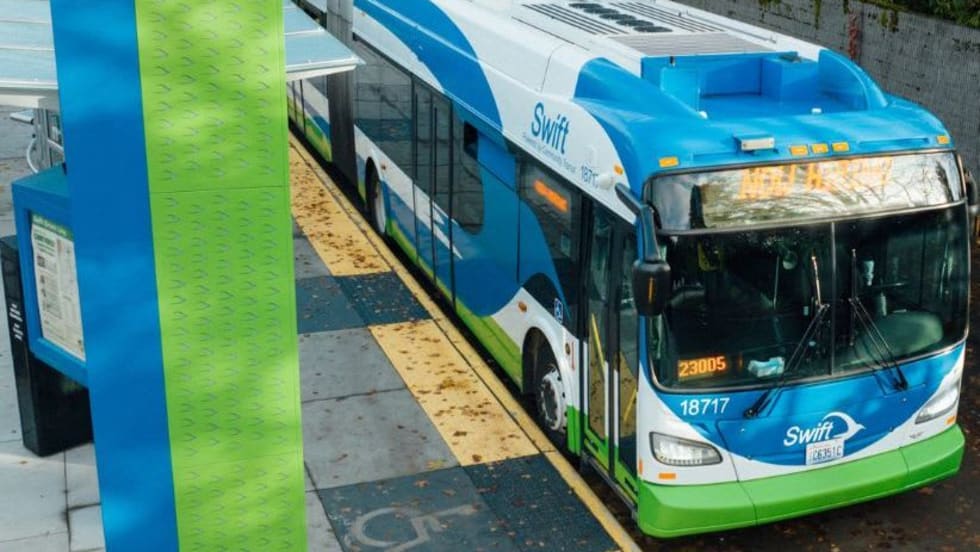
Washington's Community Transit Sets Six-Year Roadmap for Growth, Expansion
Approved TDP targets more bus service, new mobility options, Swift BRT expansion, and a potential Everett Transit annexation.
Read More →
DART Customer Satisfaction Reaches Six-Year High
Overall satisfaction rose to 74.9%, while the agency’s Net Promoter Score reached a record 33.7.
Read More →
How DART's GoPass Is Redefining Regional Mobility
Serving 14 transit agencies, GoPass simplifies multimodal travel by allowing riders to plan, pay for, and manage an entire trip through one app.
Read More →
Biz Briefs: OCTA Taps Clean Energy for Hydrogen Station, Stadler to Supply Via Rail Vehicles, and More
From manufacturers and suppliers to transit agencies and motorcoach operators, these updates offer a snapshot of the projects, partnerships and business moves driving the industry forward.
Read More →
METRO Magazine Announces 2026 Innovative Solutions Awards Winners
Projects Recognized for Advancing Mobility Through Technology, Accessibility, Workforce Innovation, and Operational Excellence
Read More →
Biz Briefs: STV teams with Amtrak, Motorcoach Operators Boost Fleet and Land Contracts, and More
From manufacturers and suppliers to transit agencies and motorcoach operators, these updates offer a snapshot of the projects, partnerships and business moves driving the industry forward.
Read More →
LA Metro Marks Banner Year, Sets Ambitious Goals for New Fiscal Year
Incoming LA Metro Board Chair and Los Angeles Mayor Karen Bass joined outgoing Board Chair Fernando Dutra and LA Metro CEO Stephanie Wiggins to review accomplishments from fiscal year 2026, which included the opening of new rail extensions, advancement of major transit projects, expanded safety programs, and new rider amenities.
Read More →