As economic conditions have put increasing pressure on transit agencies in recent years, some are looking to their parts and inventory systems to be streamlined or even outsourced.
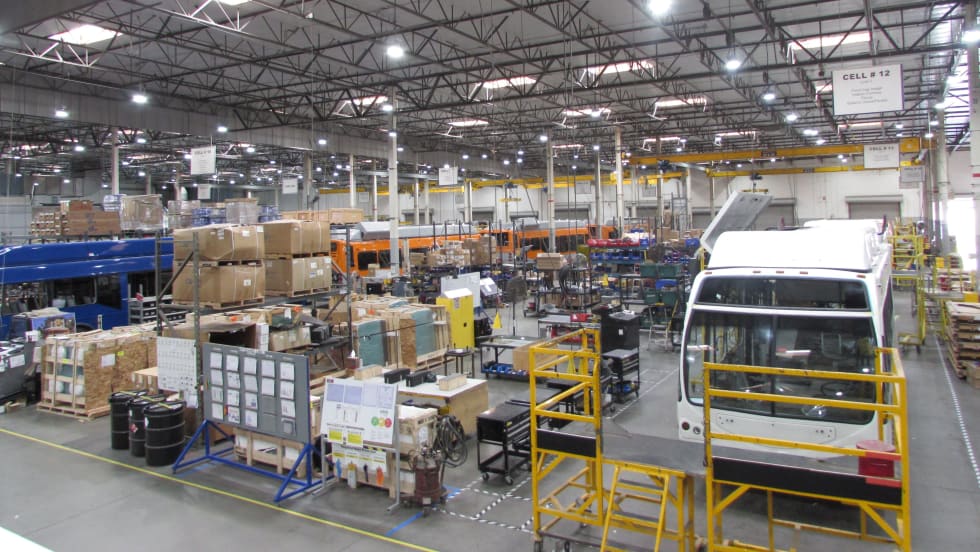
Hans Peper, executive vice president of customer services for New Flyer Industries, says that he has seen changes in buying patterns among the company's customers recently. "We're talking daily spot buys, many more rush orders and a general move to just-in-time deliveries as less inventory is being kept on hand," he says. He sees a greater sense of urgency and openness to transitioning inventory management to outside vendors.
Thus, New Flyer is looking at ways to serve customers' changing inventory needs. "The supply chain needs to be more responsive because the customers can't really rely on their own inventories. We have been preparing ourselves to develop systems to do it just as well or better than the customer used to do it themselves," Peper says.
"The financial crisis has forced people to look at how they spend money and where money is held," says Raymond Melleady, vice president of parts management services at Honey Brook, Pa.-based Neopart, who also has a background in transit operations and maintenance. "I've been in front of the public when bus fares are increased, and you want to ensure that your financial house is in order before looking for additional fare revenue."
After being acquired in 2007 by investors with substantial supply chain outsourcing expertise, Neopart invested heavily in developing its transit parts management services over recent years, gaining much experience from designing a contract with the Southeastern Pennsylvania Transportation Authority (SEPTA), among other agencies.
"Parts management programs can be all-encompassing, where the vendor would handle procurement of materials, storage, information management, warranty, issuance of materials and replenishment," Melleady says. "With this model, the transit property doesn't own any inventory and purchases only what they use, saving substantial holding costs."
Neopart also offers programs where only certain parts are provided — such as low-cost, high-volume parts — or in which storage is not part of the package.
"Inventory is the unwanted asset," Melleady says. "They need it there when they need to fix a bus, but you don't want to hold too much inventory."
Less inventory, lower costs
Buying lower quantities of parts more frequently can help reduce inventory, but doing so may increase administrative, handling and other costs while only capturing part of the savings. According to vendors, a comprehensive approach to outsourced inventory management enables transit agencies to save on the total cost of procurement. "Transit properties hold large inventories because they cannot afford to have buses out of service. Our systems are designed to maximize availability with minimal investment in inventory," Melleady says.
He explains that the full cost of procurement can include personnel needed to develop contracts, legal staff to review contracts and stockroom managers who process orders. "When you look at the overall cost to administer inventory in a transit system, they can be anywhere from 18 to 22 percent [of the cost of materials]," Melleady says.
UniSelect USA provides some parts management for non-revenue vehicles for New Jersey Transit and New York City's Metropolitan Transportation Authority. Rick Talpey, major accounts director for UniSelect, says that compared to other types of fleets, transit agencies' inventories are generally very expensive. "You may have a bus fleet of about 300 buses carrying $1.5 million to $2 million in inventory — that's crazy," he says. In addition, a purchasing department of that size may have up to $400,000 per year in payroll, he says. By shifting those costs to the parts vendor, transit agencies free up capital for other needs.
Greater Cleveland Regional Transit Authority (RTA) has established a contract with NAPA Auto Parts to supply parts for the fleet's support vehicles, including about 250 police cars, paratransit vehicles, snow plow trucks and other vehicles. At press time, the agency was five months into the contract.
"When our mechanics go to the parts counter in the shop, that's when we end up buying the part," Director of Procurement Frank Polivka says. "We got a much more competitive price going through them opening what amounts to an in-house store for us than what we were getting before."
Due to the various savings made possible by this arrangement, Polivka estimates the agency will save around $200,000 in the first year, and that's not counting the money previously lost due to parts obsolescence.
"I've walked through hundreds of parts rooms with bright, shiny brand new parts on the shelf that don't fit one vehicle they own because they've retired that portion of the fleet," Talpey says.