



How to Develop and Launch an Online Trip Planner
Transit agencies share best practices in creating trip planners that keep pace with users' needs. As technology evolves, usability, mapping and mobile enhancements can be added to improve the user's experience.
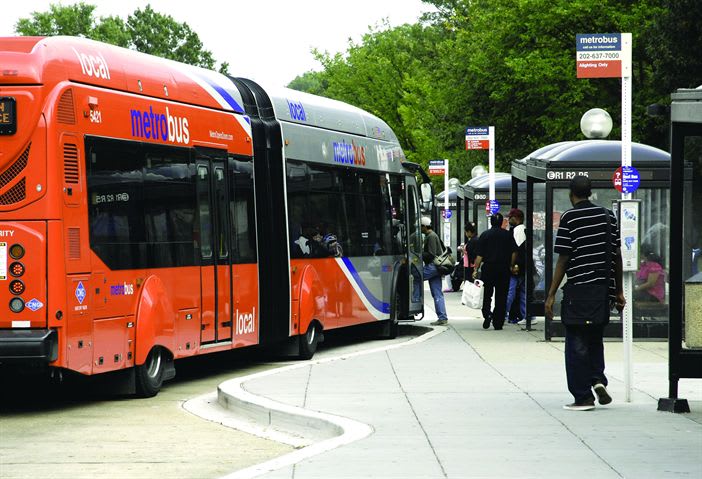
D.C. Metro's trip planner averages about 70,000 trips planned per day.
[IMAGE]MET11planner-fttrotten-2.jpg[/IMAGE]The days of indecipherable bus schedules printed in tiny type are long gone. Today, transit customers expect an agency to provide trip planning applications online that are easy to use and understand, look good, and can be sent to mobile devices or even emailed to friends in a snap.
As Web applications become more sophisticated and use of smart phones for Web browsing becomes more widespread, online trip planners present a significant opportunity for transit agencies to provide top quality customer service and convert those who are tentative about transit into loyal riders.
In-house management
The Los Angeles County Metropolitan Transportation Authority (Metro) launched its first trip planner, using proprietary software from an outside vendor, in 1998. At that time, the tool only provided basic route, schedule and fare information. Over the years, it has evolved to provide users with much more specific information, including route, schedule and fare information for up to three vehicles; stop locations; and routing by address, intersection or landmark, says Alonzo Williams, communications manager.
Metro was motivated to bring management of the trip planner in-house due to the cost of the proprietary software. "It was costing about $250,000 a year in royalty fees," Williams says. The transit agency turned the trip planner over to customer relations and IT staff and hired consultants to help with development in the initial stages.
Today, the trip planner incorporates information for about 65 transit providers, in addition to Metro. Future plans for upgrades include updating the look of the planner to make it more user friendly. Also, Williams says Metro plans to integrate Google Maps some time in the next year. The system currently uses a mapping feature from Thomas Brothers.
Metro has two full-time staff members responsible for updating the database of routes and schedules for the 65 transit agencies represented in the trip planner. "Our staff is in touch with [all the carriers] monthly to find out about any changes they may be making to their service," Williams says.
Not only is providing other agencies' transit schedules a benefit to Metro's customers, but it is advantageous to those agencies to be connected through Metro's trip planner. Additionally, Metro is able to cut down on calls from customers needing that information. "Routinely, when we first put the trip planner online, we were getting requests from other transit properties," Williams says. "Metro took a very proactive position and decided to put those carriers' information online because it was beneficial for the public, instead of having passengers call Metro for our information and then having them call one of the other transit partners."
Williams says financing and time constraints were the biggest challenges to developing and launching Metro's trip planner after bringing it in-house. "A lot of what we did had not been done before by a public agency," he says. "Mostly, it was procuring someone else's services or buying it off the shelf. But, we wanted very specific design features, which meant R&D was a little demanding."
Continuously Evolving
Vancouver, British Columbia's TransLink launched a trip planner in 2002, beginning a project that's still in continuous development as the agency makes improvements and adds features. Components that have been added since the initial offering include schedule look-up and a next-bus feature; an enhanced version of the trip planner that focused on improved usability, such as step-by-step trip planning, help files, a pop-up calendar feature, landmarks as origins and destinations, and schedules as downloadable PDF files.
Another fairly recent addition is a mapping feature that allows users to pan and zoom. Maps created in the trip planner now also feature alerts, designated by a yellow triangle symbol with an exclamation mark. These alerts signify service disruptions caused by construction, accidents or other obstacles, allowing users to plan alternates. Customers can also subscribe to specific routes to receive alerts via e-mail or text message. The trip planner is also available in a mobile version for smart phones.
TransLink works with a software vendor to manage its trip planner, says Marcela Turner, TransLink's supervisor of customer information automation. "[They] provide us with software, but we send them our requirements and then we work together to get what we want on the trip planner," she explains. Improvements to the trip planner are paid for as they are developed and requested by TransLink.
Most of the planner's day-to-day management, however, is carried out by TransLink staff. The scheduling team makes all the schedule and routes changes to TransLink's database, another team goes through the data to ensure it is ready for customers to view, by adding transfers, for example, then the data flows out through the trip planner to be accessed by customers.
During the process of developing the major Web usability enhancements in 2009, Turner says the Web team met weekly to discuss any issues that came up during the testing process. "We do a lot of thorough testing prior to putting anything out to the customer," she says. "We have test plans that we've developed for different scenarios to ensure that customers won't have to overcome any error messages."
The trip planner, and Website as a whole, is a dynamic part of the agency's customer outreach efforts. "We are always trying to meet customers' needs in how we can provide them with information," Turner says. TransLink pays careful attention to customer feedback to look for ways to improve the site. "The next project we're working on is offering customers the ability to e-mail itineraries right from the Website, as well as offering Google Maps on our trip planner."
For agencies looking to create a trip planner, Turner recommends communicating with other agencies that already have them to learn about the challenges they faced along the way. "We've done that, and we've had people approach us as well," Turner says. The Toronto Transit Commission recently launched a trip planner and integrated its routes with Google Maps, so TransLink plans to work with them to swap knowledge on both subjects.
[PAGEBREAK]Matching tech with demand
The Washington Metropolitan Area Transit Authority (D.C. Metro) trip planner is an Adobe Cold Fusion application, which staff have found very easy to use, the agency reports. The programming platform was selected in part because it seamlessly integrates with other widely-used Adobe products, such as Flash and PDF readers.
The trip planner averages about 70,000 trips planned per day, according to Metro. In addition to planning transit itineraries, other options available to users include specifying which transit modes to include in the trip and indicating the distances they're willing to walk to get to stops. Users can also receive simplified versions of itineraries by e-mail or text message, says Victor Grimes, chief, enterprise Web portal and GIS (geographic information system).
The agency's Web interface was originally developed by an outside vendor. Another vendor migrated the trip planner to Cold Fusion in 2005 after Metro made the decision to change platforms. It was later brought completely in-house to save time and money on future enhancements, according to the agency. The latest version of the trip planner that was outsourced was developed at a cost of $80,000.
The back-end system that supports the trip planner is called ATIS (Automated Transit Information System), which was originally developed by the company that would become Trapeze Software.
Like Los Angeles, D.C. Metro integrates other transit provider's schedules into their trip planner. Although beneficial to users, incorporating data from other agencies poses a challenge, in that the data is often received in a variety of formats and must be converted into a format consistent with its own data.
D.C. Metro also gathers customer feedback with an eye toward Web improvements. One change that was made to its trip planner, based on such feedback, is the ability to see itineraries for times just before and after the current itinerary.
D.C. Metro staff recommend designating a server for trip planner development, testing and production. "It is important that the testing server exactly mirrors the production server to ensure changes and new features appear and perform exactly as expected," Grimes says. "Users will quickly encounter hidden bugs, so thorough testing is a must."
D.C. Metro's trip planner averages about 70,000 trips planned per day. Users are able to search by landmarks and tourist attractions and select bus, rail or both. Larry Levine
L.A. Metro's trip planner incorporates schedule and route information for 65 area transit agencies, making it easier for users to plan trips across municipal boundaries.
[PAGEBREAK]Tips for developing online trip planners
1. Add an "alert" mechanism to the trip planner that notifies users of delays, route changes or other situations that impact their trip. This functionality can later be translated into a useful smart phone application.
2. Pay close attention to customer feedback. Not only will customers report bugs they find along the way, but they may have the most apt suggestions for changes and improvements.
3. Put your trip planner through extensive testing before release to the public. Meet on a regular basis with the team to ensure all problems are addressed during development.
4. Get advice from other agencies. Ask what challenges they faced in preparing their systems.
5. Network with other agencies to incorporate their schedules into your trip planner.
6. Try to be specific in planning the trip planner's capabilities and functionality. It's difficult to go back and make changes, which can delay the timetable for launch.
7. If developing a trip planner inhouse, select a programming platform with a small learning curve and plan for adequate server architecture to support the expected level of usage.
8. Track the top locations and other user inputs that come up "not found" and develop appropriate translations to reduce user frustration and time wasted.
More Paratransit

Reinventing Fleet Maintenance with Real-time Visibility and AI
Transit leaders need to know what needs fixing, where to look, who is responsible, when work is completed, and what it costs without having to chase information across disconnected systems.
Read More →
SamTrans Sets Priorities for Potential Connect Bay Area Revenue
The board-approved framework allocates future funding to maintaining service, rider improvements, equity initiatives, and infrastructure repairs.
Read More →
Chicago's NITA Act Moves Into Next Phase as Service Improvements Begin
Rider-focused improvements will begin rolling out across the system immediately as CTA, Metra, and Pace increase service this summer in the six-county region.
Read More →
A True Low-Floor Minibus Design Delivers Better Accessibility and Efficiency for Everyone
As transit demands evolve, so should your fleet. Download the whitepaper to see how the Low-Floor Frontrunner Minibus compares to traditional options.
Read More →
2026 METRO Buyer’s Guide & Directory
Searching for the right vehicles, technology, equipment, or services for your public transit or motorcoach operation? This industry guide brings together manufacturers and suppliers from across the transportation market — all in one place. Download it to connect with the companies that help agencies and operators improve mobility, enhance operations, and move their organizations forward.
Read More →
Rays the Mark Foundation to Honor CDTA’s Emily DeVito at October Fundraiser
Event at Chicago-area Ravisloe Country Club will support DeVito, a transit employee and mother of twins battling kidney failure and awaiting a transplant.
Read More →
King County Test Heliox Chargers, Keolis Lands California Contract Top Biz Briefs
Stay informed with these quick takes on the projects and companies driving progress across the transportation landscape.
Read More →
Spare Expands AI-Native Operations Platform With Fixed-Route Capabilities
The launch marks a major milestone in Spare’s vision for unified transit operations.
Read More →
Via Announces Scheduling and Supply Studio
The Scheduling and Supply Studio provides the world’s first fully integrated platform for optimizing vehicle and driver availability to rider demand, said company officials.
Read More →
Boston's MBTA Completes Latest Green Line Work
The work took place during 12 consecutive days of shuttle bus service replacement between Kenmore and Cleveland Circle.
Read More →