



More transit agencies looking to sell naming rights to generate revenue
Last year, Philadelphia's Southeastern Pennsylvania Transportation Authority (SEPTA) reached a five-year, $5 million agreement with AT&T for the naming rights to one of its busiest stations near the city's professional baseball and hockey stadiums.
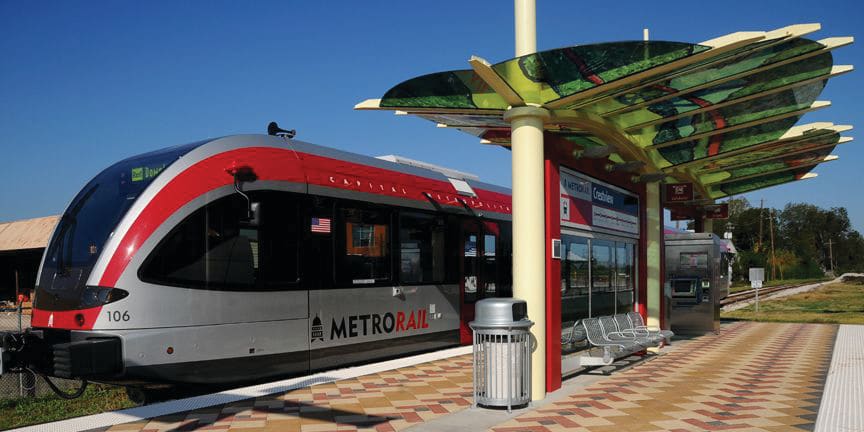
As a way to generate more non-farebox revenue and plug budget shortfalls, transit agencies around the nation, including Austin, Texas-based Capital Metro, are looking to sell naming rights on bus and rail properties.
As a way to generate more non-farebox revenue and plug budget shortfalls, transit agencies around the nation, including Austin, Texas-based Capital Metro, are looking to sell naming rights on bus and rail properties.
Joining a handful of transit agencies around the nation, Austin, Texas-based Capital Metro (Cap Metro) and Boston's Massachusetts Bay Transportation Authority (MBTA) have begun programs that will explore selling the naming rights of their bus stops, rail stations and other properties as a way to generate much-needed additional revenue.
Both agencies' decision to sell naming rights follow in the footsteps of other agencies around the nation, including those in Cleveland, San Diego, Phoenix and Washington, D.C.
Last year, Philadelphia's Southeastern Pennsylvania Transportation Authority (SEPTA) reached a five-year, $5 million agreement with AT&T for the naming rights to one of its busiest stations near the city's professional baseball and hockey stadiums.
"It's worked out very well," said Rich DiLullo, SEPTA's director of marketing. "One of the things that we did before was our homework. We talked to elected officials, community leaders and other parties that had an interest in what we were doing and won their buy-in before we proceeded."
In July, Cap Metro's board of directors approved the hiring of New York-based IMG Consulting Inc. to research and identify agency assets that would bring in revenue and propose a list of packages.
"The additional revenue outside of the farebox is a good tangible benefit, but there are also intangible benefits," explained Adam Shaivitz, Cap Metro's communications manager. "We think it's a way to help enhance the image of our organization in the community, by expanding both corporate and community partnerships."
IMG was set to have 150 days from the award to do the necessary preliminary work. Shavitz said IMG's final report is expected by the end of this year, with the first naming rights agreement taking place in 2012.
Meanwhile in Boston, the MBTA recently issued an RFP for a consultant to market potential advertisers to buy naming rights on properties the agency owns, including subway, commuter rail, bus and BRT transit lines, ferry routes, stations and media, including its Charlie Card fare payment system; smart phone applications and informational materials.
"Not unlike many other agencies in the U.S., we are grappling with fiscal constraints in our budget," explained MBTA's GM Richard A. Davey. "The MBTA is the only major transit agency in the U.S. that hasn't raised fares or cut service in the last five years, so we are looking at various ways to increase our non-fare revenue."
Some 88 people registered to download the RFP, according to the MBTA. The agency expected to award a contract to a consultant this summer and announce the first naming right agreement by this fall.
Davey said that the MBTA is looking at Boston's corporate and educational institutions as possible candidates. He also said that the MBTA intends to tread lightly when it comes to making agreements.
"Obviously, we're going to look closely at the advertising to make sure that it is tasteful," Davey said.
The MBTA's attempt to sell naming rights is its latest measure to help generate much-needed revenue, with the agency projecting a $161 million deficit for fiscal year 2013.
Other out-of-the-box revenue generators the agency has in place include selling ads on its website and opening an online store last spring, MBTAgifts.com, which sells logo-branded merchandise. The online store pulled in $40,000 in its first month of operation, according to Davey.
Davey said he believes transit agencies selling naming rights could indeed be the wave of the future.
"It's incumbent upon agencies to be as creative as we possibly can," he said. "All indications point to a reduction in the surface transportation program, so that weight that we bear to be creative in funding is even heavier today than it's been in the past."
More Bus

People Movement: Dan Dipert Coaches Adds Third-Generation Leader, Keolis Names New Valley Metro VP/GM, and More
In this edition, we also cover recent appointments and announcements at the Wabtec, SilverRide, HNTB, and more, showcasing the individuals helping to shape the future of transportation.
Read More →
New York MTA Plans Largest Bus Fleet Upgrade in More Than a Decade
The agency is seeking manufacturers for 650 new CNG buses to replace aging vehicles, improve reliability, and advance its broader fleet modernization strategy.
Read More →
Building a Flexible Path to Transit Electrification
John Hroncich discusses BAE Systems’ modular and scalable approach, lessons learned from decades of real-world operations, and how agencies can identify electrification strategies that fit their fleets.
Read More →
Bus Tech Talk: Keeping Transit Technicians Ahead of the Technology Curve
LA Metro’s Obed Mejia discusses technician training, evolving maintenance technology, fleet replacement, and strategies for getting the most out of today’s transit fleets.
Read More →
Biz Briefs: RIPTA Unveils New Frontrunners, Clevland RTA Adds New Siemens, and More
In METRO's latest installment, we take a look at recent news from Siemens, Prevost, Dodge, and more partnerships making headlines across the transportation sector.
Read More →
People Movement: Holly Arnold Joins Transdev and More
In this edition, we also cover recent appointments and announcements at Pace, CamTran, MCI, and more, showcasing the individuals helping to shape the future of transportation.
Read More →
The High Cost of Transit Buses: Industry Leaders Look to Procurement Reform
Transit leaders and policymakers examine how standardized bus designs, streamlined procurement, and predictable funding could help agencies stretch budgets and deliver better service.
Read More →
The Business Voice Behind Public Transportation
As chair of APTA’s Business Members Board of Governors, Ray Melleady explains how more than 850 business members are partnering with transit agencies to advance funding, innovation, and industry-wide collaboration.
Read More →
From Surviving to Thriving: Building Stronger Transportation Organizations
Bus Business Consultants founder Brian Dickson shares lessons on leadership, organizational health, and creating options for long-term success in a changing transportation industry.
Read More →
Finding the ‘Happy Medium’: Optimizing Maintenance Without Sacrificing Reliability
The key to maintenance optimization isn’t doing less work—it’s doing the right work at the right time on the right assets.
Read More →