



Construction Firm Building America’s Transit Future
Major challenge is the surge of competition that has surfaced in the industry vying for a piece of the high-speed rail industry, which hasn’t materialized yet.
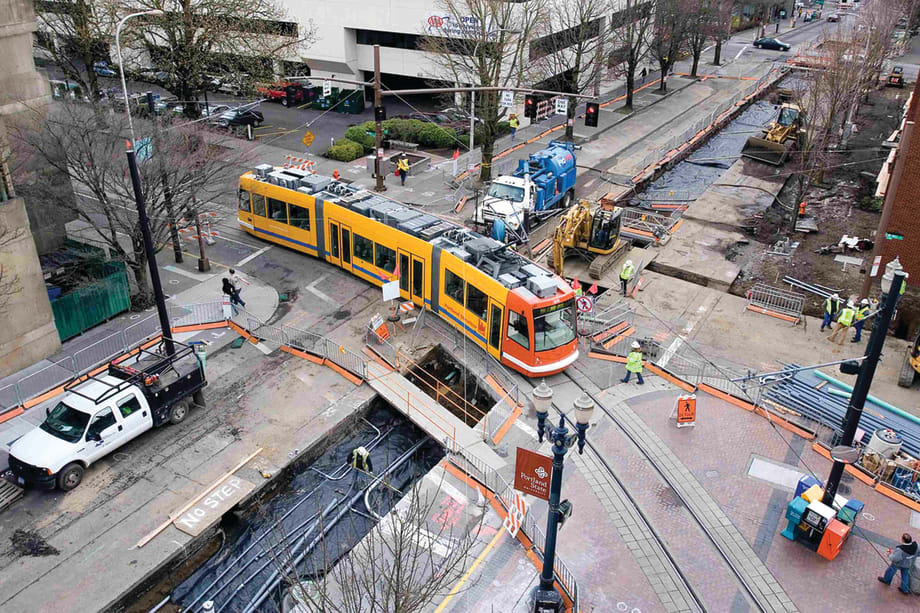
Alameda, Calif.-based general engineering contractor, Stacy and Witbeck Inc., began heavy civil construction in San Francisco in 1981. Within a short time, the company, whose operations also included track work, soon became recognized as one of the West Coast's leading contractors in light rail, commuter rail and streetcar construction. Today, the company does an estimated $450 million a year in revenue and is listed by Engineering News Record (ENR) magazine as the 103rd largest contractor in the country. The employee-owned firm has just under 200 salaried people and upwards of 400 to 600 in craft.
What makes the company unique is it is only involved in transit projects.
"Within those transit projects, we are not just a track contractor," says President/CEO John Bollier. "We do a lot of heavy civil work, where we build the roads, bridges, walls and the underground work - anything that pertains to a transit project."
Bollier, who has been with the company since 1986 when he joined as an intern, has seen many changes in the transit construction industry over the years. In addition to higher costs for projects, they are also larger in scope. "In the '80s and '90s, a large job would be about $50 million, a $100 million. Today, they are $500 million to $1 billion size," he says.
Sustainability
Other changes in the industry include the implementation of sustainability initiatives, with a growing awareness only happening in the last 10 to 15 years, Bollier says. Stacy and Witbeck works with design engineers and owners to add sustainable elements to a transit project.
On some projects, the company gives out transit passes, so employees don't have to drive to work. The company has implemented an idling policy for their vehicles and heavy equipment, utilizes biodiesel fuels when available and is in the early stages of construction for a new home office that will meet LEED Gold Certification.
"We are also just getting involved in APTA's Sustainability program," Bollier says, adding that Stacy and Witbeck goes further with the concept "by creating and sustaining opportunities for minority subcontractors and training people in the workforce to sustain them within the construction environment."
Bollier says that people are drawn to the company because of the long-term impacts that transportation projects have on communities.
"That they are making a difference is definitely a driver for recruiting individuals or grads within the last 10 years," says Bollier
[PAGEBREAK]
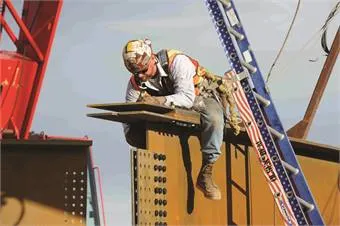
The $407 million West Valley/Airport LRT Extension in Salt Lake City (construction site pictured) consists of two segments totaling 12 miles of ballasted, direct-fixation track and paved track.
Competition, funding
Like the other sectors of the transportation industry, the construction side has its challenges. In the mid-2000s, obtaining materials for construction projects was a major challenge, particularly steel, which was caused by rising demand in other industrialized nations.
"The quotes we received for rebar, concrete mix or aggregates were only good for that day, and prices were constantly changing," Bollier says of the past problem. "Today, with the housing industry being at such a low, concrete and aggregate products have stabilized but steel and fuel prices continue to fluctuate."
To alleviate the problem of future steel pricing escalation, the firm tries to give the steel suppliers advance notice regarding projects.
"We'll partner with the supplier and the transit agency to bill the materials now and have them paid for once they are on site and integrate them into the work later on," Bollier says.
He adds that an even greater challenge that has developed in the engineering contractor industry is the surge in competing companies.
"We have more competitors that have entered the market in the hopes that there will be opportunities for high-speed rail construction projects, but that hasn't really shown up," explains Bollier. "Now, with the current work out there, we have twice the number of teams to compete with — but no high-speed rail work on the immediate horizon."
It used to be that finding a workforce was a problem for the company, but Bollier says with unemployment so high, the workforce is there. In light of the current economy, his greatest concerns for the future of construction is the lack of a transportation bill, shortage of funding resources from the local government side and transit projects being pushed back.
While some federal projects are moving along, others have been hampered by the challenge of obtaining matching local funds.
"Most of the agencies we work with have limited resources because their tax base is down," he says.
Looking ahead, Bollier says, "We see a couple of good opportunities this year on some large projects. But two years out, three years out, four years out, there doesn't seem to be a sufficient supply chain for the projects we focus on."
Innovations
On the construction site, the company works diligently to achieve minimal impacts on existing facility systems during a project. Because a great amount of work is done in downtown environments, there is a lot of business traffic and, therefore, businesses that are potentially impacted by construction. "We want to have a safe, clean environment, and if we interrupt access to a business, we want to give them plenty of notice and keep them updated on the progress or any changes," Bollier says.
Stacy and Witbeck also taps into its talented workforce to develop innovations for projects. The company was instrumental in using the rubber boot material for the first time on a light rail project for Portland, Ore.-based Trimet, according to Bollier. This material component, which provides electrical isolation for the rail, is "dramatically cheaper" to use than previous electrical isolation materials, such as elastomeric grout which was poured around the rail.
Recently, the company has partnered with the FTA, designers, transit agencies and manufacturers to use a Made in America girder rail — block rail — on projects. Previously, the rail used on most streetcar and light rail projects was purchased from Austria, but changes to the Buy America rules led the company to seek out an alternative.
"For the first time in America, we are going to have a Made in America girder rail," Bollier says, adding, "We're going to use it on the Moody Streetcar for the city of Portland."
More Rail
First Full MetroLink Rail Expansion Completed in 20 Years with $192M Airport Project
The project links two St. Louis-area airports by light rail while adding roadway and bike trail connections to improve regional access and mobility.
Read More →
Utilimarc Launches SmartReplace to Optimize Fleet Replacement Decisions
AI-powered SmartReplace helps fleets prioritize vehicle replacements, model budget scenarios, and build more defensible long-term strategies.
Read More →
Scenes from APTA TRANSform & EXPO 2026
Transit leaders, manufacturers, and industry professionals gathered in Chicago to explore new technologies, share ideas, and discuss the future of public transportation.
Read More →
USDOT Awards $416 Million for Florida Rail Crossing Safety Upgrades, New Brightline Station
The projects aim to reduce risks for motorists and pedestrians at rail crossings while expanding passenger rail access along Florida’s Space Coast.
Read More →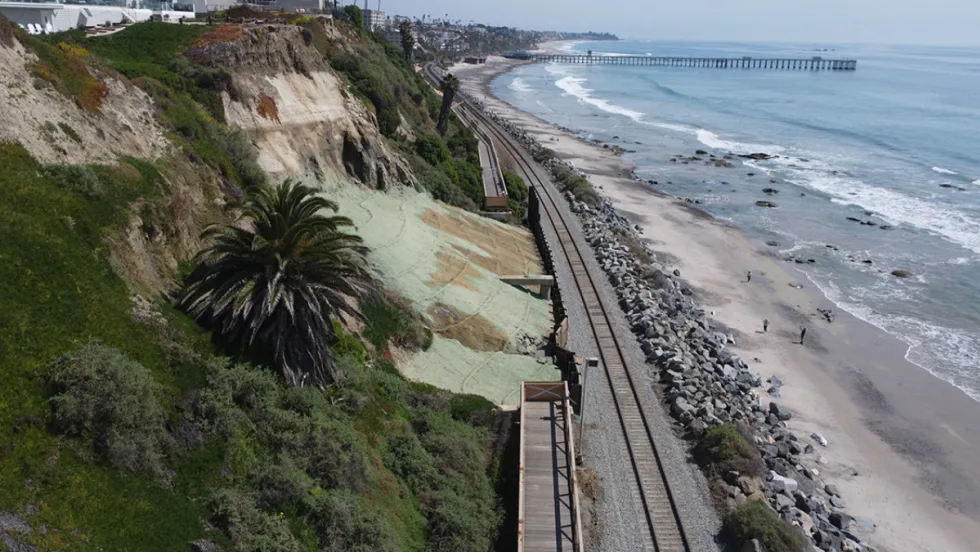
OCTA Declares Emergency to Protect Rail Corridor From Coastal Erosion
The California agency is accelerating shoreline protection and plans to place approximately 690,000 cubic yards of sand along the San Clemente coast to protect a key passenger and freight rail link.
Read More →
More Than a Summer Job: Building the Next Generation of Transit Talent
The Delaware River Port Authority and PATCO have transformed their internship program into a hands-on professional development experience that introduces students to the breadth of transportation careers — and creates a pipeline for future employees.
Read More →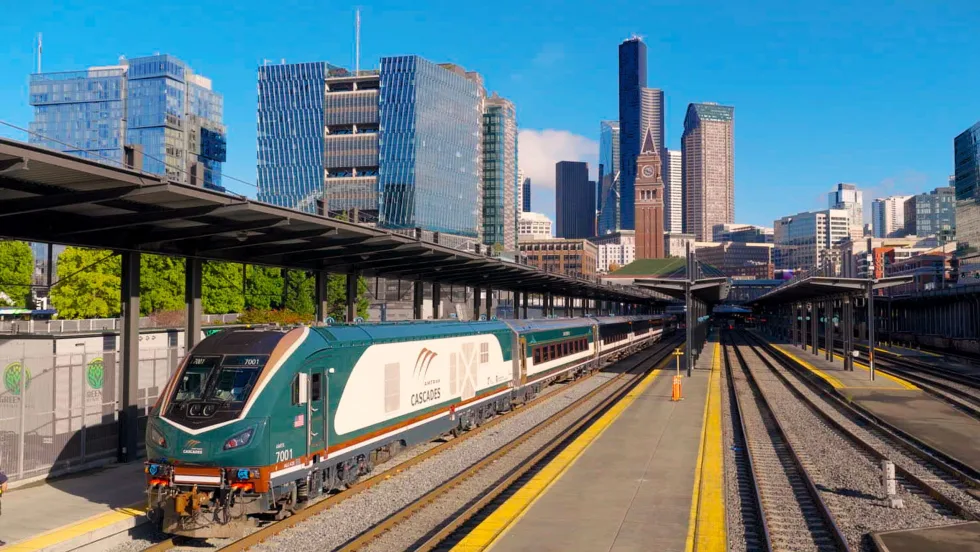
Airo Trains Make Their Amtrak Cascades Debut in the Pacific Northwest
Effective immediately, two cutting-edge Airo trainsets will join the Amtrak Cascades route, operating four daily trips between Vancouver, B.C., Seattle, Portland, and Eugene, Oregon, marking the first introduction of Airo trains into passenger service anywhere in the country.
Read More →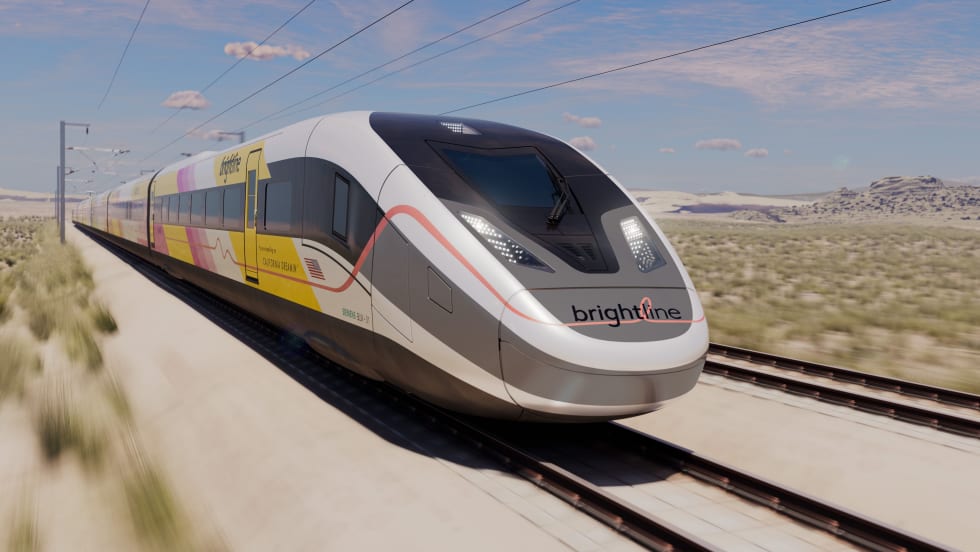
Florida's Brightline Announces Financial Restructuring
Brightline Florida says train operations will continue as normal as certain parent entities enter Chapter 11 and financial stakeholders provide $490 million in new long-term capital.
Read More →
ENC Lands MATA Contract and More in Biz Briefs
In this edition of Biz Briefs, we spotlight the latest developments shaping the future of mobility.
Read More →
Strada360’s Steve Lassey on Turning Transit Data Into Better Decisions
From breaking down data silos to preparing for AI, Strada360 CEO Steve Lassey discusses how transit agencies can use technology to improve operations, customer information, and long-term decision-making.
Read More →