



New Flyer Offering Life-Long Supply Chain Bus Solutions
The company is adapting to become a one-stop shop of supply-chain solutions and training tools as the relationship between transit operators and vehicle manufacturer becomes more interactive.

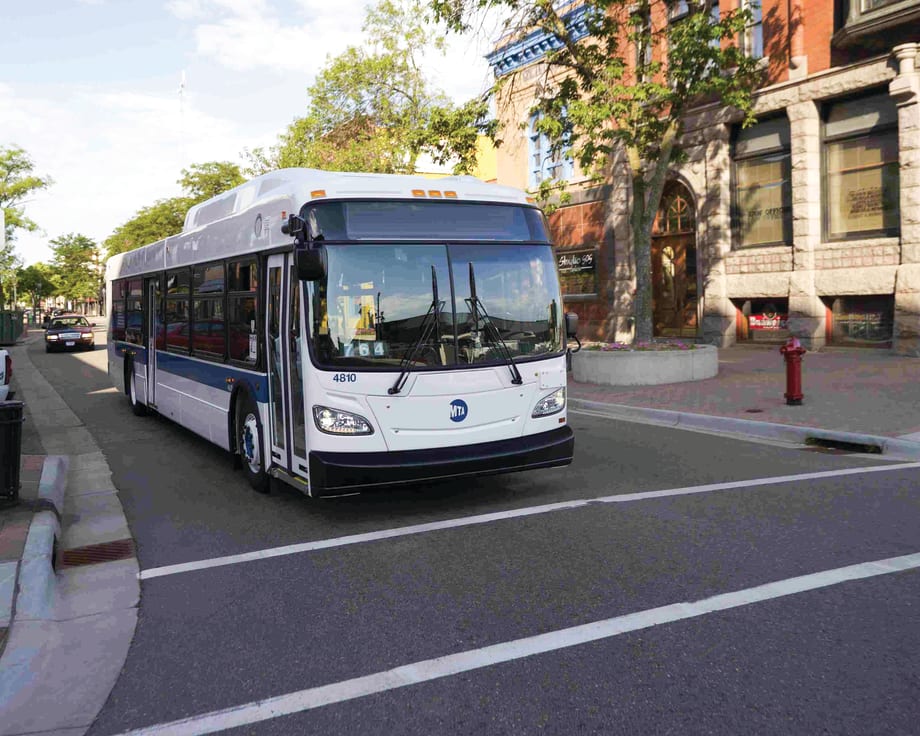

"We don't sell a bus and wait until the customer comes to us for services," Hans Peper, executive vice president of customer services, says. "We're committed to support our customers for the life of the bus. It's not a service offering, it's our responsibility."
The company's efforts are intensifying because its customers are dealing with increasing pressure on their operating budgets and looking for efficiency gains. "We are working intensely with our customer base and see the relationship changing," Peper says. "We're helping them in their mandate to provide public transportation."
Bundling parts and services
Over the last few years, New Flyer has become a one-stop service parts company for any bus operator with Genuine New Flyer parts, OEM parts and Kinetik parts, its private label line of original equipment parts. Due to the new economic reality for its customers, there is a great need for efficiency gains and operating cost reduction. Therefore, the current focus is on the recent launch of the new aftermarket service called Supply Chain Solutions.
As part of this new service package, New Flyer provides supply solutions for its customer's maintenance area, such as material planning, forecasting, stocking, consignment and even storeroom management. Combined with this is the ability to provide reliability and maintenance engineering, using the bus manufacturer's knowledge and experience, actual customer's material usage is reviewed and optimized to each unique customer maintenance environment. New Flyer was recently awarded aftermarket supply solutions covering these types of services at the Washington Metropolitan Area Transit Authority and Baltimore.
This total aftermarket package of material supply and service solutions is customized and designed to help each customer reduce their maintenance and operations costs — every customer is different. "For example, in the parts organization we're packaging parts in kits that coincide with maintenance schedules to help the maintenance staff reduce the maintenance down-time of their buses," Peper says. "It's no longer about incidental part fills."
As part of the manufacturer's primary goal to provide support over the life of the bus, one of the new service offerings is to provide an entire supply chain solution to make the process more efficient for customers.
[PAGEBREAK]

Adding parts center
New Flyer operates three parts distribution centers in North America and will add a fourth in the greater Toronto area in October to provide additional support to its many customers in Eastern Canada and the Northeastern U.S.
"Given today's economic situation, we want to provide our customers same-day support and deliveries," Peper says. "At a time when there's lots of negative news on public transit cost and funding reduction... New Flyer is investing in our customer relationship; we need to be physically closer to our customers to help them with supply chain solutions."
The manufacturer also supports many non-New Flyer customers that operate its competitors' buses. For example, it recently won a contract with the Maryland Transit Administration to provide brake kits for its fleet, which is composed of New Flyer and other buses.
"Our parts organization is not specific to New Flyer," Peper says. "It's more of a generic parts organization because you can't go to a customer with a limited assortment, [if] you really want to help them."
Onboard Intelligence system
"New Flyer was the first bus manufacturer to standardize its buses with local area networks on board (PLC) in 1993. Being a technology leader in this area, we have been investigating the ability to communicate remotely with our buses since the late 1990s," Peper says.
In 2009, New Flyer embarked on a new venture with a large customer by adding a remote vehicle control system to a fleet of over 300 buses, monitored by New Flyer, and provided a five-year extended warranty on the buses. "We packaged this combination under the concept of 'We're going to help you maintain and monitor the bus to maximize the up time and minimize service issues,'" Peper says. "That concept is really a step change in the industry."
Having an onboard intelligence telematics system is a central element in the manufacturer's strategy to provide life cycle support. New Flyer believes it is one of the responsibilities of a bus manufacturer to assist its customers with remote vehicle management, Peper says.
"We know what our bus operators and maintainers need to see. Instead of being inundated by lots of data, we focus on exception messages," he explains. "Everybody gets an engine and an axle with a bus, but when it comes to intelligence and monitoring systems, they look to software companies and those suppliers are limited in their understanding of the world of a bus operator," he adds.
Working with its customers, New Flyer believes it can be more successful in managing the vehicle and the up time, drivers' behavior, and maintenance issues occurring on the vehicle. To aid in this effort, the manufacturer is launching its New Flyer CONNECT system, which will become a standard for its buses. The system is described by Peper as simple, cost efficient and easily integrated with any other onboard systems.
Customer training
Another way that New Flyer is supporting customers over the long term with its buses is by offering industry-leading training. "Operators are under a lot of pressure, and there are a lot of efforts in transit to train operators and maintenance staff," Peper says.
To enhance its employee training, the company launched the "New Flyer Institute" last year. After seeing success, New Flyer now plans to open the institute to customers. "When you talk about technical topics in maintenance, repair and installations, a lot of material is similar," Peper says. Future courses will be a combination of Web-based and onsite training with different levels, ranging from standard eTraining Topics, to custom courses specifically geared to individual transit organizations. "Through interactive means, including videos and 3D models, we can train people successfully with examinations and certifications at the end," Peper says.
Besides technical training, courses will be developed for organizational development, safety, leadership and operator training.
In addition, the New Flyer Publications group is a key contributor to its strategy. "This area of expertise provides another source of knowledge and support to our customers with key-content matter." Peper says.
More Bus
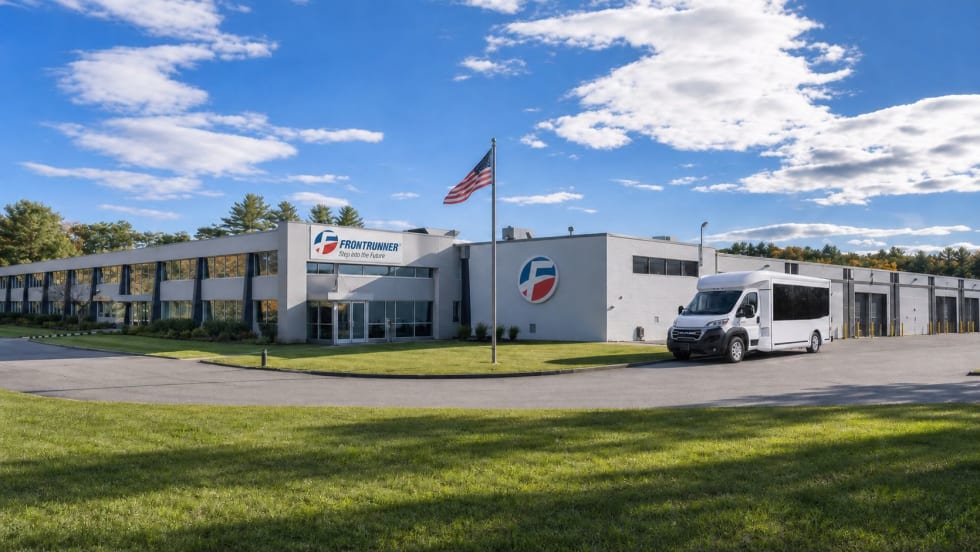
Frontrunner Bus Group Expands with New Massachusetts Headquarters
The significantly larger facility will provide the infrastructure needed to support the company’s growing workforce, advanced technologies, and expanding product line.
Read More →
Joshua Schank on Transportation Innovation, Risk, and the Future of Mobility
In this edition of METROspectives, Joshua Schank discusses lessons from launching LA Metro’s Office of Extraordinary Innovation, the challenges of advancing new mobility technologies, and much more.
Read More →
Reinventing Fleet Maintenance with Real-time Visibility and AI
Transit leaders need to know what needs fixing, where to look, who is responsible, when work is completed, and what it costs without having to chase information across disconnected systems.
Read More →
SamTrans Sets Priorities for Potential Connect Bay Area Revenue
The board-approved framework allocates future funding to maintaining service, rider improvements, equity initiatives, and infrastructure repairs.
Read More →
When Routine Fails: How Public Transit Must Adapt for the World Cup
The 2026 FIFA World Cup will test transit agencies’ ability to manage unpredictable travel patterns, making real-time data and operational flexibility critical to moving millions of visitors efficiently.
Read More →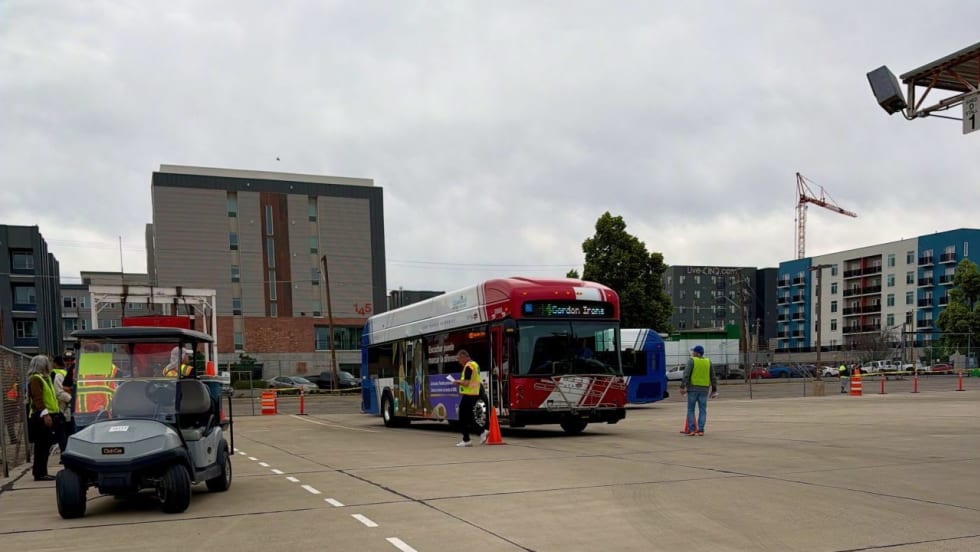
Photo Highlights from APTA's 2026 Mobility Conference
The photo gallery captures scenes from the conference, including the International Bus Roadeo, exhibit hall activities, the Bus Showcase, and much more.
Read More →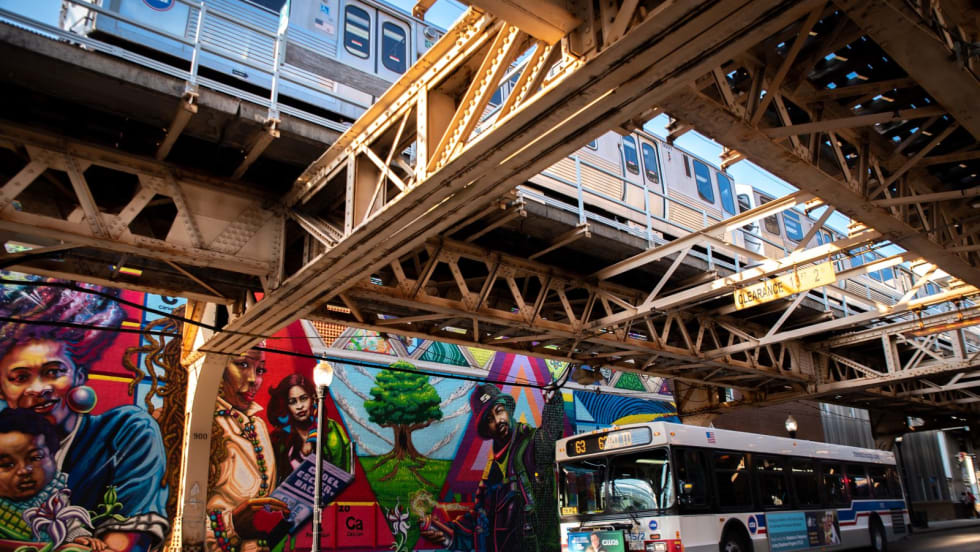
Chicago's NITA Act Moves Into Next Phase as Service Improvements Begin
Rider-focused improvements will begin rolling out across the system immediately as CTA, Metra, and Pace increase service this summer in the six-county region.
Read More →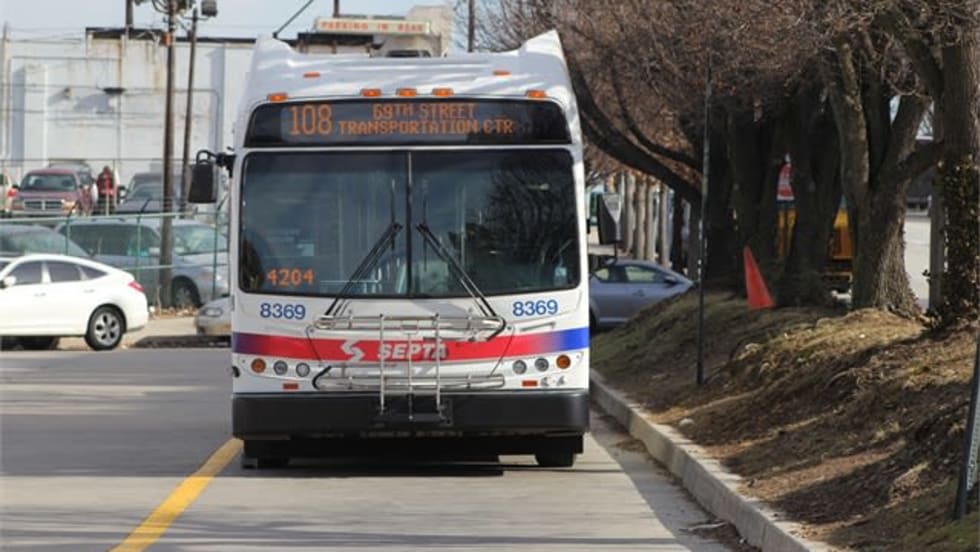
Philadelphia's SEPTA Approves Annual Transit Service Plan
Between 2021 and 2024, SEPTA held more than 200 public meetings — including 144 in-person sessions — throughout the SEPTA service region.
Read More →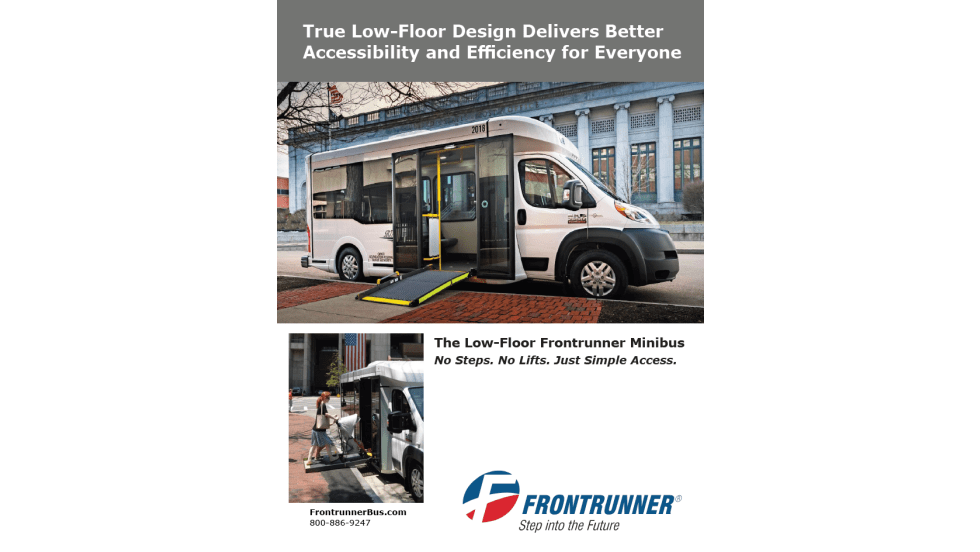
A True Low-Floor Minibus Design Delivers Better Accessibility and Efficiency for Everyone
As transit demands evolve, so should your fleet. Download the whitepaper to see how the Low-Floor Frontrunner Minibus compares to traditional options.
Read More →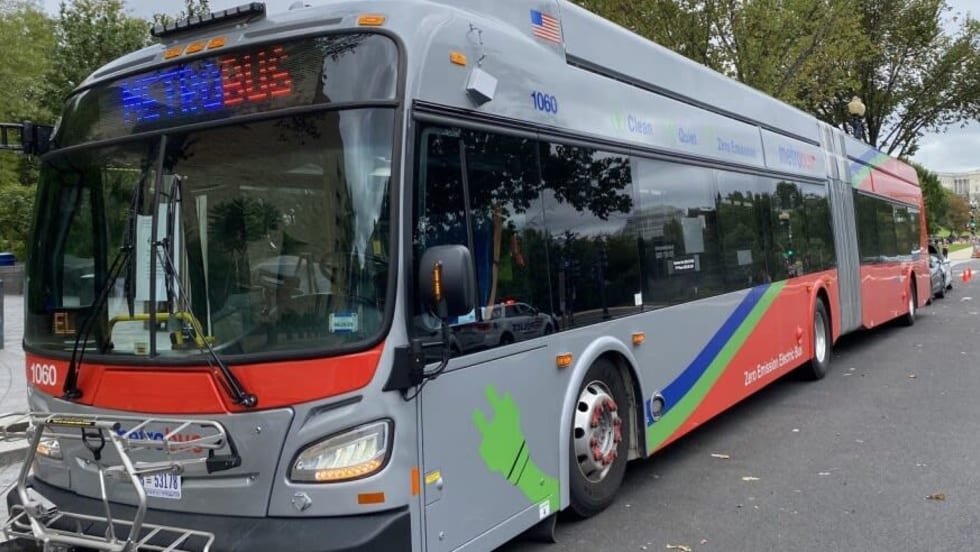
WMATA Debuts 'Fares Pay for Service' Awareness Campaign
The campaign was highlighted during a media event at the Paul S. Sarbanes Transit Center in Silver Spring, where WMATA’s GM/CEO Randy Clarke joined Metro Transit Police officers, WMATA management team, board members, and staff to expand fare enforcement and customer education efforts on Metro Bus routes throughout the region.
Read More →