



Women In Transportation: Terry Garcia Crews
Title: CEO/GM Organization: Southwest Ohio Regional Transit Authority City: Cincinnati

Since beginning with SORTA last year, Garcia Crews has started the "Getting Back to Basics" campaign, where she and the board are honing in on several areas for improvement.

Successfully running a public sector transportation organization takes an understanding of how to run a private business, says Terry Garcia Crews, CEO/GM of the Southwest Ohio Regional Transit Authority (SORTA). She has been at the Cincinnati-based transportation organization for less than a year, but only after a track that gained her comprehensive experience in the private sector.
While obtaining her bachelor's in business administration, Garcia Crews landed her first job as an assistant in a consumer finance company, and then, she became a legal secretary. But through most of college, she hustled weekend nights as an administrative assistant at a hospital.
Upon graduating in the 1980s, Garcia Crews found herself relocating to Phoenix, where she entered the banking industry as an affirmative action analyst. Within six months, she was promoted into bank marketing and generated around $1.3 million for Arizona Bank.
"This experience allowed me to understand the business world, and that was extremely valuable because that's where you learn about the bottom line, return on investments, the possibility picture," she says. "In my perspective that's really what has helped in my career today."
After more than three years in banking, Garcia Crews didn't like the uncertainty as different banks were acquisitioned, and that's when she found an opportunity at Sun Tran as a marketing director. She spent 13 years at Sun Tran in this position, until she went to Pima County as the community information administrator.
Garcia Crews knew at this point that she enjoyed engaging in community outreach and media relations, but she only stayed at Pima County for about a year. "I realized that the political environment can be pretty tough," she says, and so she started her own marketing, advertising and public relations company. Her niche was in public transportation and city governments, and she gained clients nationally.
After almost four years into her company, Sun Tran asked Garcia Crews back as assistant GM, where she stayed for about six years. She then jumped across states to be the interim GM in Poughkeepsie, N.Y. She could have made it permanent, but this Southwest woman couldn't handle the winter temperatures and headed to Lexington, Ky., as GM/CEO of LexTran. Within four years, she was recruited as president and CEO of Star Tran in Austin, Texas.
Garcia Crews' journey wasn't over yet. After more than two years at Star Tran, she transitioned to Cincinnati as GM and CEO of SORTA.
"One thing most of all is that it was primarily Professional Transit Management that gave me the opportunity to step up and move up," she says.
With all the different paths that drew her to where she is now, Garcia Crews didn't leave any agency unmarked. At Lexington, for example, she helped to stabilize the finances through a tax initiative. With the help of government officials, she gained the support of the community in a property tax that benefited LexTran, which at the time had no designated funding.
Since aligning with SORTA last year, Garcia Crews is starting the "Getting Back to Basics" campaign, where she and the board are honing in on several areas for improvement. She began the campaign by spending time with employees, getting comment cards and other forms of input.
"Typically going into a new organization I'll look at it from a private sector mindset," she explains. "I ask myself, 'What's the bottom line and how do we hold our accountability to the taxpayers?' "
More Bus

Finding the ‘Happy Medium’: Optimizing Maintenance Without Sacrificing Reliability
The key to maintenance optimization isn’t doing less work—it’s doing the right work at the right time on the right assets.
Read More →
LA Metro, City of West Hollywood, and Partners Advance Smarter Bus Lane Enforcement
The award-winning partnership combines AI-powered detection with human oversight to improve bus reliability, accessibility, and enforcement efficiency.
Read More →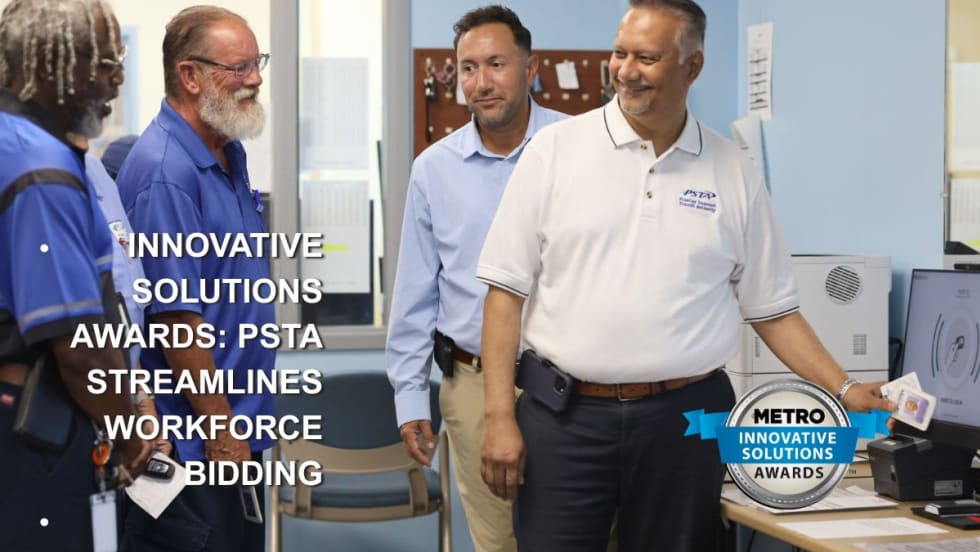
PSTA Modernizes Workforce Management with Digital Bidding System
The award-winning Workforce Transit Modernization project replaced paper bidding with a transparent digital platform, cutting administrative effort while improving access for operators.
Read More →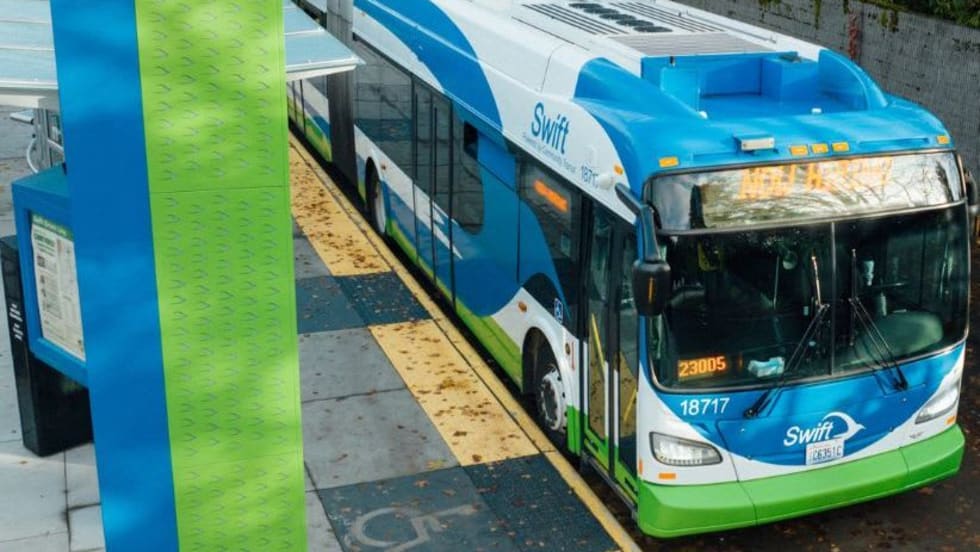
Washington's Community Transit Sets Six-Year Roadmap for Growth, Expansion
Approved TDP targets more bus service, new mobility options, Swift BRT expansion, and a potential Everett Transit annexation.
Read More →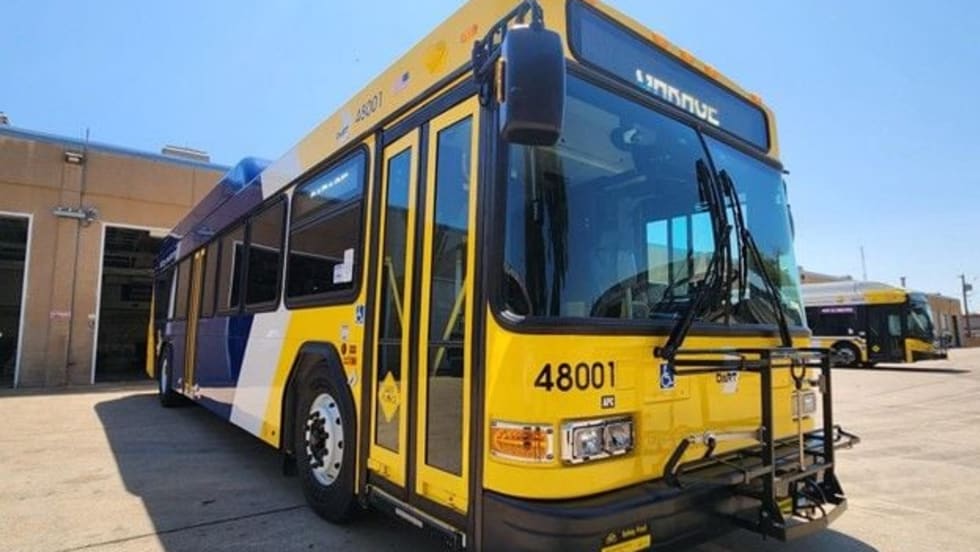
DART Customer Satisfaction Reaches Six-Year High
Overall satisfaction rose to 74.9%, while the agency’s Net Promoter Score reached a record 33.7.
Read More →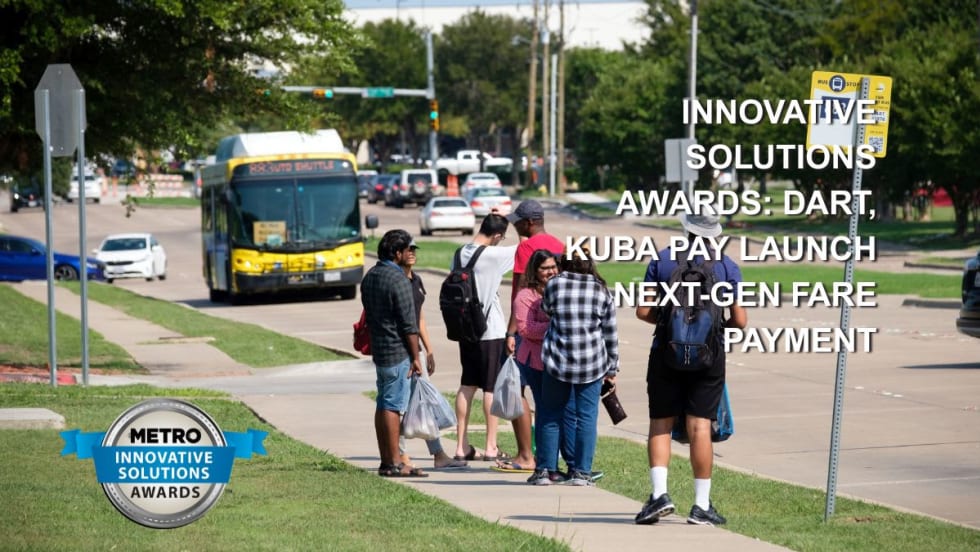
How DART's GoPass Is Redefining Regional Mobility
Serving 14 transit agencies, GoPass simplifies multimodal travel by allowing riders to plan, pay for, and manage an entire trip through one app.
Read More →
Biz Briefs: OCTA Taps Clean Energy for Hydrogen Station, Stadler to Supply Via Rail Vehicles, and More
From manufacturers and suppliers to transit agencies and motorcoach operators, these updates offer a snapshot of the projects, partnerships and business moves driving the industry forward.
Read More →
METRO Magazine Announces 2026 Innovative Solutions Awards Winners
Projects Recognized for Advancing Mobility Through Technology, Accessibility, Workforce Innovation, and Operational Excellence
Read More →
Biz Briefs: STV teams with Amtrak, Motorcoach Operators Boost Fleet and Land Contracts, and More
From manufacturers and suppliers to transit agencies and motorcoach operators, these updates offer a snapshot of the projects, partnerships and business moves driving the industry forward.
Read More →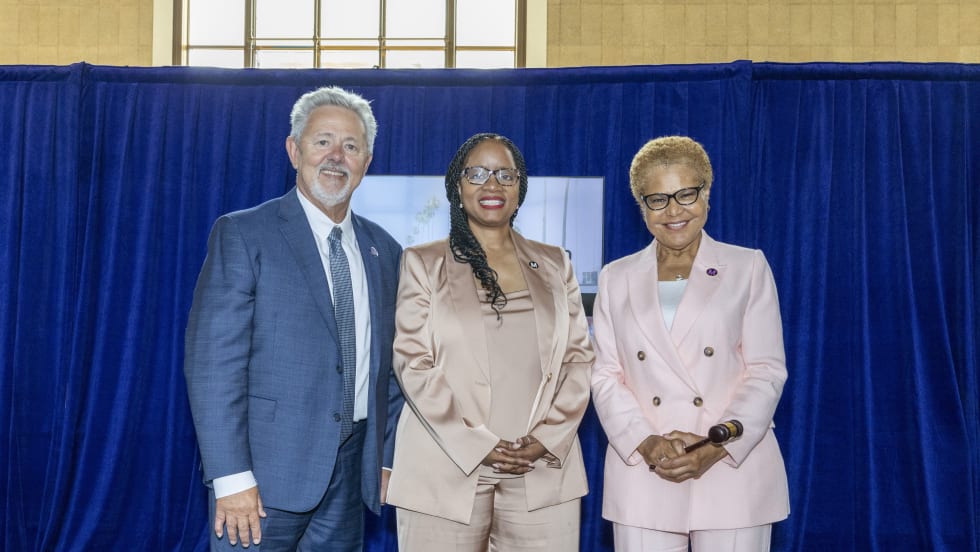
LA Metro Marks Banner Year, Sets Ambitious Goals for New Fiscal Year
Incoming LA Metro Board Chair and Los Angeles Mayor Karen Bass joined outgoing Board Chair Fernando Dutra and LA Metro CEO Stephanie Wiggins to review accomplishments from fiscal year 2026, which included the opening of new rail extensions, advancement of major transit projects, expanded safety programs, and new rider amenities.
Read More →