



Digital Signage Trends Take Hold for Transit
As technology evolves even more quickly, companies look into the future for ways to develop better products, such as infotainment systems and information kiosks to better serve their customers.
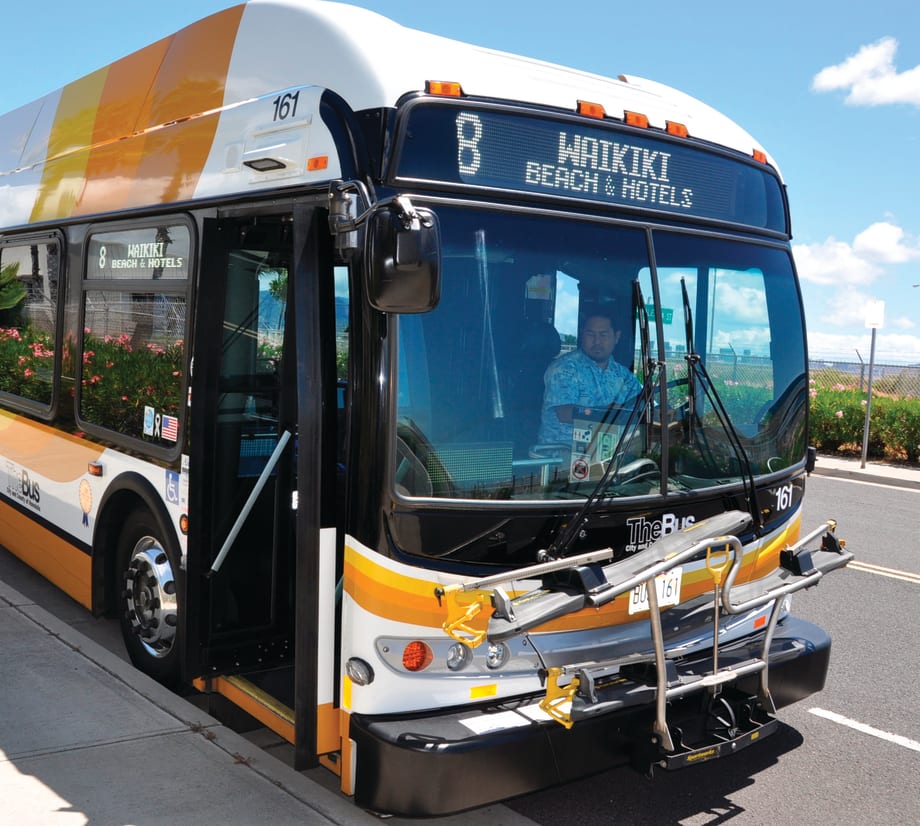
It’s no secret that technology advances at a rapid rate these days and, as technology moves into the wireless age where the Internet and digital systems run most of the technology around us, it is easy to see that the same is happening to digital signage systems for the public transportation industry. Signs are beginning to use wireless signals for message displays, as well as GPS and Web-based technology.
Keeping up with trends
Some of the latest trends in digital signage include infotainment systems, which began to take hold in Europe, but are now becoming more prevalent in the U.S., according to Daniel Kelleher, VP, sales and marketing, for Luminator, a lighting and communications design and manufacturing company that serves the bus, rail and aerospace industries. Infotainment systems provide passengers visual information, utilizing LCD technology on transportation vehicles to display mapping, public service announcements, schedule changes and advertising. Kelleher explains that infotainment can provide “up-to-date information,” which can be critical to increasing ridership for transit.
The types of advertising that are developing through infotainment are evolving as well. Kelleher says that his company now has the ability to provide location-based advertising, which uses GPS tracking. As the bus nears a specific retailer or restaurant, the infotainment system can display an advertisement on the screen about that particular company. “I think the general public wants more visual information on the buses,” Kelleher says.
Hanover Displays, an electronic destination sign company, with U.S. headquarters in Illinois, also offers onboard location-based advertising, says Brandon Curtis, sales manager for North America, adding that because his company is in more than 60 countries, it has the ability to bring trending technology from overseas into the U.S. as the need arises.
When asked to point to other trends in the industry, Curtis says that white signs have been extremely popular lately because of the high visibility and high contrast. Customers want them because they are new and different, he says, adding that, “At the end of the day, amber [signage] is still most accepted by the ADA community.”
Jody Huntimer, marketing manager for Brookings, S.D.-based Daktronics Transportation, says that her company has seen more interest in LED displays. These displays are mostly used for route information and scheduling. Daktronics is currently working to provide passengers with more easily-understood and categorized information at terminals and stops. [PAGEBREAK]

Hanover Displays’ Brandon Curtis says while white signs have been extremely popular because they are new, amber signage is still the most accepted by the ADA community.
Information kiosks
Additional trends in the digital signage arena include information kiosks. Kenneth Rivera, president/CEO of Los Angeles-based TransitVue Communication Systems, says that his company maintains a rather large focus on the wayside where they are currently working on information kiosks. The company is working with the Los Angeles Metro to integrate information kiosks with their passenger information system for its rail system.
One advantage of this improvement would be that the system would allow trip planning via touch screen. The kiosk would generate a printout detailing instructions on which buses and rail lines they can take to their destination along with travel times for the route. Rivera says that it would operate much like MapQuest and would be very simplistic. This would create an easy way of transmitting information to travelers as well as using LCD screens. In addition to rail system applications, this system could also be used for buses.
Rivera explains that TransitVue now has signage that can broadcast in different languages for those who can’t read English and has a system called “Push to Listen” for passengers who are visually impaired. It would tell the passenger times and service alerts that are being broadcast on the LCD or LED screens with just the push of a button. Rivera says that by converting visual information into audio, it eliminates the need for programming and maintenance of PA systems.
TransitVue also uses open architecture and html coding in order for different agencies to be able to communicate with one another. The system is both Web and network based, and requires only minimal hardware, license and secure web access in order to connect, but it allows the agencies to be able to communicate delays and schedule changes so passengers can stay informed. “That’s where technology really is a benefit,” Rivera says.
Future technology
While wireless signage is already being used by transit agencies, looking to the future, Luminator’s Kelleher says it will become even more prevalent. Many companies still have employees that have to update signs manually using USB sticks. In the near future, transit systems will be doing this wirelessly where one person can update the signs through a computer-based system easily and quickly, saving labor in the process.
LCD screens and LED signs will continue to grow in popularity, Kelleher says, despite their current demand among transit agencies.
TransitVue is working toward the future by putting effort into the concept of predictability. The company is developing algorithms that will tell the passengers and transit employees exactly where buses and railcars are at any given time. Rivera explains that this tool will be beneficial during an emergency situation, as the location information for the vehicle involved could be shared with fire and police departments quickly and easily. This technological development will require the integration of several systems onboard the vehicles, on the wayside and elsewhere.
The company is also working toward an eco-friendly future with its technology by developing solar-powered wireless applications. Although these new products will help transit systems conserve energy, they are still undergoing testing. Rivera says they are trying to make them affordable to both large and small agencies.
Daktronics has future developments down the road and is exploring more opportunities to enhance their passengers’ experience, Huntimer says. “We are always looking to the future for what the customers may need,” she says.[PAGEBREAK]

TransitVue Communication Systems is working with the Los Angeles Metro to integrate kiosks with their passenger information system for the agency’s rail system.
Customer Service
But, it’s not just about the technology. Besides enhancing their product lines, digital signage suppliers are making sure customer service is at its peak.
Huntimer explains that Daktronics excels in customer service because their sales, engineering, manufacturing and support teams all work closely with one another. Because of this, she says there is no disconnect between the customer and the company.
Daktronics’s customer service starts at the regional level with regional sales people, project managers and support personnel. This allows them to nurture a relationship between the company and the agencies.
Luminator spends a lot of time at transit agencies at the customer level to find what their needs are, says Kelleher. The company keeps their relationship strong with their customers by keeping options that customers like and constantly improving on their service as a team.
TransitVue does much the same as Luminator by working on the customer level. They like to bring the displays to the agencies and help them with the systems, which can be anything from fiber optic to lease line to wireless.
While Hanover Displays is constantly improving their products, they are also doing a lot to educate transit agencies. This education is mostly based around the products agencies are looking to purchase. Curtis says that they want the agencies to understand the long-term cost and benefits of the products they are looking at. He explains that the company is looking out for the best interest of the transit agency and the taxpayer’s dollar.
More Bus

New York MTA Plans Largest Bus Fleet Upgrade in More Than a Decade
The agency is seeking manufacturers for 650 new CNG buses to replace aging vehicles, improve reliability, and advance its broader fleet modernization strategy.
Read More →
Building a Flexible Path to Transit Electrification
John Hroncich discusses BAE Systems’ modular and scalable approach, lessons learned from decades of real-world operations, and how agencies can identify electrification strategies that fit their fleets.
Read More →
Bus Tech Talk: Keeping Transit Technicians Ahead of the Technology Curve
LA Metro’s Obed Mejia discusses technician training, evolving maintenance technology, fleet replacement, and strategies for getting the most out of today’s transit fleets.
Read More →
Biz Briefs: RIPTA Unveils New Frontrunners, Clevland RTA Adds New Siemens, and More
In METRO's latest installment, we take a look at recent news from Siemens, Prevost, Dodge, and more partnerships making headlines across the transportation sector.
Read More →
People Movement: Holly Arnold Joins Transdev and More
In this edition, we also cover recent appointments and announcements at Pace, CamTran, MCI, and more, showcasing the individuals helping to shape the future of transportation.
Read More →
The High Cost of Transit Buses: Industry Leaders Look to Procurement Reform
Transit leaders and policymakers examine how standardized bus designs, streamlined procurement, and predictable funding could help agencies stretch budgets and deliver better service.
Read More →
The Business Voice Behind Public Transportation
As chair of APTA’s Business Members Board of Governors, Ray Melleady explains how more than 850 business members are partnering with transit agencies to advance funding, innovation, and industry-wide collaboration.
Read More →
From Surviving to Thriving: Building Stronger Transportation Organizations
Bus Business Consultants founder Brian Dickson shares lessons on leadership, organizational health, and creating options for long-term success in a changing transportation industry.
Read More →
Finding the ‘Happy Medium’: Optimizing Maintenance Without Sacrificing Reliability
The key to maintenance optimization isn’t doing less work—it’s doing the right work at the right time on the right assets.
Read More →
LA Metro, City of West Hollywood, and Partners Advance Smarter Bus Lane Enforcement
The award-winning partnership combines AI-powered detection with human oversight to improve bus reliability, accessibility, and enforcement efficiency.
Read More →