



Innovative approach to creating app
Greater Good’s plan for the innovative app stems from co-founder George Aye’s experience as lead designer at CTA.
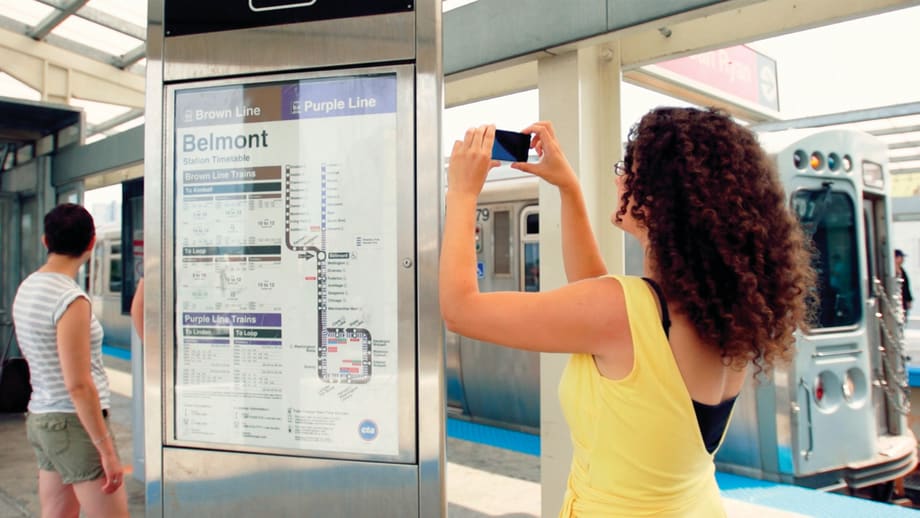
Photo courtesy Greater Good Studio

Photo courtesy Greater Good Studio
A unique project, spearheaded by Chicago social design firm Greater Good Studio, is looking to build a new app that will not only transform the types of information Chicago Transit Authority (CTA) users have access to, but also make the system more appealing to non-users.
Greater Good’s plan for the innovative app stems from co-founder George Aye’s experience as lead designer at CTA.
“While he was there, he was always looking for different ways to improve the riders’ experience,” said his wife and co-founder Sara Aye. “He saw that if that experience was a positive one, perhaps more people would use the CTA.”
With the next version of Apple’s iOS set to no longer have Google Maps, opting instead to have its own mapping application that would cover driving and walking, but not public transit, Chicago’s transit users will have to turn to an app created by a third party, which is where the folks at Greater Good saw an opening.
The new app would integrate both CTA bus and train services, use real-time arrival data and be designed by the people of Chicago. With that, the idea is that the app would include all sorts of information that users would find useful in enhancing their CTA experience, including paying via smartphone, finding out where to pick up coffee on their trip, or locating bike parking or car sharing services.
“The experience of CTA doesn’t start when you get on a bus, it starts when you decide to take it in the first place, so we want to do what we can to motivate more people to use the CTA,” explained Aye. “Being outsiders, wehave a little more freedom, which allows us to make the user the center of our focus when creating this app.”
Prior to developing the app, Greater Good launched a campaign via Kickstarter in early July, dubbed “Designing Chicago: New Tools for Public Transit.”
Kickstarter is an online threshold pledge system for funding creative projects, which typically include an array of endeavors ranging from indie film and music to publishing and food-related projects.
Through its Kickstarter program, Greater Good was asking for backers to donate $125,000 for the research and design of the app, which would then be completed by April 2013. Through the campaign, Greater Good was also looking for donors to become volunteers for the project as either “Urban Scouts,” who would play a part in the information gathering and ideal process, or as “Urban Icons,” who would take part in a real-world educational experience where the project is to design a transit app.
“To us, Kickstarter really opened up the concept of funding our own work in a way that’s never been done before,” said Aye. “We thought this is an interesting way to use Kickstarter, because participation is not a typical thing you see for sale on the site, and we knew we’d be innovating a little bit on the model.”
Although Greater Good did not meet its $125,000 Kickstarter goal, the Aye’s plan on continuing work for the app as part of the company’s plan to be its own customer and solve problems they would like to see addressed.
“We’re really committed to doing this project,” said Aye. “We’re going to continue with the participatory research and design process, it just may take a little more time to complete the app, but we think that’s OK. We want to give it as much time as it needs so funding will be available when the design is done.”
The new timetable for the app, Aye added, is most likely between fall and winter 2013.
More Bus

People Movement: Dan Dipert Coaches Adds Third-Generation Leader, Keolis Names New Valley Metro VP/GM, and More
In this edition, we also cover recent appointments and announcements at the Wabtec, SilverRide, HNTB, and more, showcasing the individuals helping to shape the future of transportation.
Read More →
New York MTA Plans Largest Bus Fleet Upgrade in More Than a Decade
The agency is seeking manufacturers for 650 new CNG buses to replace aging vehicles, improve reliability, and advance its broader fleet modernization strategy.
Read More →
Building a Flexible Path to Transit Electrification
John Hroncich discusses BAE Systems’ modular and scalable approach, lessons learned from decades of real-world operations, and how agencies can identify electrification strategies that fit their fleets.
Read More →
Bus Tech Talk: Keeping Transit Technicians Ahead of the Technology Curve
LA Metro’s Obed Mejia discusses technician training, evolving maintenance technology, fleet replacement, and strategies for getting the most out of today’s transit fleets.
Read More →
Biz Briefs: RIPTA Unveils New Frontrunners, Clevland RTA Adds New Siemens, and More
In METRO's latest installment, we take a look at recent news from Siemens, Prevost, Dodge, and more partnerships making headlines across the transportation sector.
Read More →
People Movement: Holly Arnold Joins Transdev and More
In this edition, we also cover recent appointments and announcements at Pace, CamTran, MCI, and more, showcasing the individuals helping to shape the future of transportation.
Read More →
The High Cost of Transit Buses: Industry Leaders Look to Procurement Reform
Transit leaders and policymakers examine how standardized bus designs, streamlined procurement, and predictable funding could help agencies stretch budgets and deliver better service.
Read More →
The Business Voice Behind Public Transportation
As chair of APTA’s Business Members Board of Governors, Ray Melleady explains how more than 850 business members are partnering with transit agencies to advance funding, innovation, and industry-wide collaboration.
Read More →
From Surviving to Thriving: Building Stronger Transportation Organizations
Bus Business Consultants founder Brian Dickson shares lessons on leadership, organizational health, and creating options for long-term success in a changing transportation industry.
Read More →
Finding the ‘Happy Medium’: Optimizing Maintenance Without Sacrificing Reliability
The key to maintenance optimization isn’t doing less work—it’s doing the right work at the right time on the right assets.
Read More →