



Getting 'Permission' with Bus Operator Pivot Point Training
Let's simplify the definition of 'pivot point.' The pivot point is the specific location on a bus that an object must align with before the operator attempts to overtake that object, whether it is a vehicle, sign, etc. Attempting to overtake the object — fixed, pedestrian, double parked vehicle — before that object reaches the pivot point locations mentioned below by bus model, will result in making contact with that object. Let's look at the various pivot point locations on some buses.

One of the first things instructors should do whenever a new type of bus arrives on site is to locate its pivot point.
Let's simplify the definition of 'pivot point.' The pivot point is the specific location on a bus that an object must align with before the operator attempts to overtake that object, whether it is a vehicle, sign, etc. Attempting to overtake the object — fixed, pedestrian, double parked vehicle — before that object reaches the pivot point locations mentioned below by bus model, will result in making contact with that object. Let's look at the various pivot point locations on some buses.
40ft. RTS/Orion- Center of rear tires
45ft. MCI- Midpoint between 2 sets of rear tires
60ft. Articulated- Center of Articulated Joint (Accordion)
Would someone like to volunteer the location of the pivot point on a 30ft. and 35ft. model bus?
Getting Permission
Let's put this to use. A very powerful lesson of the do's and don'ts of overtaking fixed objects and eliminating curb strikes or mounting curbs while turning should be demonstrated on the first day your students begin training on the training bus. Along with learning mirror setup/utilization, air brake familiarity, interior and exterior pre-trip inspection, getting permission — getting the object to align with the pivot point of his or her bus — should be a new phrase that students learn. Once this is accomplished, students will get into the habit of seeking permission before attempting to move around fixed objects.
Those of you with a driver training simulator can perform this all-important exercise during a serpentine course conducted around pillar columns, which appear in some virtual driving worlds. Pillars support the overhead elevated train tracks in cities like New York and Chicago, just to name a few, and provide an ideal location to practice this critical movement. If you don't have this type of training set up on your bus simulator, contact your simulator provider.
Go to your training area and bring a rubber cone. Place it next to the pivot point — depending on the bus models above. Let's use the 40-foot bus, for example, by placing the cone as close as you like alongside the center of the right rear outside tire — the left rear outside tire can be used for a left-side demonstration. Have your students stand by the right rear corner of the bus near the right rear taillight looking down the right side of the bus. They should have a good view of the closeness of the cone to the right outside tire. With you in the operator's seat, take the wheel and lock the steering wheel to the right then slowly begin to move. What your students will see is that from the point where you placed the cone and back, this area will move around the cone with no contact.
Give the cone a name.
From that point forward in your training, consider any object they attempt to overtake a person. If they feel they are overtaking a person, it keeps them a little more focused on the task at hand. Once you have established your point of not having contact as long as you get the object to the pivot point, move the cone forward a few feet toward the rear doors. Get back in the bus and once again lock the steering wheel to the right. With the students watching, attempt to move right again. Before moving slowly, lock the wheel right. This time the bus will make contact with the object. This comes in handy when working with shifters/drillers in tight depot areas. You will be surprised how much damage can occur by moving buses around a depot during the late hours. Damage appears during a morning pull-out pre-trip that was not present on the post-trip during the previous evening's pull-in.
Allow each student/operator to move around the cone/simulated pillars moving left and right using the 'getting permission' theory. Walk them through one or two sets of cones then allow them to do it on their own, unassisted. It's important they demonstrate that they comprehend the reason behind getting permission. Remember, they must learn to look right or left before moving right or left!
In closing:
Permission is granted to move around the fixed object only when being aligned with the pivot point. Result = NO CONTACT!
Permission is denied to move around the fixed object — where there is minimal clearance between the pivot point and the fixed object — before being aligned with the pivot point. Result = CONTACT!
More Blog Posts
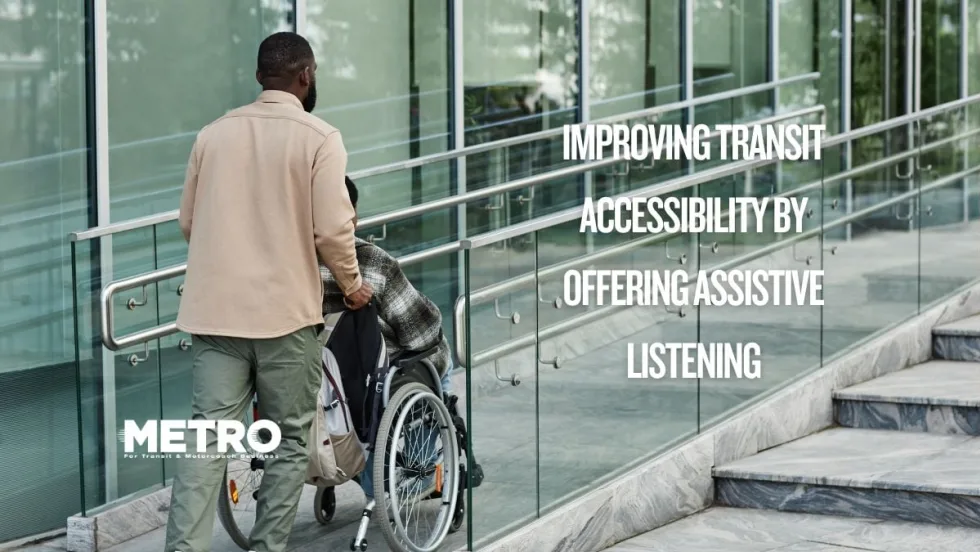
Improving Transit Accessibility by Offering Assistive Listening
Did you know that there are literally tens of millions of people worldwide with hearing loss, many of whom will use some form of public transit at some point?
Read More →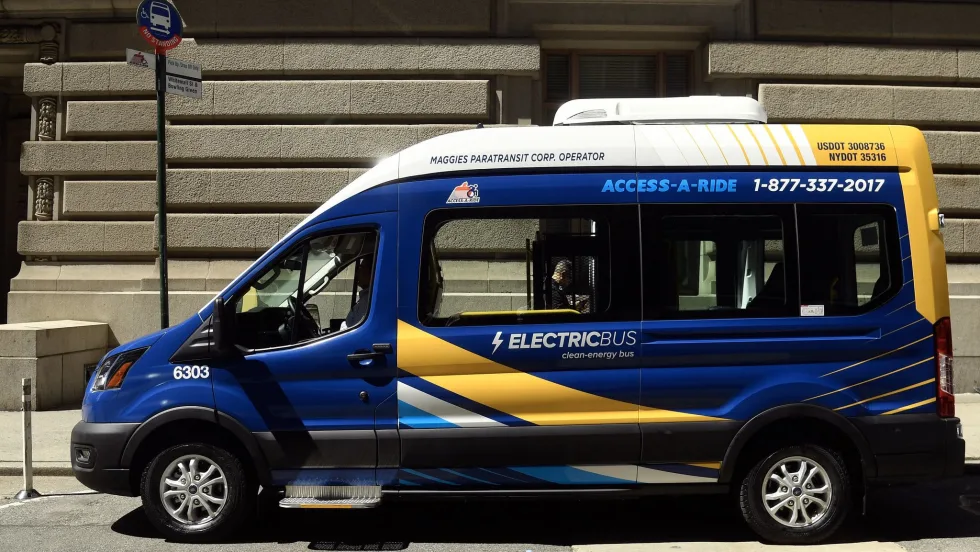
35 Years of the ADA, Making Travel Easier for Seniors
Thirty-five years after the passage of the Americans with Disabilities Act of 1990 (ADA), the impact of this landmark piece of civil rights legislation cannot be overstated.
Read More →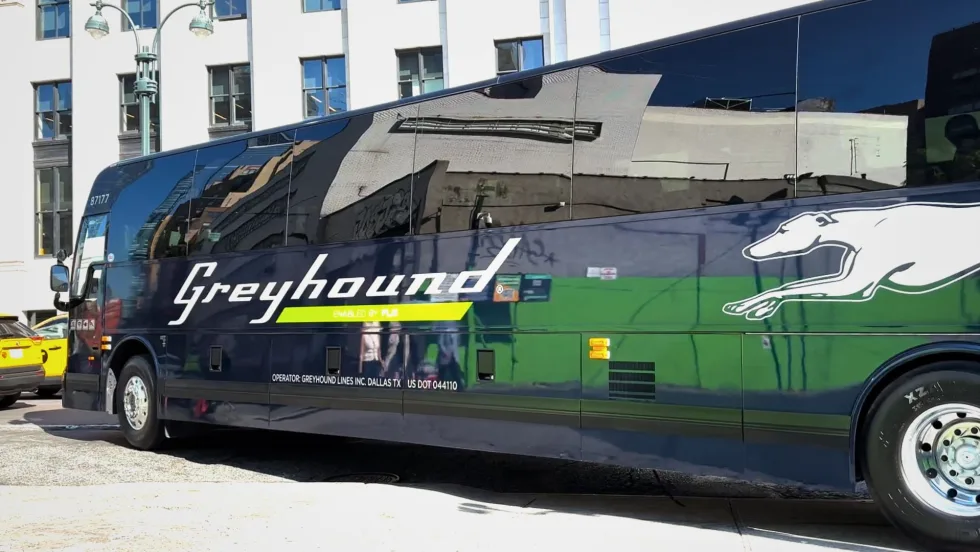
Driving Performance with Purpose: How I Lead One of Greyhound’s Top Teams
Safety, on-time performance, and customer experience are critical elements in intercity bus operations. But getting them right doesn’t come down to plans or protocols alone. It comes down to execution. How well your team performs on the ground, in real time, is what defines success.
Read More →
Navigating Emerging Privacy Laws: A Call to Action for Service Providers in Mass Transit
With Data Privacy Day Jan. 28, I want to spotlight a critical challenge faced by service providers in the mass transit sector: managing personal information responsibly in an era of rapidly evolving privacy regulations.
Read More →
Human Trafficking Awareness: What Public Transportation Can Do?
January is National Slavery and Human Trafficking Prevention Month in the U.S., and January 11 is National Human Trafficking Awareness Day.
Read More →
Want to Improve Transit Safety and Operations? Break Down the Silos
Retrieving and reviewing data and video can be a cumbersome process for fleet managers. Each system or tool provides a piece of the puzzle, but seeing the complete picture requires tedious manual synchronization.
Read More →
Ensuring Public Transit Cybersecurity Through Robust Protective Measures
In today’s highly connected world, cybersecurity is of utmost importance, particularly for transportation agencies overseeing transit bus systems that rely increasingly on sophisticated technologies, including the use of data analytics in traffic signal networks, to manage and operate their systems.
Read More →
How Advances in Thermal Management Revolutionize Urban Mobility
In the daily hustle and bustle of city life, transit buses serve as the backbone of urban transportation, allowing millions of city dwellers to get from point A to point B each day reliably.
Read More →
The Evolution of Bus Design
Thirty years ago, drivers not only had to drive the bus and navigate heavy traffic, but they were also responsible for tasks like supervising passenger loading and unloading, selling tickets, and providing passengers with various kinds of information, all while sitting in an often ill-fitting workstation.
Read More →
What 'Transit Safety 101' Really Means
Safety, Safety, Safety. This word is used repeatedly, and in many contexts, without most people understanding what it actually means.
Read More →