



Carmageddon II: Off the rails
Hot off of last week's incredibly overhyped "Carmageddon," the Los Angeles County Metropolitan Transportation Authority's (MTA) Blue Line light rail system will not be running in my city this weekend because some trees along the line need to be trimmed.

Hot off of last week's incredibly overhyped "Carmageddon," the Los Angeles County Metropolitan Transportation Authority's (MTA) Blue Line light rail system will not be running in my city this weekend because some trees along the line need to be trimmed.
The MTA has assured riders stops along the line will be opened as the work is complete and that buses will be running along the line to transport passengers. The lack of hype surrounding this shutdown made me chuckle. Granted, I know that this is not as big a deal as "CARMAGEDDONNNNNNNN!!!" but it is significant to those in the area who need to get to Los Angeles for work. Seems more important to me that public transit is shut down for a weekend than some area of the freeway, but maybe I'm being irrational.
I also wondered how often public transportation systems have to shut down for similar reasons? How come these shutdowns don't touch off an outcry like we saw here in Southern California last week? (The Northeast Corridor is excluded from that statement, of course.)
So, what does your public transportation system do in the event of a major shutdown? Are they well-publicized? And, does it ever cause a public outcry as great as we experienced here last weekend?
In case you missed it...
Read our METRO blog, "Transit to rescue city from 'Carmageddon'" here.
More Blog Posts

Inside ITF 2026: Transport Reacts to A Challenging World
Transport leaders from around the world gathered in Leipzig, Germany, for the 2026 International Transport Forum to discuss resilience, climate impacts, supply chains and the future of sustainable mobility.
Read More →
Every Ride Tells a Story — But You’re Not Just Selling the Ride
You’re selling the moment, the meaning, and the emotion behind it.
Read More →
How Digital Signage is Reshaping the Traveler Experience at Transportation Hubs
What was once a landscape of static signs has evolved into a responsive, immersive environment powered by real-time visual communication.
Read More →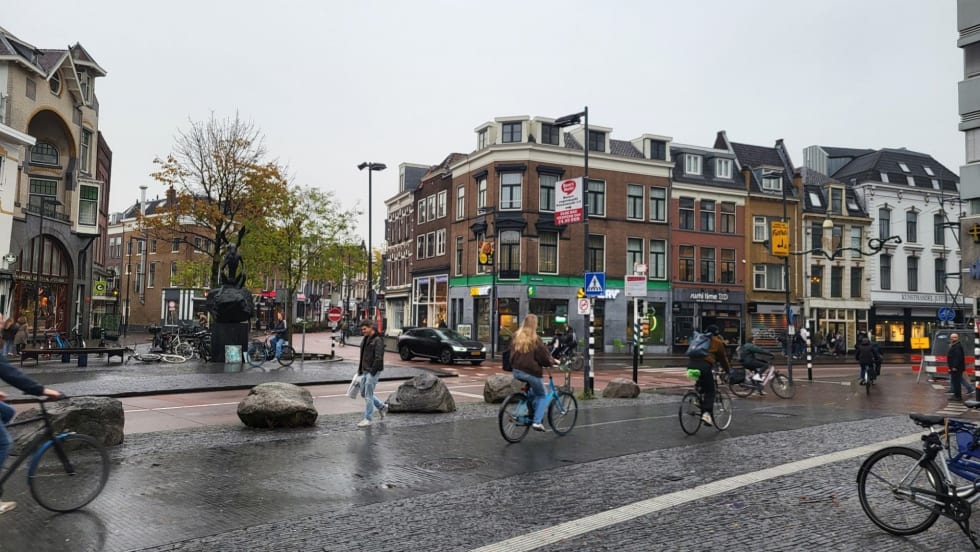
Latest Trends in Urban Mobility from Polis Conference 2025
Polis comprises cities and regions, as well as corporate partners, from across Europe, promoting the development and implementation of sustainable mobility. This year’s event had over a thousand attendees across various policy forums and an exhibition.
Read More →
Why Transit Leaders Require Better Tools for Operational Clarity In Today’s Tech-Fragmented Environment
Across North America and beyond, transit agency officials are contending with a perfect storm of operational headaches and strategic challenges that hamper daily service and long-term progress.
Read More →
The Powerless Brokers: Why California Can’t Build Transit
It is no secret that transit in the U.S. is slow and expensive to build.
Read More →
Why Transport Sustainability Should Focus on People Instead of Cars
Simply incentivizing electrification is not enough to make a meaningful impact; we must shift our focus toward prioritizing public transportation and infrastructure.
Read More →
Transit ROI & System Efficiencies Will Drive 'Big, Beautiful' Transit Funding
For many years, the narrative surrounding public transit improvements has been heavily weighted toward environmental gains and carbon reduction. While these are undeniably crucial long-term benefits, the immediate focus of this new funding environment is firmly on demonstrable system efficiencies and a clear return on investment.
Read More →
Getting Better on Purpose
The notion of agencies being over- or underfunded, I argued, doesn’t hold up. If an agency wants to turn up the heat — to grow beyond the status quo — it must demonstrate measurable value.
Read More →
The Fiscal Lessons of Goldilocks
Some agencies might suggest they are funded in the public transportation space. Some complain that they are funded too little. I have never heard a public transportation executive proclaim that they are funded too much. And if no public agencies are funded too much, then, by definition, none are funded too little. To steal from Goldilocks’ thinking, they are all funded just right.
Read More →