




RELATED: Albuquerque BRT receives rare 'Gold Standard' recognition
Enhancing Bus Service With a More ‘Direct’ Way to Travel
As part of an initiative to improve bus travel for riders in Philadelphia, SEPTA and the City’s Office of Transportation and Infrastructure have partnered on the Greater Philadelphia region’s first direct bus route, the “Boulevard Direct.”
December 12, 2017
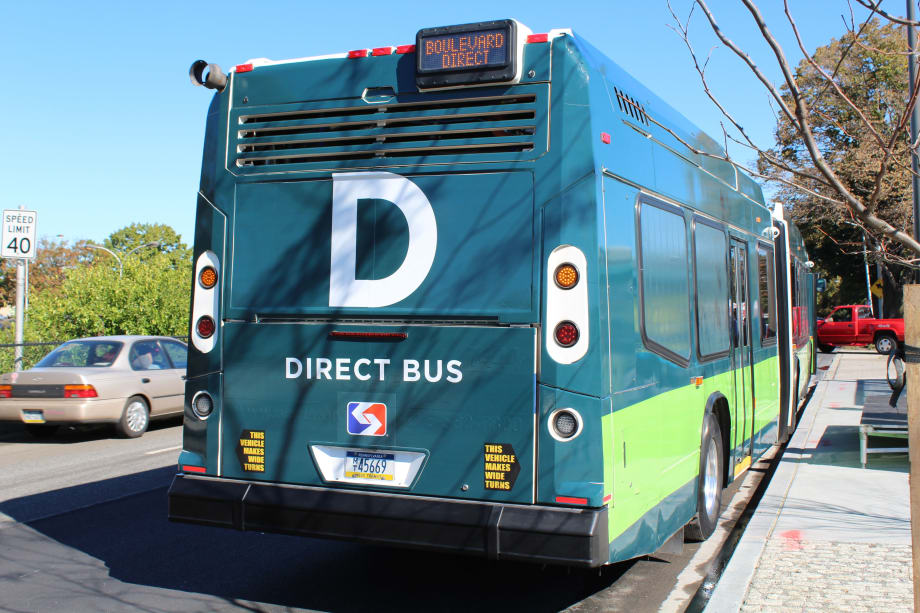
Branding for SEPTA's new Direct Route buses manufactured by Nova Bus. Photo: SEPTA
3 min to read
Branding for SEPTA's new Direct Route buses manufactured by Nova Bus. Photo: SEPTA
The quickest way from point A to point B is a straight line — or, if you are a bus rider, a direct route.
As part of an initiative to improve bus travel for riders in Philadelphia, the Southeastern Pennsylvania Transportation Authority (SEPTA) and the City’s Office of Transportation and Infrastructure have partnered on the Greater Philadelphia region’s first direct bus route, the “Boulevard Direct.” The service is an enhancement of SEPTA’s current Route 14, which carries more than 10,000 riders every weekday from the authority’s Frankford Transportation Center (FTC) in Northeast Philadelphia to the Neshaminy and Oxford Valley malls in nearby Bucks County, Pa., via the very busy Roosevelt Boulevard (U.S. Route 1).
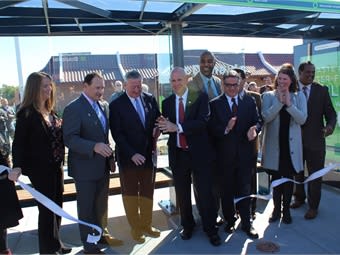
Among the officials at the ribbon-cutting for the new service, were Philadelphia Mayor Jim Kenney (center left) and SEPTA GM Jeff Knueppel (center right). Photo: SEPTA
SEPTA’s regular Route 14 makes approximately 80 stops on the 10-mile run from FTC to Neshaminy Mall, carrying many workers to their jobs and shoppers to a variety of retail centers along the way. Boulevard Direct buses make only eight stops at key intersections in that same 10-mile stretch, reducing travel time from 47 minutes to approximately 30.
“Route 1 is a high-volume travel corridor — and this service will save riders valuable time,” said SEPTA GM Jeffrey D. Knueppel.
Not only is Route 1 a high travel thoroughfare, it has been labeled as one of the most dangerous roads in Pennsylvania. The City of Philadelphia is working to improve safety on Roosevelt Boulevard through initiatives like the Boulevard Direct service enhancement. There are 10 new stations within Philadelphia to accommodate riders traveling in both directions. These new stations include new plazas and curbs, ADA ramps, bus shelters that serve both Route 14 and Boulevard Direct customers, free standing bench seating, pedestrian-scale lighting, landscaping, solar trash and recycling receptacles, and wayfinding signage.
“The City’s recently released Three-Year Vision Zero Action Plan highlights the need for change on Roosevelt Boulevard,” said Mike DiBerardinis, managing director for the City of Philadelphia. "We are all encouraged to see change happening on the Boulevard, where transit riders waiting for the bus are more visible."
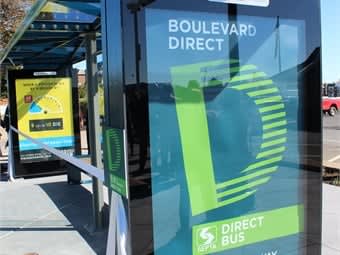
Boulevard Direct stops (new shelter design pictured) were chosen as a result of SEPTA ridership analysis. Photo: SEPTA
Boulevard Direct stops were chosen as a result of SEPTA ridership analysis. The stops account for half of all bus riders along Roosevelt Boulevard and intersect with existing bus connections for riders transferring to other routes. During the weekday morning and evening rush hours, buses run every 10 minutes; service during most other time periods is every 15 minutes. To ensure riders board the correct buses, SEPTA has outfitted the 60-foot articulated diesel-electric hybrid vehicles with wraps designed with the Boulevard Direct branding.
The Boulevard Direct service launched on October 22. While complete ridership data is still being complied, one month in the enhanced service was attracting approximately 2,700 riders in each direction per day. SEPTA anticipates that number to continue to grow as early feedback from customers and operators to date has been positive from passengers and operators. SEPTA Customer Service has received commendations from riders on the enhanced service.
“We are always looking for ways to improve the travel experience for our customer, said Knueppel. “The Boulevard Direct is a result of our partnership with the City of Philadelphia. Together, we will continue to explore ways to enhance service throughout the SEPTA bus network.”
Heather Redfern is the Public Information Manager for the Southeastern Pennsylvania Transportation Authority.
Subscribe to Our Newsletter
More Blog Posts
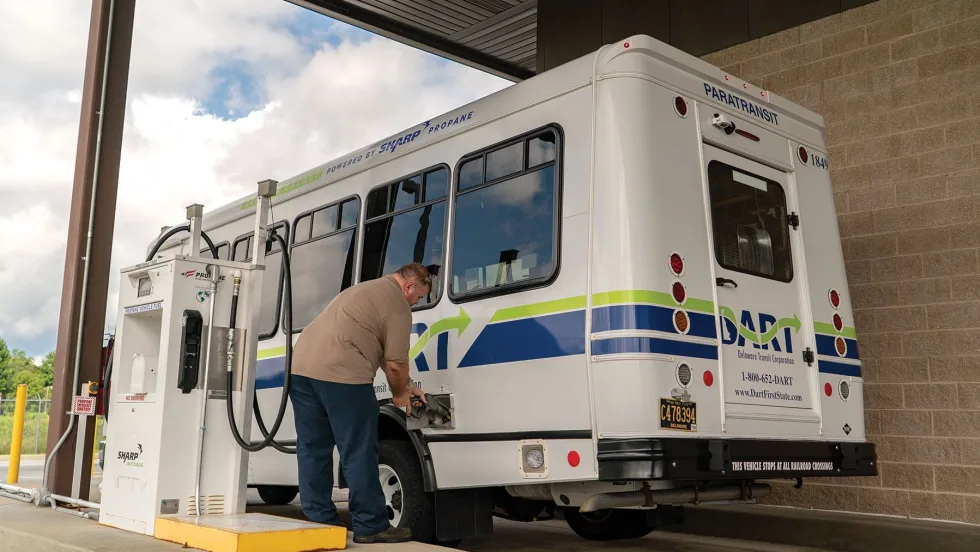
Building a Winning FTA Grant Proposal: Why Propane Autogas is the Pragmatic Choice for Fleet Resilience
With $610 million available through the FY 2026 Buses and Bus Facilities Competitive Program and the Low or No Emission Grant Program, agencies must build a compelling case before the September 21 deadline that balances environmental compliance with operational feasibility.
Read More →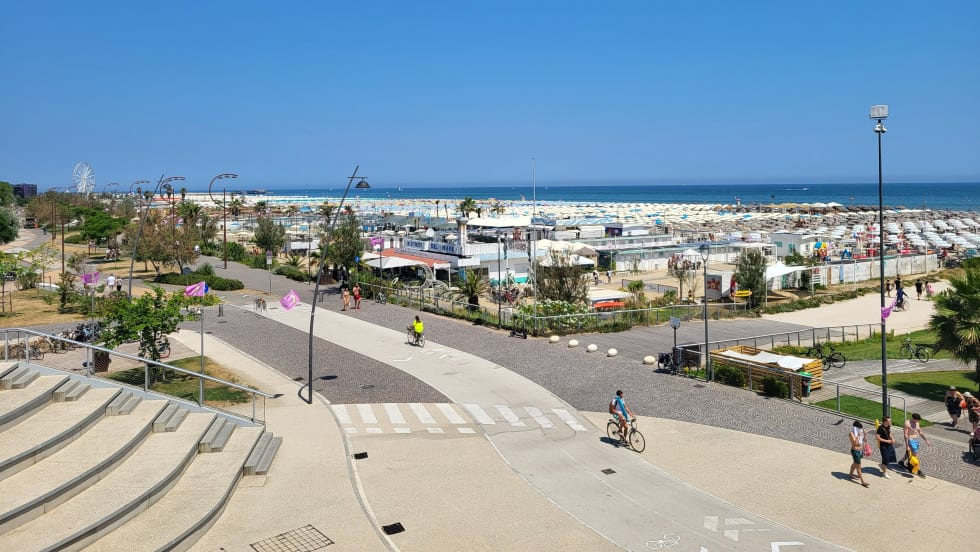
Velo-city Conference 2026: Latest Trends in Cycling as Part of Urban Mobility
The global cycling conference highlighted how cities are integrating bicycles into multimodal transportation networks, expanding cycle tourism and reshaping urban mobility.
Read More →
Kindness Isn’t Soft...It’s Strategic.
Mike Bismeyer — often known as “The Kindness Guy” — has spent more than 17 years in public transit and mobility, serving in industry leadership roles, speaking across North America, and advocating for stronger workplace cultures. But his message doesn’t come from theory. It comes from lived experience.
Read More →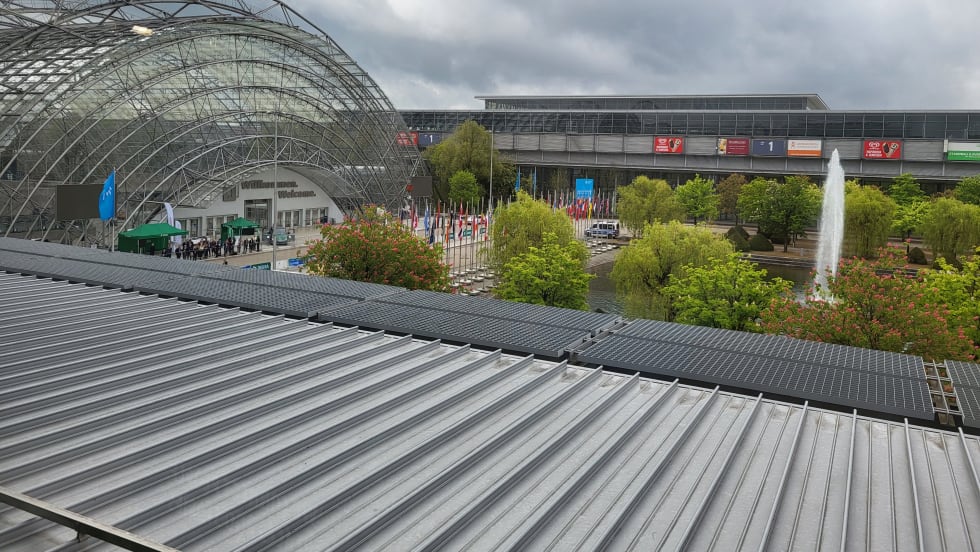
Inside ITF 2026: Transport Reacts to A Challenging World
Transport leaders from around the world gathered in Leipzig, Germany, for the 2026 International Transport Forum to discuss resilience, climate impacts, supply chains and the future of sustainable mobility.
Read More →
Every Ride Tells a Story — But You’re Not Just Selling the Ride
You’re selling the moment, the meaning, and the emotion behind it.
Read More →
How Digital Signage is Reshaping the Traveler Experience at Transportation Hubs
What was once a landscape of static signs has evolved into a responsive, immersive environment powered by real-time visual communication.
Read More →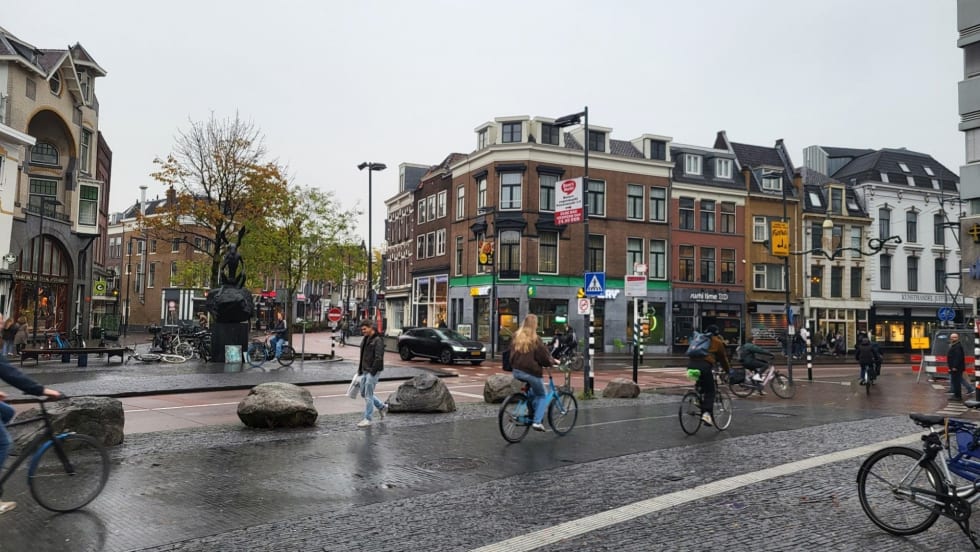
Latest Trends in Urban Mobility from Polis Conference 2025
Polis comprises cities and regions, as well as corporate partners, from across Europe, promoting the development and implementation of sustainable mobility. This year’s event had over a thousand attendees across various policy forums and an exhibition.
Read More →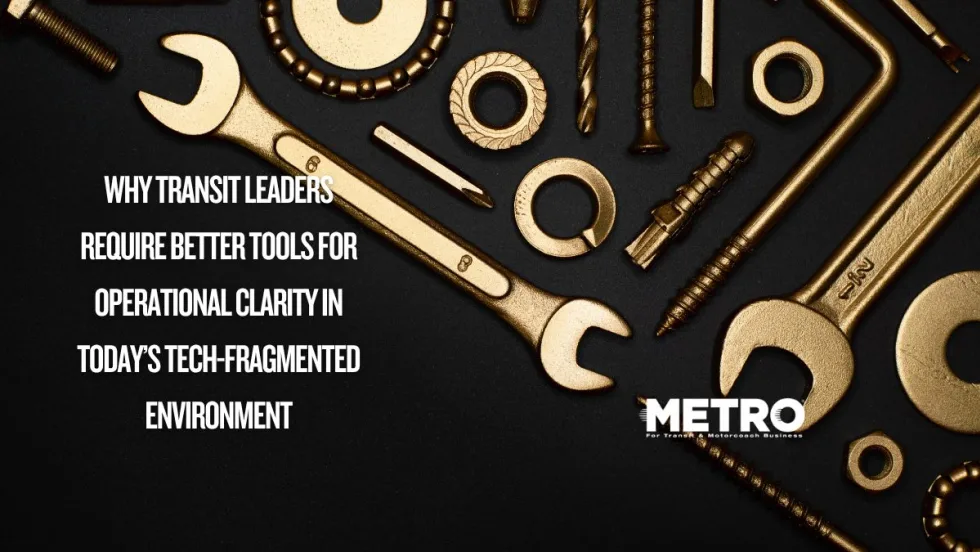
Why Transit Leaders Require Better Tools for Operational Clarity In Today’s Tech-Fragmented Environment
Across North America and beyond, transit agency officials are contending with a perfect storm of operational headaches and strategic challenges that hamper daily service and long-term progress.
Read More →
The Powerless Brokers: Why California Can’t Build Transit
It is no secret that transit in the U.S. is slow and expensive to build.
Read More →
Why Transport Sustainability Should Focus on People Instead of Cars
Simply incentivizing electrification is not enough to make a meaningful impact; we must shift our focus toward prioritizing public transportation and infrastructure.
Read More →