



Denton County Commuter Rail Line Breaks the Mold
The agency goes from inception to launching the 21-mile commuter rail system in approximately nine years. The project was built without the use of any federal funds.
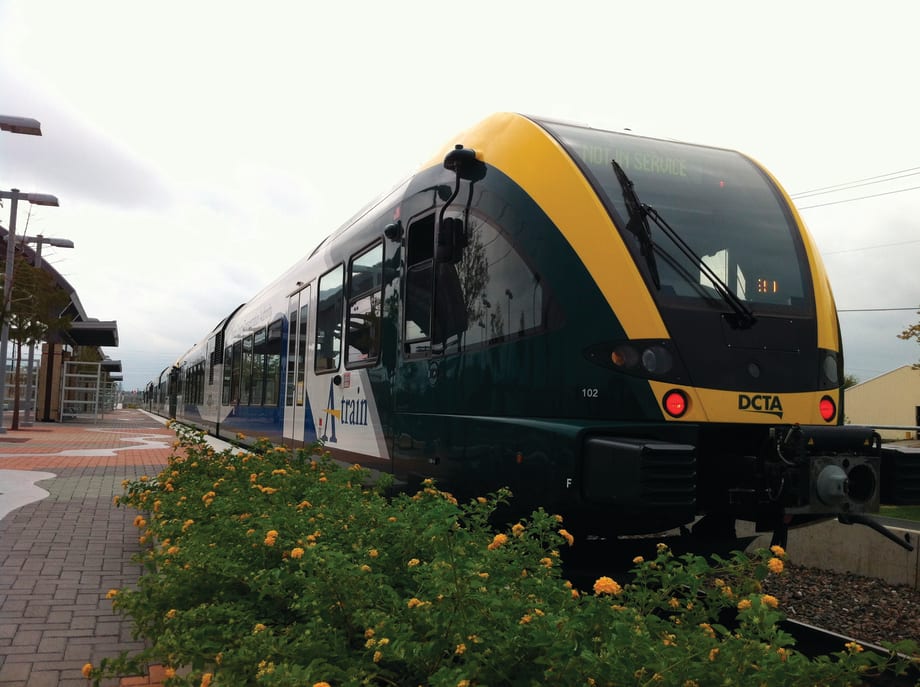
Formed in 2002 and funded in 2003, the Texas-based Denton County Transportation Authority (DCTA) did the unthinkable in June 2011 when it opened its 21-mile A-train commuter rail line for revenue service using no federal funds.
“This was not a New Starts project,” says Jim Cline, DCTA’s president. “The capital portion of the project was funded through sales tax and funded from the county through a concession payment from a toll road that was contracted a few years ago.”
Project development
Created by House Bill 3323, under Chapter 460 of the Texas Transportation Code, approved by the 77th Texas Legislature and signed into law by the Governor in 2001, DCTA is a coordinated county transportation authority that earned a 73% approval rating to form by the Denton County voters in November 2002.
Recognizing the importance of public transportation to a small urban county facing tremendous population and employment growth, DCTA pushed an aggressive schedule for the launch of the A-train, which stretches from Denton to Carrollton and connects with Dallas Area Rapid Transit’s (DART) Green Line.
Realizing that the federal New Starts process threatened to delay the project, the DCTA board directed staff to forgo the federal process and seek additional funding resources.
“Back in 2007, we were in the environmental phase of the federal process and working under the New Starts parameters at the time, which was strictly based off of cost effectiveness,” explains Dee Leggett, VP, communications and planning. “We struggled with meeting the thresholds and also staying on our aggressive timeline of tying in with DART in late 2010/early 2011. It was really our desire to push for implementing a project sooner, rather than later, that led to the strategic decision by our board to forego the New Starts process.”
A half-cent Denton County sales tax paid for only 20% of the cost to build the A-train. The remaining 80% came from a new Regional Toll Revenue funding initiative, which was a result of the Texas Legislature enabling the Texas Department of Transportation to consider public- and private-sector partnerships to finance roadways.
The first agreement to generate Regional Toll Revenue funds was with the North Texas Tollway Authority (NTTA). In exchange for the opportunity to construct, operate and maintain a 26-mile toll road for 52 years, NTTA paid the region $3.2 billion. The Regional Transportation Council (RTC) used these funds to expedite about 200 transportation projects, one of which was DCTA’s A-train. In April 2008, the RTC approved funds for the purchase of railcars, and in August 2008, $190.2 million was approved for the completion of DCTA’s A-train.
“Our chairman, who is a member of the RTC, was quite familiar with some of the different funding pots that would become available, and we knew that there was going to be a concession arrangement for the toll revenues that would create opportunities for funding,” says Cline. “Obviously, we weren’t sure of where our project would fall, but we knew it was a priority project for Denton County, which gave us a pretty good chance.” [PAGEBREAK]
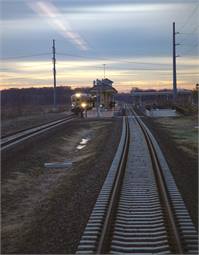
Built without the use of federal funds, the DCTA’s A-train commuter rail line commenced revenue service in June 2011.
Partnering
Currently, DCTA is averaging 1,500 to 1,600 passengers a day, with the area’s university population — University of North Texas and Texas Woman’s University — making up a large part of that number. Since its launch, the rail service has also helped grow DCTA’s bus ridership by 15% to 25%, depending on the route.
“We provide shuttle services for the University of North Texas, and between doing that and student passes to go with the schools under a contract relationship, it has greatly expanded our level of service for all of our riders and met the needs of our education facilities,” says Cline.
A major contributor to the A-train’s success has been the partnership between DCTA and the other local transit agencies — DART, the Fort Worth Transportation Authority (The T) and Trinity Railway Express (TRE).
DCTA is leasing the right-of-way from DART and working to coordinate the A-train with its Green Line. While awaiting its new Stadler GTW railcars, DCTA is leasing vehicles — Budd diesel railcars — from TRE.
“Another example [of our partnerships] is the backup dispatch center for TRE in our rail operations and maintenance facility. We built a duplicate system where they can dispatch the entire TRE system and DCTA system from our location, if they have issues,” says Cline. “We also joined in on the TRE’s operations contract, so we’re leveraging; the whole thing is making a ton of sense.”
One factor driving the positive working relationship between the agencies is the customer, explains Leggett.
“At the end of the day, the customer doesn’t care whether its DCTA or DART that they are riding on, they want to be able to get from Denton to Dallas or Dallas to Denton,” she says. “So, we have had to develop this really close working relationship from planning our different schedule changes to coordinating our call centers, and luckily, DART has been a great partner.”
Leggett adds DCTA knows it is lucky to have such a positive relationship.
“I have heard horror stories in other metropolitan areas to remain nameless,” she says. “The fact that DART, DCTA and The T work so well together is really amazing. It says a lot about the willingness of North Texas to advance transportation alternatives regardless of whose name is on the bus or train.”
Growing pains
As with any new system, the DCTA has experienced some growing pains with its A-train, however, it has been pleased with its progress. One of the issues has been effectively scheduling its commuter rail service, since it typically has longer headways than DART’s more frequent light rail service.
“Since we are on a single-track system, one of the things we have to be careful about is scheduling, because we are synchronizing two-way traffic. We have to make it to the sidings or the stations so the trains can pass,” says Cline. “One of the things we are trying to work closely on with DART, is if a DART train arrives late, we are trying to find a way to not leave people behind because we have longer headways.”
Most of the work for the DCTA, however, came from revising routes and schedules for its bus service, which served 2.5 million people in 2011. Following the launch of the A-train, the DCTA added Route 9, which now provides the last mile of service from its northern terminus to the University of North Texas. The focus on improved service stems partly from a survey of riders and non-riders, which found that 50% of A-train users ride only within the limits of DCTA’s territory.
“Our supervisors are out and about all the time, looking for locations to see how we can make the meets happen better on the bus side as well as the links to the train at either the north terminus or south terminus,” says Cline. “We did two schedule revisions, — August 2011 and January 2012 — and we are zeroing in on that, eliminating some of the areas where we maybe weren’t making the times or the meets weren’t working very well. It’s getting better and better each time.”
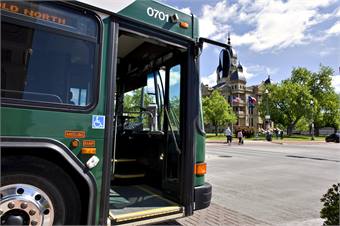
The A-Train helped boost DCTA'sbus ridership.
Rolling stock
As mentioned earlier, DCTA is currently leasing Budd railcars from TRE as it anticipates the final delivery and approval of its Stadler GTW rail vehicles.
“We have received our eighth Stadler car out of 11 and going through acceptance testing,” says Cline. “We will be ready to put them into service as soon as we get the final check-off from the Federal Railroad Administration (FRA).”
In February, DCTA submitted the rail industry’s first Alternative Vehicle Technology (AVT) waiver to the FRA. The purpose of the waiver is to obtain permission to use the Stadler GTW rail vehicles, with their alternate crashworthiness elements, in revenue service concurrently with DCTA’s current fleet of traditional FRA-compliant vehicles. The submission completed months of study and analysis, in cooperation with the FRA, Swiss-based Stadler and DCTA’s systems consultant LTK Engineering Services, to establish the equivalency of the Stadler vehicle design with traditional U.S. compliance standards.
The agency employs temporal separation — traditional and new vehicle fleets are always separated — over the A-train corridor, so integration of the Stadler GTWs into service is not contingent upon receipt of the AVT waiver. However, the waiver will allow DCTA to introduce the new cars sooner to run in mixed-use with the traditional cars currently in operation.
“The AVT waiver will give us the opportunity to work with compliant passenger or freight vehicles because future corridors are likely to be on an active freight line,” Cline says. “To be able to operate the vehicles with prudent dispatching on the same tracks as freight vehicles is key to the ability for us to have a successful future.”
Short, long-term growth
In the short term, DCTA is focused on equipping its commuter rail system with positive train control (PTC) technology at an estimated cost of $17 million.
“We are proceeding forward on our timetable and looking to see what happens as far as implementation dates,” says Cline. “There are some significant unknowns in that, so there are issues that have to be resolved before we can really move forward.”
The long-term growth of the A-train is set to eventually reach 60 to 65 miles, but is all “funding dependent” and hinges partly on the FRA’s approval of its Stadler vehicles, according to Cline.
While the first phase of the A-train was built without federal funds, Leggett says the agency is concentrating on developing more win-win partnerships as it moves forward, with Cline adding the DCTA is open to all options down the road, depending on what may suit the project best.
“If you can judiciously use local funds for elements of the project, you get flexibility and it provides some opportunities that you don’t have when you use federal funds,” says Cline. “But, that is only if they are available and can help your timeline to get a project completed sooner.”
More Bus
Brian Dickson on Building Stronger, More Resilient Transportation Organizations
Bus Business Consultants Founder Brian Dickson discusses the leadership principles, operational discipline, and strategic planning that separate transportation companies positioned for long-term success from those stuck in survival mode.
Read More →
LA Metro Breaks Ground on Vermont BRT Project
The 12.4-mile corridor is projected to serve 66,200 daily riders, reduce travel times by up to 24%, and create the nation's busiest bus rapid transit corridor.
Read More →
Roman Cornell on ABC Companies’ Evolution and the Future of Passenger Transportation
The company’s CEO discusses carrying forward a third-generation family legacy, ABC’s continued evolution in passenger transportation, support for increasingly complex fleets, and how technology and continued investment could help operators improve uptime.
Read More →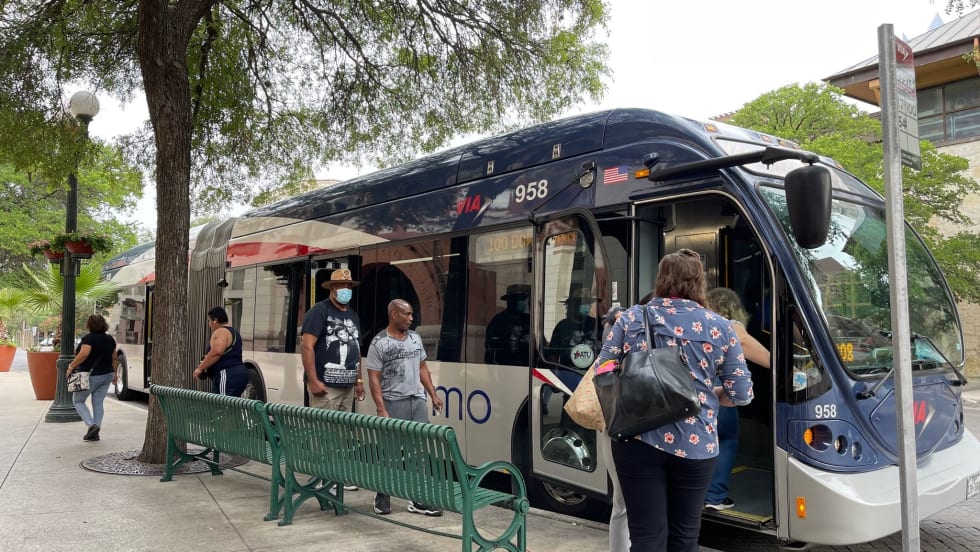
VIA Bus Ridership Grows 10.1% Through August 2026
San Antonio's VIA Metropolitan Transit reported the highest bus ridership growth among major Texas transit systems. Federal Transit Administration data ranked it second among the nation's 50 largest transit systems.
Read More →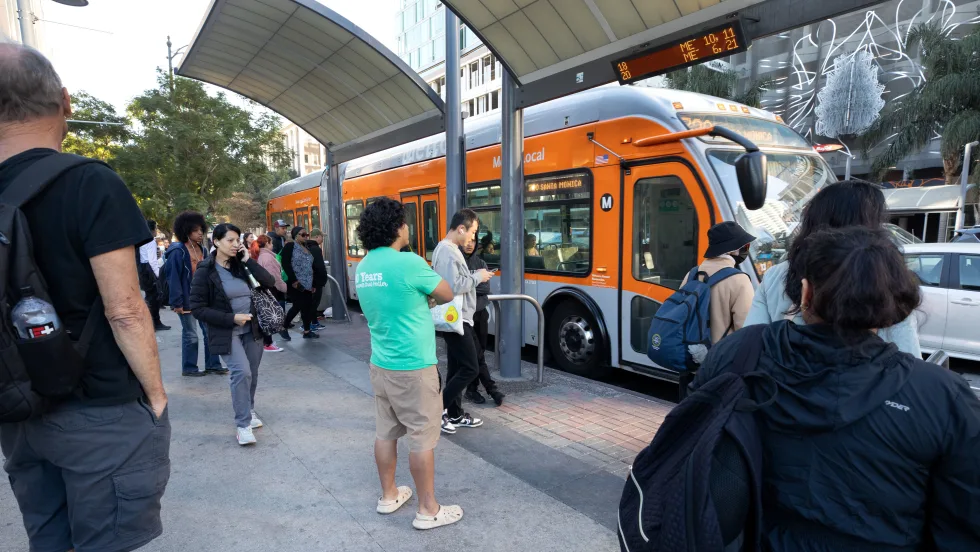
LA Metro September Ridership Climbs 3.9%, Led by Rail Growth
The agency recorded more than 27.2 million boardings, with rail ridership increasing 12.4% year over year and the D Line posting the largest gains.
Read More →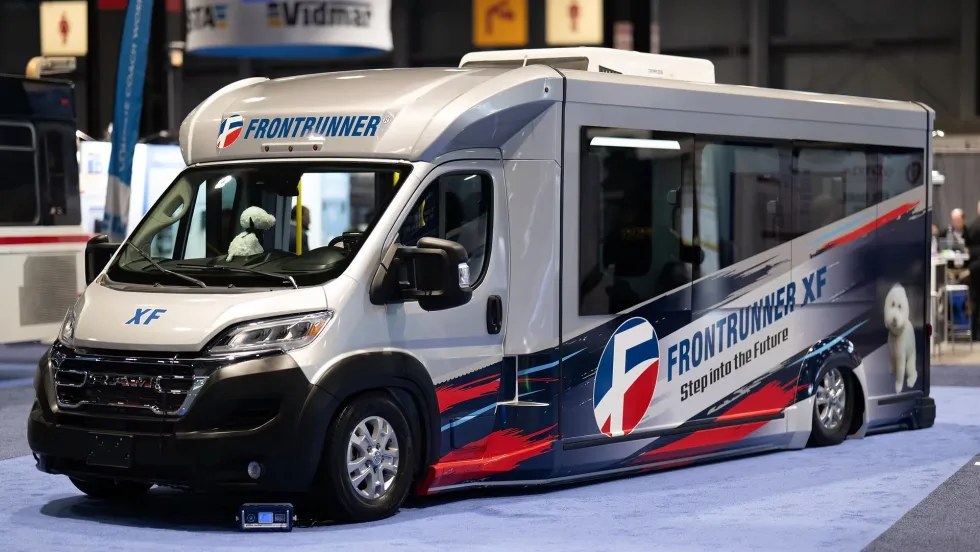
Frontrunner Bus Group Introduces XF Low-Floor Bus with Enhanced Accessibility
The new mid-sized bus features a full flat-floor design, eight-inch curbside step-in height, and zero-entry rear ramp to improve passenger access and operational flexibility.
Read More →
Scenes from APTA TRANSform & EXPO 2026
Transit leaders, manufacturers, and industry professionals gathered in Chicago to explore new technologies, share ideas, and discuss the future of public transportation.
Read More →
More Than a Summer Job: Building the Next Generation of Transit Talent
The Delaware River Port Authority and PATCO have transformed their internship program into a hands-on professional development experience that introduces students to the breadth of transportation careers — and creates a pipeline for future employees.
Read More →
LA Metro Board Awards 220 Battery-Electric Bus Contract to ENC
The contract, which is the largest base award of battery-electric buses by a U.S. transit agency, will be built in Southern California, sustaining good jobs as LA prepares to welcome the world in 2028
Read More →
Public Transit Conference Returning to GFX in 2027, Call for Papers Now Open
The Call for Papers is now open, allowing transit agency professionals and industry experts to help shape the PTC educational program by submitting session ideas for consideration.
Read More →