



Denver RTD Generating Innovative Ideas to Fuel Expansion
Initiatives pursued include boosting sales tax revenue, maximizing assets and creating a pooled savings account, while leadership programs and partnerships have helped bolster its workforce.
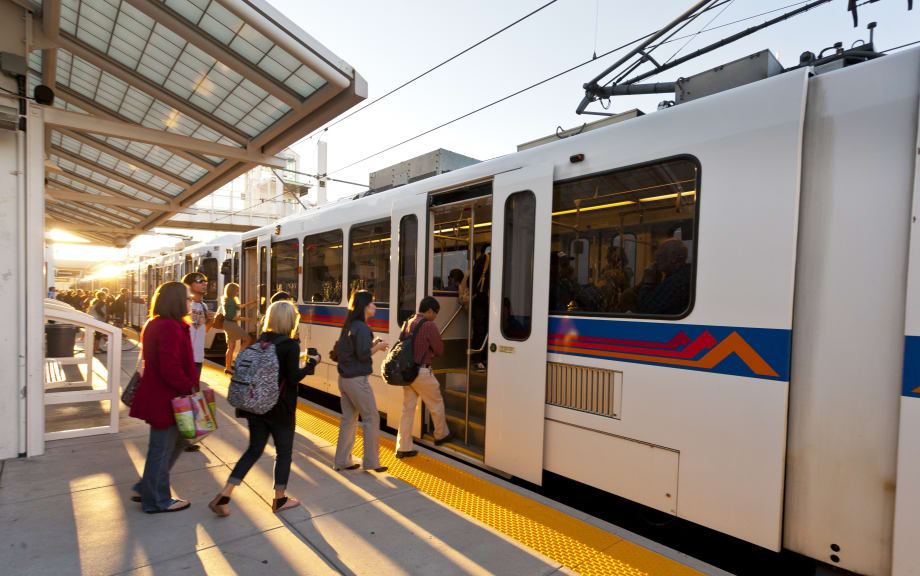
Projected ridership for the new W line (left), opening under budget and ahead of schedule, is expected to reach 20,000 to 25,000 passengers.
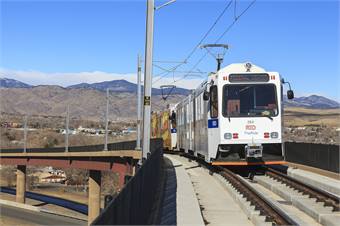
The first portion of RTD’s FasTracks program, the West Line light rail line, will debut late April.
Delivering quality service to the more than 2.8 million people residing in Denver Regional Transportation District’s (RTD) expansive service area, while managing a multi-billion dollar transit expansion program, takes precision, planning and innovative thinking. It is this innovation that has been the key to RTD GM Phillip A. Washington’s ability to develop new revenue streams and bolster the workforce to help keep the system and its projects moving forward.
Funding initiatives pursued include boosting sales tax revenue, maximizing current assets and creating a pooled savings account, while leadership programs and collaborative partnerships have helped bolster its workforce.
Economic challenges
RTD’s services include light rail, fixed-route bus and paratransit, as well as seasonal bus service to sporting events. The agency uses a fleet of nearly 1,000 buses and 172 light rail vehicles to serve 40 municipalities in six counties plus two city/county jurisdictions within a 2,300-square-mile service area.
RTD is funded with a combination of farebox recovery (20%) and collected sales tax, advertising, grants and interest income revenues (80%). Currently, the agency receives 0.6% from sales tax for its base system operations and 0.4% of sales tax for its capital program. Like many transit systems in the U.S., RTD has seen their sales tax revenues fall due to the economy.
During these fiscally challenging times, the agency froze salaries, locked in fuel prices, restricted travel and deferred projects.
“We bit the bullet last year and cut service by eight to nine percent,” Washington says. “It was tough, but as a result we stabilized our budget.”
Washington says he doesn’t anticipate significant service reductions or fare increases for the next few years.
Additionally, RTD just negotiated a five-year collective bargaining agreement. “That length of time is really unprecedented in this industry,” he says. “To do that within the parameters of the budget was really significant.”
The precarious economic outlook also made it a challenge to continue moving the agency’s mass transit expansion program — FasTracks — forward. To prevent any delays on this front, RTD developed innovative ways to generate additional funding. [PAGEBREAK]
The first portion of RTD’s FasTracks program, the West Line light rail line, will debut late April.
Creative funding
One of the first of several initiatives the agency pursued was a public-private partnership to help fund its East and Gold Line commuter rail projects (Eagle P3). Other FasTrack projects, such as the North Metro Commuter Rail Line and RTD’s bus rapid transit project, will benefit from creative funding in the form of the FasTracks Internal Savings Account. This account would pool together funds from several internal actions such as pursuing additional sales tax revenue.
To that end, the RTD is awaiting the outcome of a new bill that would allow the agency to have parity with the state to tax items such as candy, soft drinks and cigarettes — items already taxed by the state. If passed, the bill would raise an additional $2.7 million annually, which would help fund the FasTracks commuter rail project.
Additionally, a consulting firm was brought in to look at the agency’s assets for revenue generating opportunities.
“We want them to determine where it makes sense to sell naming rights to stations, those kinds of things,” Washington says.
Maximizing the value of its assets was also the goal behind the development of the T3 (Transformation through Transportation) industry forum held in fall of 2011. Top executives from engineering, construction, financial and tech firms from around the world took part in the event.
“We brought in big businesses and players from all over the world,” Washington says. “We laid out our program plans and asked them to come in with their ideas and help us. Not just to build new infrastructure, but to look at our existing assets and tell us how we can maximize the value of what we have.”
To enhance the idea submission process, the RTD revised their unsolicited proposal policy. Since the forum, RTD received several unsolicited proposals, which resulted in being able to complete the I-225 Rail Line corridor by 2016.
“We are in the process of being able to push another project forward [the North Metro Rail Line] through this process,” Washington says.[PAGEBREAK]
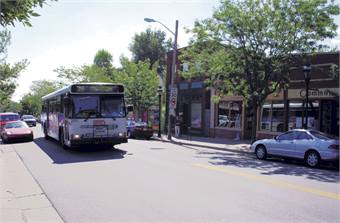
Three times a year, the agency reviews its services to determine if certain ridership thresholds are met and makes tweaks where needed to run more efficiently.
Workforce development
Creative thinking too played a key role in the agency’s workforce development plans. As of late, workforce development has been a hot topic in the public transportation industry. In 2011, Washington implemented an innovative training program that develops qualified employees for senior management positions within the agency and the industry.
“[This program] is very important to me and my team, because one of the top priorities of any leader should be the development of his/her people,” Washington says.
The Strategic Leadership Development Program (SLDP), as it is called, is made up of five steps and fosters growth from entry level to executive leadership. The first step is a leadership academy, a 12-month program that trains selected employees on all aspects of the organization, including operations, finance, labor, budget and the board-staff relationship.
Participants are also required to have classroom instruction on various topics, such as ethics and time management. Another step is mentoring, which sees senior staffers coaching employees to achieve their goals. For the third step, assistant GMs are tasked with creating their own leadership program within their department.
The final piece of the program is a multi-agency partnership where eight to 10 employees are selected to travel to the different partnering agencies for a few days every three months to share ideas, best practices and discuss real-world operational challenges.
“This is a sharing of best practices and allowing each agency’s participants to see what we are doing,” Washington says. Currently, the agency is collaborating with Dallas Area Rapid Transit and the Los Angeles County Metropolitan Transportation Authority. “We are going to add another agency for 2014,” Washington says. [PAGEBREAK]
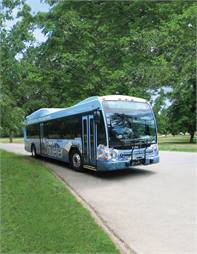
A fleet of 40-foot Gillig hybrid-electric BRT buses help RTD attain their sustainability goals.
Creating jobs
Complementing the Strategic Leadership Development Program is Workforce Initiative Now (WIN), a collaborative workforce partnership led by RTD to create career opportunities into the transportation industry. WIN was developed as a workforce strategy to maximize opportunities for unemployed and underemployed residents of the communities impacted by large regional infrastructure projects.
“It trains people to put them to work on construction projects, and capital programs; in this case, our FasTracks Program allows them entry into the industry,” Washington says.
The RTD also builds the WIN strategy into their contracts for work going out.
“If you bid on any of our jobs, you have to agree to allow and meet the goal of a percentage of WIN participants in this program,” he says. Since its inception in 2010, 300 participants have benefited from the program.
Light rail launch
By the end of April, RTD will begin to see the fruits of its labor when it launches the first portion of its FasTracks expansion program, the 12-mile West Line light rail line. Features include eleven new stations, six park-n-rides, 7.5-minute frequencies during rush hour, with projected ridership of 20,000 to 25,000 passengers per weekday.
“We have exceeded all of our ridership projections for every line that we’ve opened,” says Washington, “We’ll do the same thing here.”
The line is opening under budget and eight months ahead of schedule, which is practically unheard of, according to Washington. When asked how RTD was able to achieve this, he says, “Through top project management and military precisionI’m a big proponent of empowering people, but holding them accountable.”
For an interview with GM Phillip Washington, click here.
More Bus
Biz Briefs: New Flyer Delivers in Columbus, Houston, Beep and Freebee Merge, and More
In this edition of Biz Briefs, we spotlight the latest developments shaping the future of mobility.
Read More →
People Movement: Dan Dipert Coaches Adds Third-Generation Leader, Keolis Names New Valley Metro VP/GM, and More
In this edition, we also cover recent appointments and announcements at the Wabtec, SilverRide, HNTB, and more, showcasing the individuals helping to shape the future of transportation.
Read More →
New York MTA Plans Largest Bus Fleet Upgrade in More Than a Decade
The agency is seeking manufacturers for 650 new CNG buses to replace aging vehicles, improve reliability, and advance its broader fleet modernization strategy.
Read More →
Building a Flexible Path to Transit Electrification
John Hroncich discusses BAE Systems’ modular and scalable approach, lessons learned from decades of real-world operations, and how agencies can identify electrification strategies that fit their fleets.
Read More →
Bus Tech Talk: Keeping Transit Technicians Ahead of the Technology Curve
LA Metro’s Obed Mejia discusses technician training, evolving maintenance technology, fleet replacement, and strategies for getting the most out of today’s transit fleets.
Read More →
Biz Briefs: RIPTA Unveils New Frontrunners, Clevland RTA Adds New Siemens, and More
In METRO's latest installment, we take a look at recent news from Siemens, Prevost, Dodge, and more partnerships making headlines across the transportation sector.
Read More →
People Movement: Holly Arnold Joins Transdev and More
In this edition, we also cover recent appointments and announcements at Pace, CamTran, MCI, and more, showcasing the individuals helping to shape the future of transportation.
Read More →
The High Cost of Transit Buses: Industry Leaders Look to Procurement Reform
Transit leaders and policymakers examine how standardized bus designs, streamlined procurement, and predictable funding could help agencies stretch budgets and deliver better service.
Read More →
The Business Voice Behind Public Transportation
As chair of APTA’s Business Members Board of Governors, Ray Melleady explains how more than 850 business members are partnering with transit agencies to advance funding, innovation, and industry-wide collaboration.
Read More →
From Surviving to Thriving: Building Stronger Transportation Organizations
Bus Business Consultants founder Brian Dickson shares lessons on leadership, organizational health, and creating options for long-term success in a changing transportation industry.
Read More →