



How Contractors are Providing Solutions for Transit’s Challenges
Whether reallocating fleet assignments or revamping an organization’s safety culture, private contractors are tapping innovative technologies and programs to create solutions for the challenges faced by today’s public transit systems.
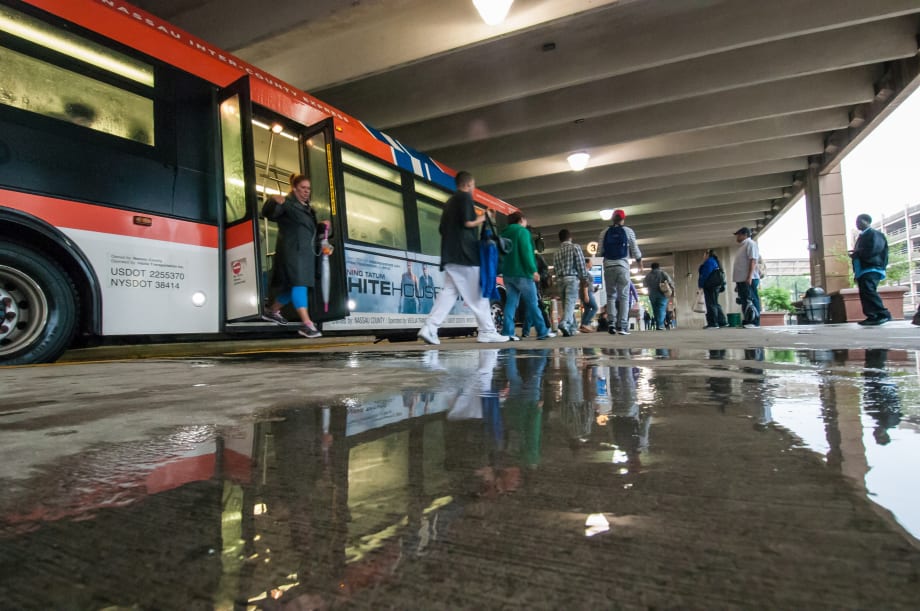
Nassau Inter-County Express recently launched a mobile fare app to attract new riders.
Nassau Inter-County Express recently launched a mobile fare app to attract new riders.
“Solution providers” is an apt name for private contractors of public transportation services. Whether it’s implementing cost-saving initiatives or introducing an overhaul of an operation’s safety culture, outsourcing can be the obvious solution for many.
Tapping the expertise of contractors appears to be a growing trend, with more and more transit agencies turning to outsourcing than ever before, says Dick Alexander, sr. VP, business development, for Veolia Transportation.
“I think a lot of it [has to do with] the economic crisis,” he says of the development. “I think those that might have been on the fence about whether to contract or not, found the economic conditions were such that t they needed to turn to it because the private sector can do it cheaper and more efficiently.”
First Transit’s sr. VP, operations, western region, Nick Promponas, says, “Agencies who have historically outsourced remain committed to the model and continue to use it in their deployment strategy.”
To that end, the number of companies offering outsourcing services is growing.
RELATED:Transit Contractors Bring Efficiencies, Share Success Stories
“There are more people entering the market, it’s just more competitive,” Alexander says. “Instead of competing against two other people, you are competing against five.”
Read on to find out how three private contractors are using innovative programs and technologies to create solutions for the challenges faced by today’s public transit systems.
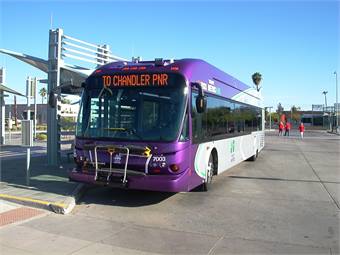
First Transit’s strategy for its Valley Metro Regional Public Transportation Authority contract saved over 450,000 fleet miles per year and 23,000 pay hours.
First Transit- Valley Metro Regional Public Transportation Authority
Transit agencies looking to take advantage of the benefits of outsourcing services include the Phoenix-based Valley Metro Regional Public Transportation Authority (RPTA), which hired First Transit to take over operation of its City of Mesa facility and the City of Tempe’s fixed-route operations and maintenance services on behalf of Valley Metro to help identify efficiencies. The three-year base contract, with seven, one-year options, which began last July, includes management of approximately 300 vehicles and more than 700 employees.
Challenges: The RPTA and the City of Tempe were considering proposals that would consolidate fixed-route services in the East Valley for the purposes of gaining efficiencies, such as reduced mileage — which equates to less wear and tear on their equipment and reduced fuel costs — through reallocating fleet assignments between the transit facilities in Mesa and Tempe, Promponas says.
They solicited for proposals to evaluate the current service structure and to determine how to best deploy the fleet to meet these objectives, he says.
Solutions: “Our analysis determined that up to 90 vehicles could be reassigned from Mesa to Tempe,” Promponas says.
The steps taken to achieve this included the development of a comprehensive run cut that not only reassigned vehicles, but also adjusted running times to reduce non-productive time. Also, careful consideration and analysis of existing staffing as well as labor agreement wages and benefits between both yards was made, he adds.
Challenges: On the fixed-route side, the key area of improvement was getting the fleet to align geographically with routes. “In the old model, deadheads were excessive and the cost of running the service was unnecessarily high,” Promponas says.
Solutions: The company used a number of tools to derive efficiencies from the system, including proprietary run-cutting software and Infor EAM software (branded as First Base.info), which serves as the backbone of the maintenance and facilities operation.
“The software allows us to schedule repairs in a very systematic and efficient way, including the automation of generating purchase orders as part of the inventory management process,” Promponas explains.
First Transit also provided 40 hours of customized annual skills enhancement training for its technicians.
“Our goal is to reach ASE Blue Seal certification at all of our maintenance operations,” Promponas says. “In addition, we also provide virtual training that begins with a comprehensive online skills assessment to establish baseline knowledge, and the program is then customized through training modules based on their identified needs.”
The company also uses the Transportation Safety Institute’s training curriculum for our operators and instructors.
Results: “Our strategy saved over 450,000 fleet miles per year and 23,000 pay hours,” Promponas says.
National Express - Solano County Transit
Cincinnati-based transit-contracting firm, National Express deployed an innovative program to help rebuild a safety culture for Solano County
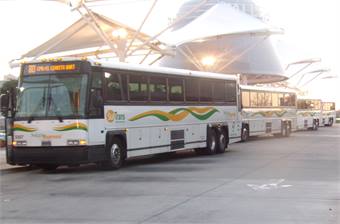
Calif.-based Solano Transit received the Gold Award for Safety at APTA’s 2014 Bus and Paratransit Conference in Kansas City, Mo.
(Calif.) Transit (SolTrans). National Express took over operation of 75 fixed-route buses and eight paratransit vehicles as well as the management of 95 bus operators and 130 total employees, beginning in July.
Challenges: “Prior to the takeover, safety issues recognized included questionable employee morale overall and the accident rate was approximately 2.0 accidents per one hundred thousand miles,” says Tom Greufe, VP, safety, for National Express.
Training staff also identified a number of “at risk driving behaviors,” including speeding, hard stops, not coming to complete stops, and aggressive pull-ins and pull-outs of bus stops.
Solutions: To mitigate the problems, National Express employees implemented safety culture training sessions covering five culture-building steps: Create a vision of the desired safety culture; assess the current safety culture’s strengths and weaknesses; develop a safety action plan and allocate resources; implement the safety action plan strategy and hold people accountable for meeting objectives; conduct ongoing evaluation of progress.
“To help support and promote the safety culture vision, a large daily scoreboard was installed in the operator’s break room that tracked daily safety performance to let them know if they achieved an accident- and/or injury-free day,” Greufe says.
Utilizing positive reinforcement in the training process was also key.
“If somebody does something wrong, we want to correct the problem first before taking disciplinary steps. If the problem persists, then disciplinary action will be taken,” he explains.
Another strategy used in the training was the elimination of discipline steps for any hazardous acts committed by an employee that was reported by other employees and to focus on corrective retraining and future prevention instead.
“What really got [the employees] to buy into the process was the pride factor — knowing that they could be known as one of the safest transit systems in California, if they all worked together as a team,” Greufe says.
Results: When comparing the rates in the final six months of 2013 to the rates of the first six months before taking over the contract, the operation achieved a 71% decrease in accidents, a 75% decrease in passenger falls and a 56% decrease in employee injuries.
Solano Transit was recognized for its efforts at APTA’s 2014 Bus and Paratransit Conference in Kansas City, Mo. where it received the Gold Award for safety.
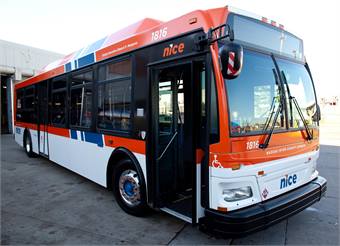
Veolia Transportation – NICE Bus
The Nassau Inter-County Express (NICE) bus system operates in Nassau County, just east of New York City on Long Island, serves approximately 100,000 riders daily. The system currently operates 52 routes with a fleet of 300 fixed-route buses and 95 Able-Ride paratransit service vehicles.
Veolia Transportation took the service over from the New York Metropolitan Transportation Authority (MTA) in January 2012 as a five-year public-private operating contract, with an option for five more years.
“Not only are we doing the operations, we’re doing maintenance, planning, scheduling, marketing and we manage their grants,” says Alexander.
Challenges: “They didn’t want to cut service,” he explains. “It’s a very well-utilized service, but the county was under terrific financial strain.”
Veolia proposed restructuring some of the services, which meant reducing service in some areas, but adding service to others.
“We went in looking for a way to make the service more efficient in terms of what was provided and change the cost structure of the system,” Alexander says.
Solutions: This involved reorganizing the purchasing processes within the system, cutting unnecessary overhead positions and processing payroll nationally.
Veolia also implemented a major rebranding of the system to attract more riders and make it more responsive to customer’s needs. In addition to changing the name to NICE and creating a new look, Veolia developed an interactive website, which includes Next bus information. Other changes included restructuring schedules and routes.
“We did a complete rework of the service schedules, but we didn’t cut service,” Alexander explains.
The most recent innovation deployed by the company was the new Go Mobile fare app, making NICE among the first U.S. bus transit systems to offer smartphone ticketing to its customers featuring smartphone payment apps for both iPhone and Android.
“What we’re trying to do is attract new riders to the system, expecially from the local universities” Alexander says of the fare app launch.
Results: Since taking over the contract, the company has reduced operating costs 23% — from $136.95 to $106.04 per hour — and has achieved higher customer satisfaction scores each quarter during the first year.
Other outcomes include reduced service hours and increased ridership, as well as increasing wages by 3% and holding cash fare structure flat while MTA increased fares to the region.
More Bus

New York MTA Plans Largest Bus Fleet Upgrade in More Than a Decade
The agency is seeking manufacturers for 650 new CNG buses to replace aging vehicles, improve reliability, and advance its broader fleet modernization strategy.
Read More →
Building a Flexible Path to Transit Electrification
John Hroncich discusses BAE Systems’ modular and scalable approach, lessons learned from decades of real-world operations, and how agencies can identify electrification strategies that fit their fleets.
Read More →
Bus Tech Talk: Keeping Transit Technicians Ahead of the Technology Curve
LA Metro’s Obed Mejia discusses technician training, evolving maintenance technology, fleet replacement, and strategies for getting the most out of today’s transit fleets.
Read More →
Biz Briefs: RIPTA Unveils New Frontrunners, Clevland RTA Adds New Siemens, and More
In METRO's latest installment, we take a look at recent news from Siemens, Prevost, Dodge, and more partnerships making headlines across the transportation sector.
Read More →
People Movement: Holly Arnold Joins Transdev and More
In this edition, we also cover recent appointments and announcements at Pace, CamTran, MCI, and more, showcasing the individuals helping to shape the future of transportation.
Read More →
The High Cost of Transit Buses: Industry Leaders Look to Procurement Reform
Transit leaders and policymakers examine how standardized bus designs, streamlined procurement, and predictable funding could help agencies stretch budgets and deliver better service.
Read More →
The Business Voice Behind Public Transportation
As chair of APTA’s Business Members Board of Governors, Ray Melleady explains how more than 850 business members are partnering with transit agencies to advance funding, innovation, and industry-wide collaboration.
Read More →
From Surviving to Thriving: Building Stronger Transportation Organizations
Bus Business Consultants founder Brian Dickson shares lessons on leadership, organizational health, and creating options for long-term success in a changing transportation industry.
Read More →
Finding the ‘Happy Medium’: Optimizing Maintenance Without Sacrificing Reliability
The key to maintenance optimization isn’t doing less work—it’s doing the right work at the right time on the right assets.
Read More →
LA Metro, City of West Hollywood, and Partners Advance Smarter Bus Lane Enforcement
The award-winning partnership combines AI-powered detection with human oversight to improve bus reliability, accessibility, and enforcement efficiency.
Read More →