Executive Director New Jersey Transit Newark, N.J.
by Alex Roman, Managing Editor
October 16, 2014
A key initiative at NJ TRANSIT for Hakim has been a focus on customer service at all levels as well as creating a sense of ownership for every employee at the agency.
3 min to read
A key initiative at NJ TRANSIT for Hakim has been a focus on customer service at all levels as well as creating a sense of ownership for every employee at the agency.
Like many in the public transportation industry, Veronique “Ronnie” Hakim didn’t have much of an inkling she would end up where she is now. In fact, the opportunity to work for the New York Metropolitan Transportation Authority’s (MTA) New York City Transit (NYCT) came about after working in Paris, graduating law school and embarking on a career as a lawyer in New York City.
“What ends up happening for, some of us, I think, is we fall into a position. In my case, I fell into a transit position and then realized how exciting it was,” she says. “[If you] think about it from a young lawyer’s perspective, you’re working on something that absolutely has meaning. Providing transit service is truly the one resource millions of people rely on.”
Ad Loading...
Hakim began her career as an attorney at NYCT, where she was progressively promoted, with an emphasis on construction and technology contracts, eventually landing the position of general counsel and executive VP of the MTA’s Capital Construction Division.
During her time at NYCT, she worked on the agency’s MetroCard fare payment pilot program, a $100 million underground storage tank replacement program and how to regulate First Amendment activity on the subway system, as well the extension of the MTA’s subway and railroad systems.
In 2010, Hakim was recruited by the New Jersey Turnpike Authority to serve as its executive director, where she focused on introducing cost efficiencies.
“That was a different kind of challenge, because it required bringing together senior leadership at the New Jersey Turnpike Authority and introducing to them zero-based budgeting and how to go through their departments and really look for opportunities for efficiency,” she explains. “Over the almost four years that I was there, we were able to identify over $100 million of operational savings.”
Since March, Hakim has served as the executive director of New Jersey Transit (NJ TRANSIT), which boasts 11,000 employees; capital and operating budgets totaling more than $3 billion annually; 260 bus routes; 12 commuter rail lines; three light rail lines; and Access Link paratransit services linking major points in New Jersey, New York and Philadelphia.
Ad Loading...
Upon taking the job, Hakim says she gave herself 90 days — 30 to quietly observe and 30 to start asking questions before taking the last 30 days to develop a charter of how she wanted to advance.
One of the first things she did at NJ TRANSIT was identify the need for a consolidated Office of System Safety.
“We are in the process of consolidating all of our safety-related resources that deal with both our external customer safety and internal employee safety, and introducing a series of rail safety programs really intended to promote a culture of safety, as well as safety across all [of our] operating lines,” she explains.
Hakim adds another key initiative has been to stress the importance of customer service, especially ensuring that customers can not only depend on their bus or train arriving on time, but providing them with technologies, such as its “My Bus Now” program, that inform them when that vehicle will arrive.
Most importantly, Hakim says she and her executive management team are focusing on how to create a sense of ownership for all of NJ TRANSIT’s employees.
Ad Loading...
“It requires leadership to go into their home department and challenge the entire structure in the department to take a sense of ownership and pride in the work that they do,” says Hakim of the initiative. “As I’ve been traveling through the system, the one constant observation I have is that everybody truly does take a sense of pride in being a part of NJ TRANSIT.”
Hakim’s objectives for the agency may go back to two things she learned through very good, smart mentoring relationships — to communicate clearly so there is no confusion and to build consensus.
“This is a very large organization,” she says. “One person can have the senior leadership role, but the entire organization is the way to success. So, we all succeed or fail together here.”
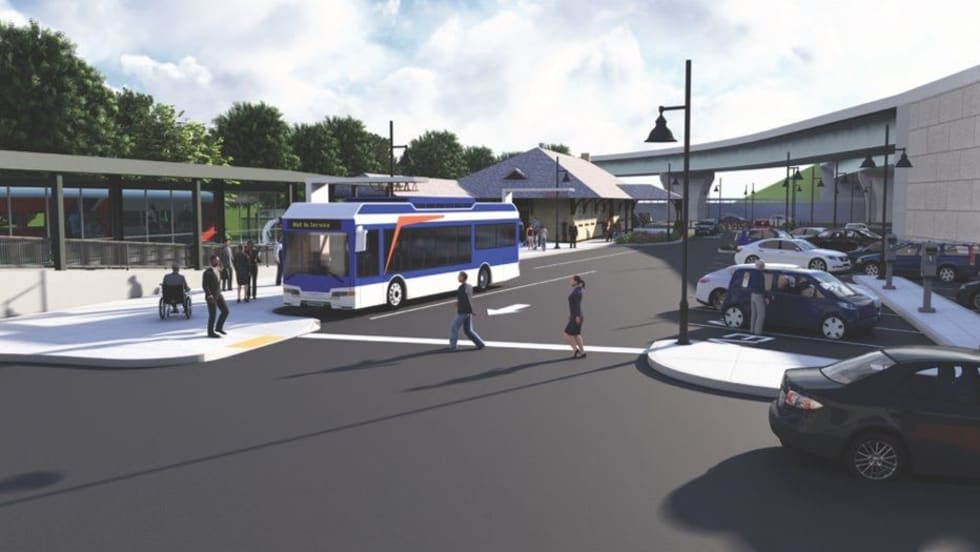
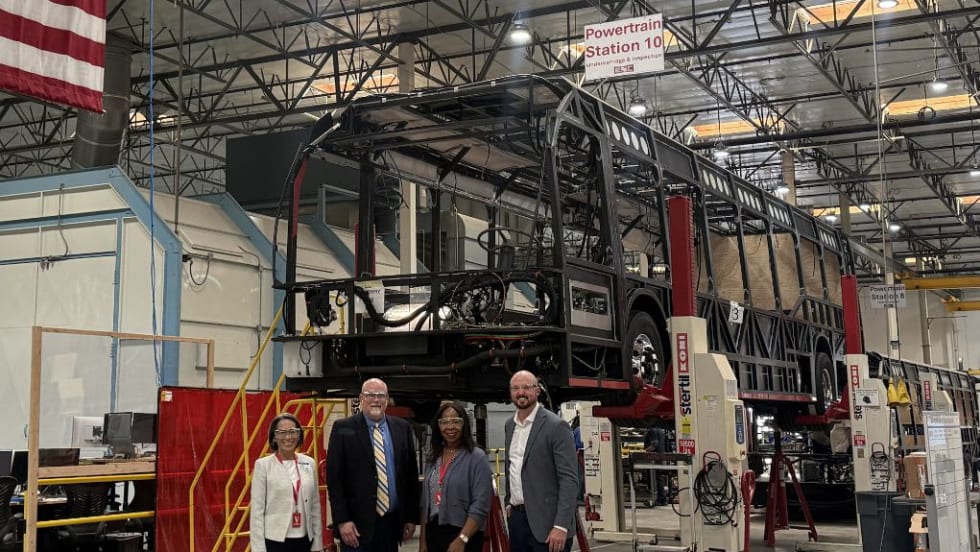
The beginning of the final BRT segment advances construction across all five segments, reflecting steady progress toward shorter travel times, improved accessibility, and a more dependable connection to jobs, businesses, and community destinations.
The visit is part of the SF Fed's ongoing engagement with major employers and industries across Southern California and, more broadly, the western U.S. to better understand regional economic conditions and business outlooks.
Advances in data and analytics are giving transit agencies new opportunities to refine maintenance practices, improve efficiency and make more informed decisions about asset performance.
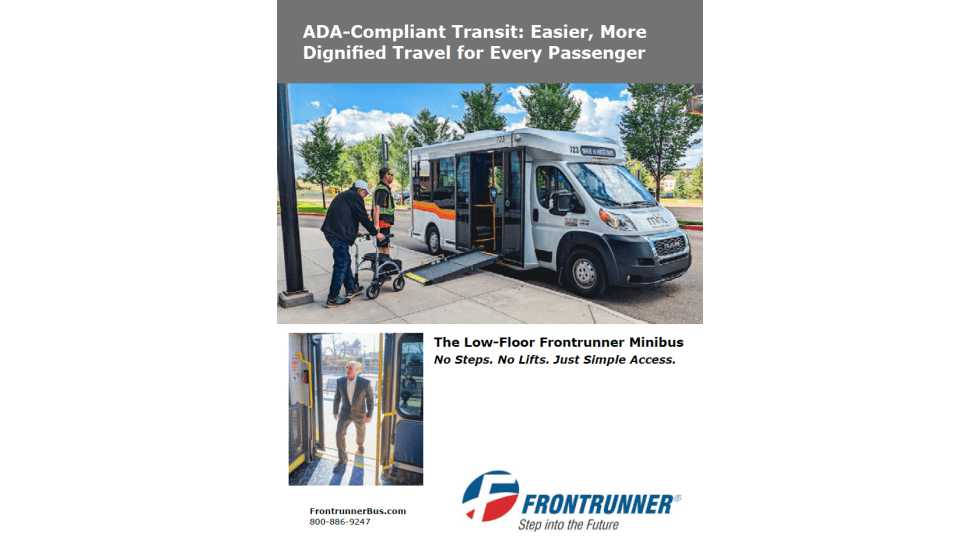
Today’s riders—and the communities you serve—expect more from public transit. While ADA compliance is required, leading transit agencies know that true accessibility also means delivering dignity, efficiency, and a better rider experience. This whitepaper reveals why forward thinking agencies nationwide choose the Low Floor Frontrunner as their first choice for ADA compliant vehicles—setting a new standard with passenger first design, faster boarding, improved safety, and unmatched operational performance.
In Part 2 of a two-part conversation, AC Transit’s director of maintenance joins co-hosts Alex Roman and Mark Hollenbeck to discuss his maintenance team’s work with various types of vehicle, training, augmented reality, and more.
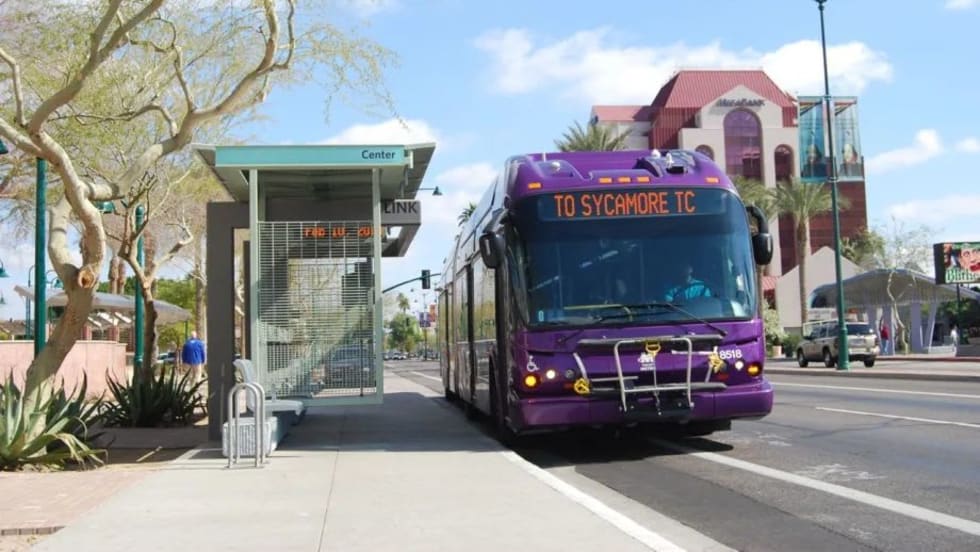
Under this extension, Keolis will continue to manage and operate fixed-route bus service across the East Valley, serving communities including Tempe, Mesa, Chandler, Scottsdale, the town of Gilbert, parts of Phoenix, and the Gila River Indian Community.
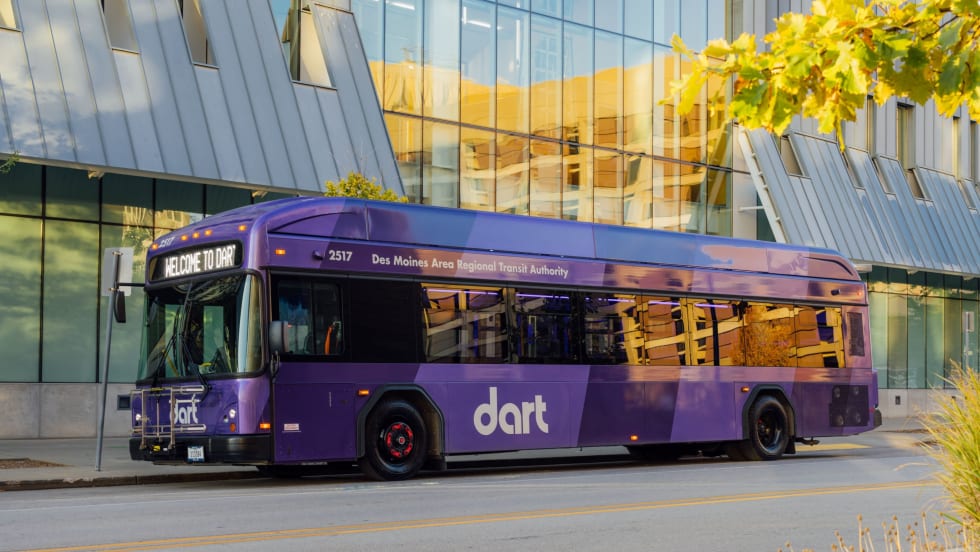
The new network reflects extensive input from riders and the community through Reimagine DART on what matters most in public transit — and those priorities are reflected in the changes ahead.