



Foxx calls on Congress to pass GROW AMERICA Act
During a visit to Kawasaki's Lincoln, Neb. plant, the secretary of transportation said Congress' hesitation to pass the $302 billion, four-year transportation reauthorization proposal creates economic uncertainty for millions of Americans who rely on public transportation.

U.S. DOT
U.S. DOT
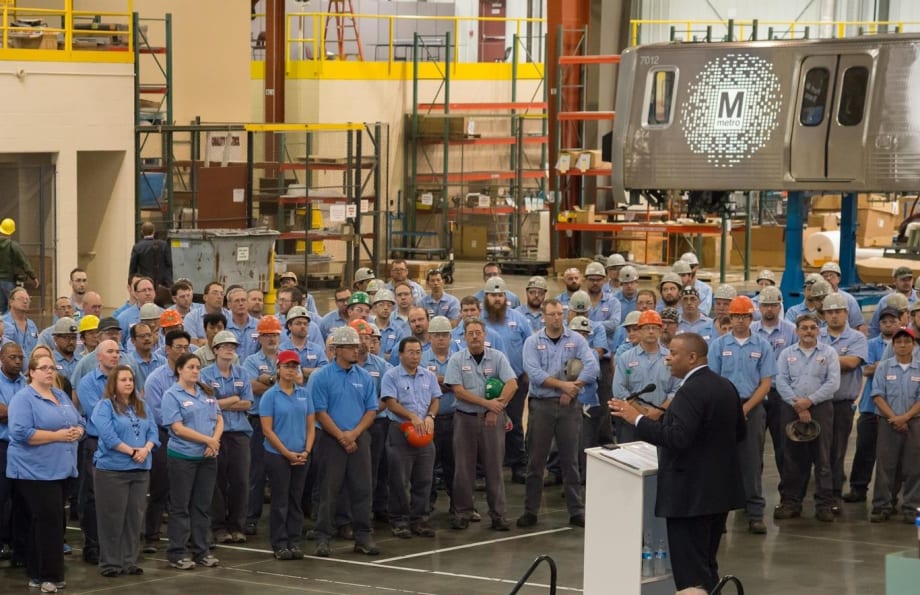
U.S. Transportation Secretary Anthony Foxx called on Congress to pass the GROW AMERICA Act, the Administration’s four-year, $302 billion proposal to invest in the nation’s transportation network, during a visit to Kawasaki Motors Manufacturing Corp., U.S.A.’s plant in Lincoln, Neb.
The GROW AMERICA Act would substantially increase funding for public transportation to boost work at plants like Kawasaki, while strengthening the existing Buy America laws to expand U.S. manufacturing opportunities across the entire domestic supply chain. Secretary Foxx was joined by Lincoln Mayor Chris Beutler and Kawasaki leadership.
“Sadly, when Congress fails to act, they create economic uncertainty for the millions of Americans who depend on a reliable transportation network to get to work, school, or a doctor appointment, but also at the kitchen tables of Lincoln families who need to know where and when the next vehicle order will come from to make ends meet,” said Secretary Foxx.
The Kawasaki facility in Lincoln employs approximately 1,600 people across the campus, where a dedicated force of 439 Nebraskans are building the next generation of metro railcars for the Washington Metropolitan Area Transit Authority (Metro) and New York’s Metropolitan Transportation Authority’s (MTA) Metro North Railroad.
Metro’s Series 7000 railcars will begin to replace the older Series 1000 railcars recommended for removal from service by the National Transportation Safety Board following the Ft. Totten Red Line Crash in June 2009. The Federal Transit Administration provided more than $100 million for the purchase of the replacement vehicles.
Kawasaki is also nearing completion of the final two dozen M8 railcars of a 366 vehicle order that will serve Metro-North Railroad from Grand Central Station along the New Haven Line in Connecticut.
The $302 billion, four-year transportation reauthorization proposal would provide increased and stable funding for the nation’s highways, bridges, transit and rail systems without contributing to the deficit. The proposed legislation also includes several critical program reforms to improve the efficiency and effectiveness of federal highway, rail and transit programs.
Overall, GROW AMERICA would increase average transit spending by nearly 70% annually by investing $72 billion over four years into transit systems and expand transportation options for all Americans.
More Bus

New York MTA Plans Largest Bus Fleet Upgrade in More Than a Decade
The agency is seeking manufacturers for 650 new CNG buses to replace aging vehicles, improve reliability, and advance its broader fleet modernization strategy.
Read More →
Building a Flexible Path to Transit Electrification
John Hroncich discusses BAE Systems’ modular and scalable approach, lessons learned from decades of real-world operations, and how agencies can identify electrification strategies that fit their fleets.
Read More →
Bus Tech Talk: Keeping Transit Technicians Ahead of the Technology Curve
LA Metro’s Obed Mejia discusses technician training, evolving maintenance technology, fleet replacement, and strategies for getting the most out of today’s transit fleets.
Read More →
Biz Briefs: RIPTA Unveils New Frontrunners, Clevland RTA Adds New Siemens, and More
In METRO's latest installment, we take a look at recent news from Siemens, Prevost, Dodge, and more partnerships making headlines across the transportation sector.
Read More →
People Movement: Holly Arnold Joins Transdev and More
In this edition, we also cover recent appointments and announcements at Pace, CamTran, MCI, and more, showcasing the individuals helping to shape the future of transportation.
Read More →
The High Cost of Transit Buses: Industry Leaders Look to Procurement Reform
Transit leaders and policymakers examine how standardized bus designs, streamlined procurement, and predictable funding could help agencies stretch budgets and deliver better service.
Read More →
The Business Voice Behind Public Transportation
As chair of APTA’s Business Members Board of Governors, Ray Melleady explains how more than 850 business members are partnering with transit agencies to advance funding, innovation, and industry-wide collaboration.
Read More →
From Surviving to Thriving: Building Stronger Transportation Organizations
Bus Business Consultants founder Brian Dickson shares lessons on leadership, organizational health, and creating options for long-term success in a changing transportation industry.
Read More →
Finding the ‘Happy Medium’: Optimizing Maintenance Without Sacrificing Reliability
The key to maintenance optimization isn’t doing less work—it’s doing the right work at the right time on the right assets.
Read More →
LA Metro, City of West Hollywood, and Partners Advance Smarter Bus Lane Enforcement
The award-winning partnership combines AI-powered detection with human oversight to improve bus reliability, accessibility, and enforcement efficiency.
Read More →