



5 things to consider when naming and designing brand identities
As cities work to become more relevant to new generations and attract diverse visitors, ensuring transit systems’ naming and branding systems are well-designed will become increasingly important.

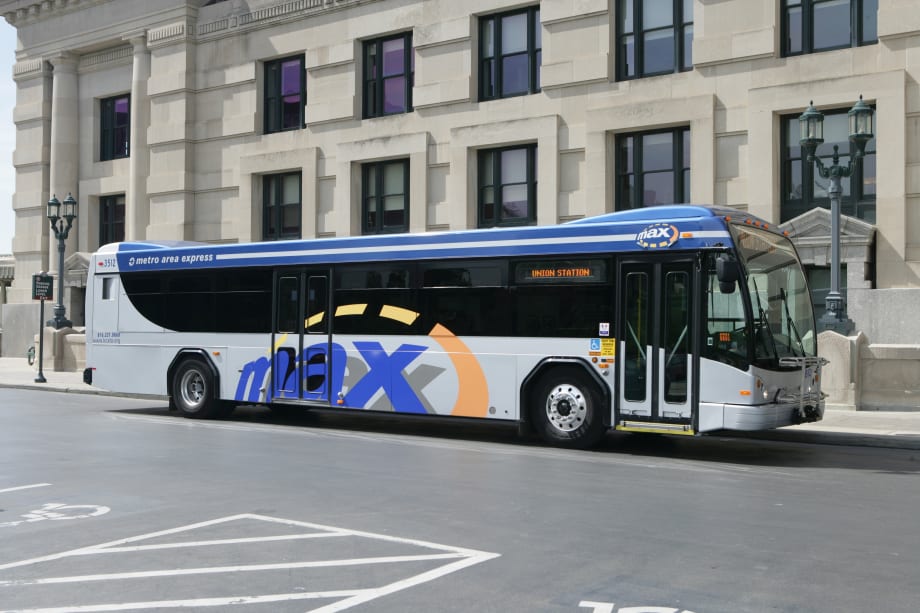
When branding, it’s important to keep things simple, which was a key consideration for the Kansas City Area Transportation Authority’s bus rapid transit system.
When branding, it’s important to keep things simple, which was a key consideration for the Kansas City Area Transportation Authority’s bus rapid transit system.
As cities work to become more relevant to new generations and attract diverse visitors, ensuring transit systems’ naming and branding systems are well-designed will become increasingly important.
That’s because people who gravitate toward these more dense urban centers do so in part because they want everything at their fingertips. They don’t want to have to own a car to get to work — or play. For these people, your transit system becomes an integral part of their everyday lives. For visitors and tourists, a well-designed system ensures they will be able to discover and enjoy all that your city has to offer.
Here are five things you need to consider when naming and branding your transit system:
Unity. Optimally, the new transit name and brand should be capable of working in unison with all operators across all of your transit lines — even if you are just rebranding one mode of transit right now. Why? Riders are looking to get from point A to point B in a timely and convenient manner and sometimes this requires using more than one mode.
Connecting the modes with uniform visual and verbal cues will make the transition between modes easier for riders. This also enables you to begin extending that unified experience to transit information systems such as the signage, website, map and smartphone applications. For example, New York City Bus uses the same brand language as New York City Subway, and both live under the MTA brand.
Expansion. Naming schemes should be flexible and extensible enough so that they can expand and adapt as lines and services are added or decommissioned. Studies exploring how the name and brand could be applied in these scenarios should be part of the design process and standards developed to guide future needs.
Flexibility/extensibility becomes extremely important when naming routes and lines. For example, using color can be a problem if the system grows to the point that you run out of colors. It’s also important to consider if the city will benefit from a very rational route system (A line, B line, C line, etc.) or if you want to get into naming routes after people and places. A note of caution — the latter approach can become political and names can become irrelevant over time.
Simplicity. In examining the branding of major transit systems all around the world and speaking directly with many of their leaders to understand their challenges — and what they would do differently — we found that the bigger the city and more complex it is, the simpler the brand and signage system needs to be. Simplicity in transit branding is essential.
Don’t be surprised, however, if initially you encounter resistance, as many people equate simplicity with lack of creativity. Nothing could be further from the truth. Consider the universal and iconic stop sign. It’s simple, memorable and extremely effective. Communicate this to your public, but hold your ground. You’ll thank us later. Transport for London is a best practice for its simplicity.
Function. When vetting names it can be helpful to create a list of criteria. Here are a few examples: Will riders immediately understand what it is? Does it work with a pure and directional URL? Does it fit with the native nomenclature, in other words, the words people are already using to refer to your system? Does the name reflect what the rider is looking to do? It’s also important to keep in mind that the best looking design in the world will fail to create the desired user experience unless its first consideration is the transit user.
Pride. Transit is extremely visible and thus what it looks like (and how it works) is a constant reminder to citizens and visitors of what your city thinks of itself. When considering a new brand identity direction, take inspiration from art, architecture, colors, imagery and voice from the surrounding environment that helps define your city, but also look at consumer products and imagery that convey the impression you are looking to achieve. Paris RATP, for example, combined a very simple and clean Parisian aesthetic application to its fleet with an artistically-driven mark to create a unique brand for Paris.
A unified, flexible, simple and functional transit naming and branding design that reflects your city in its best, most aspirational light will serve as source of civic pride for years to come. Ensuring the transit communications serve user first, however, is ultimately what will help your city really go places.
Megan Stephens is president and partner at Willoughby Design,
a brand strategy and design firm with offices in San Francisco
and Kansas City. mstephens@willoughbydesign.com.
More Bus

New York MTA Plans Largest Bus Fleet Upgrade in More Than a Decade
The agency is seeking manufacturers for 650 new CNG buses to replace aging vehicles, improve reliability, and advance its broader fleet modernization strategy.
Read More →
Building a Flexible Path to Transit Electrification
John Hroncich discusses BAE Systems’ modular and scalable approach, lessons learned from decades of real-world operations, and how agencies can identify electrification strategies that fit their fleets.
Read More →
Bus Tech Talk: Keeping Transit Technicians Ahead of the Technology Curve
LA Metro’s Obed Mejia discusses technician training, evolving maintenance technology, fleet replacement, and strategies for getting the most out of today’s transit fleets.
Read More →
Biz Briefs: RIPTA Unveils New Frontrunners, Clevland RTA Adds New Siemens, and More
In METRO's latest installment, we take a look at recent news from Siemens, Prevost, Dodge, and more partnerships making headlines across the transportation sector.
Read More →
People Movement: Holly Arnold Joins Transdev and More
In this edition, we also cover recent appointments and announcements at Pace, CamTran, MCI, and more, showcasing the individuals helping to shape the future of transportation.
Read More →
The High Cost of Transit Buses: Industry Leaders Look to Procurement Reform
Transit leaders and policymakers examine how standardized bus designs, streamlined procurement, and predictable funding could help agencies stretch budgets and deliver better service.
Read More →
The Business Voice Behind Public Transportation
As chair of APTA’s Business Members Board of Governors, Ray Melleady explains how more than 850 business members are partnering with transit agencies to advance funding, innovation, and industry-wide collaboration.
Read More →
From Surviving to Thriving: Building Stronger Transportation Organizations
Bus Business Consultants founder Brian Dickson shares lessons on leadership, organizational health, and creating options for long-term success in a changing transportation industry.
Read More →
Finding the ‘Happy Medium’: Optimizing Maintenance Without Sacrificing Reliability
The key to maintenance optimization isn’t doing less work—it’s doing the right work at the right time on the right assets.
Read More →
LA Metro, City of West Hollywood, and Partners Advance Smarter Bus Lane Enforcement
The award-winning partnership combines AI-powered detection with human oversight to improve bus reliability, accessibility, and enforcement efficiency.
Read More →