



Calif.'s OCTA to launch new bus design
The existing design, more than 20 years old, will be phased out to make way for the new look that prominently features a light blue and orange wave across the bus and the words “OC Bus.”

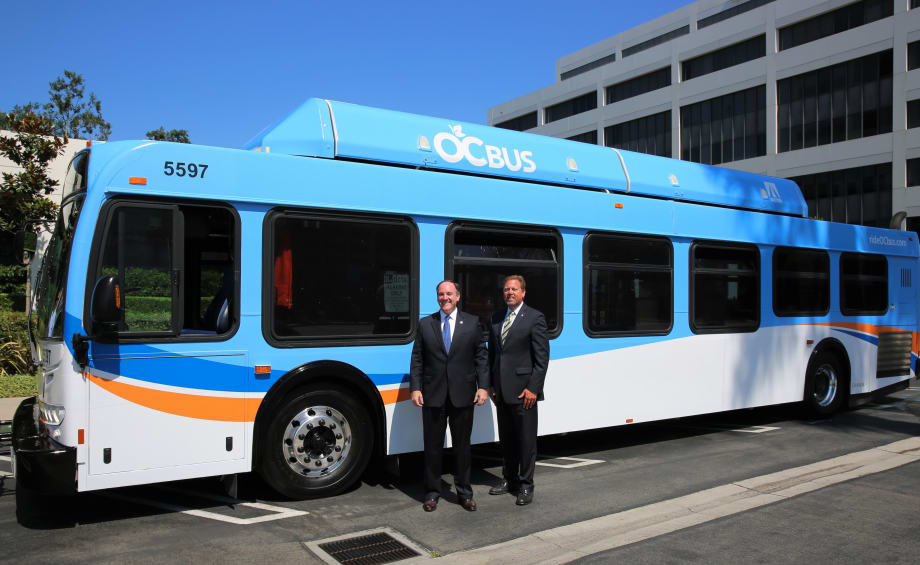
OCTA Chairman Jeff Lalloway, also Irvine’s mayor pro tem, (left) and OCTA CEO Darrell Johnson stand in front of the redesigned OCTA bus, which will soon roll out on Orange County streets.

Calif.’s Orange County Transportation Authority (OCTA) board voted Monday to roll out a colorful new design for its buses as part of an ongoing and comprehensive effort to maximize service, retain riders and get the attention of new customers.
The existing design, more than 20 years old, will be phased out to make way for the new look that prominently features a light blue and orange wave across the bus and the words “OC Bus.” The recognizable blue-and-white OCTA logo also remains.
The timing was right for the re-branding because OCTA is in the process of replacing more than 40% of its bus fleet with 201 compressed natural gas-powered buses. The buses are scheduled for delivery from late 2015 to early 2017.

OCTA continues to explore ways to make its bus service a transportation option of choice for more Orange County residents by optimizing service delivery and by marketing and discounting prices to targeted groups.
Concepts for the new bus designs were reviewed by customers, advisory committees, members of the OCTA’s Teen Council and the millennial generation, and other stakeholders. The final design, they said, is inviting and dynamic and captures the personality of Orange County.
The new look is cost-effective to implement and maintain and is a timeless enough to last for years.
More Bus

DART Taps Nathaniel P. Ford Sr. as Next President/CEO
Since 2012, Ford has served as the CEO of the Jacksonville Transportation Authority
Read More →
AC Transit’s Cecil Blandon on Building the Next Generation of Transit Maintenance Leaders
The agency’s maintenance chief discusses leadership, workforce development, zero-emission technology, and preparing technicians for the future of public transportation.
Read More →
Building the Next Generation of Transit Technology
In this edition of METROspectives, Luminator CEO Magnus Friberg discusses the company's transformation, the growing role of AI and software, and what's next for transit technology.
Read More →
June LA Metro Ridership Surges 2 Million Year Over Year
Total June ridership increased for both weekdays and weekends. Weekday ridership was 953,820, which grew 8.4% from June 2025; Saturdays increased nearly 13% year-over-year to 708,826; and Sundays increased 7.7% to 611,534 from June 2025, according to LA Metro.
Read More →
Washington's Pierce Transit Board Sends Transit Funding Measure to November Ballot
With the adoption of Resolution 2026-006, the measure moves to the Pierce County Auditor, giving voters in the Pierce Transit service area the decision on whether to fund an expansion of local transit service within the agency’s service area.
Read More →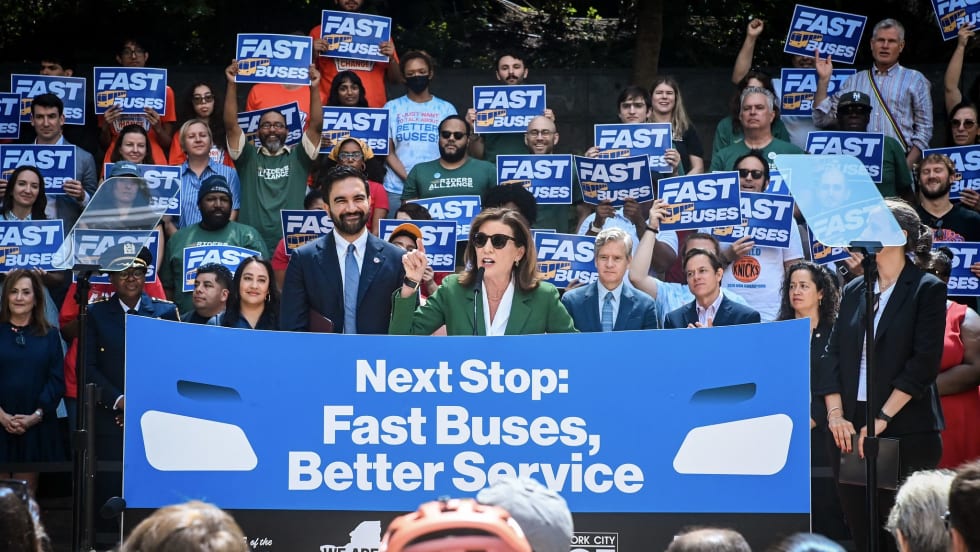
New York Unveils Sweeping Plan to Modernize City Bus Service
Next Stop: Fast Buses, Better Service identifies 50 priority bus corridors for improvements across the five boroughs and launches the City’s next generation of rapid bus service along five key routes.
Read More →
CTDOT Taps STV for Electric Bus Facility Design
The firm will work with CTDOT and RVT to define the facility layout, operational requirements, and long-term flexibility for RVT’s growing electric fleet.
Read More →
Ford to Leave JTA After More Than 10 Years as CEO
He plans to continue his work advancing innovative mobility solutions to improve the quality of life in communities across the nation. He did not announce specific plans.
Read More →
Transit Leaders Push for Bus Procurement Reforms to Reduce Costs
Industry experts said reducing unnecessary bus customization and modernizing purchasing practices could help transit agencies buy more vehicles, improve reliability, and make better use of limited funding.
Read More →
Executive Order Aims to Improve Transit Access Across California
The order directs state agencies to streamline transit project delivery, improve coordination, and expand access to bus and passenger rail services across California.
Read More →