




San Francisco takes steps to increase cable car safety for operators
San Francisco introduces interactive, online performance dashboards
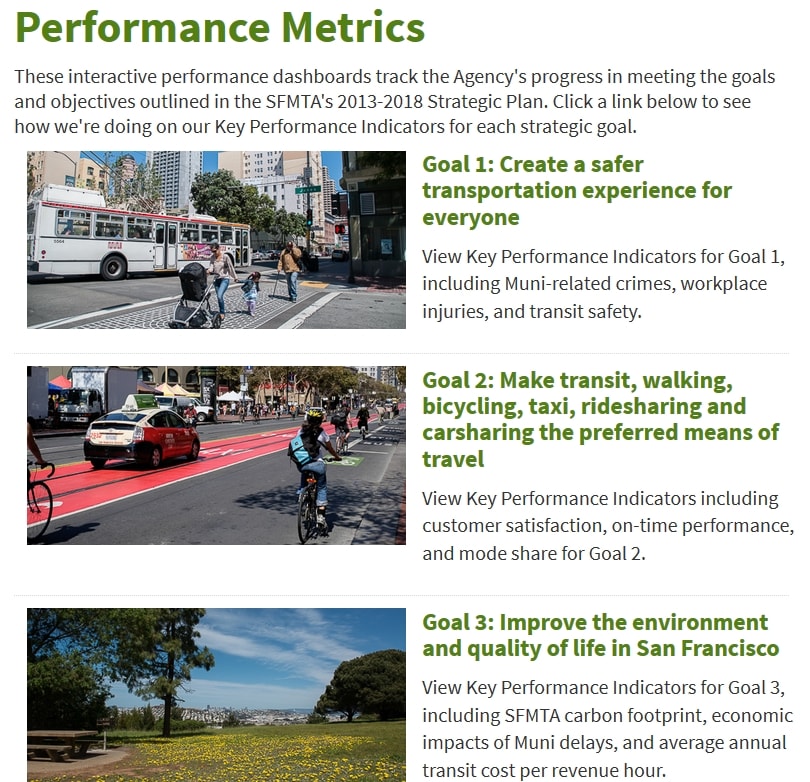
The site contains results from 13 key areas, including the percentage of on-time performance, mode share, crime stats, the agency’s carbon footprint, collision data and other information aligned with the SFMTA’s strategic plan.
August 20, 2015
2 min to read
The San Francisco Municipal Transportation Agency (SFMTA) introduced new, interactive, online dashboards that will allow the agency to better report out on its performance by sharing up-to-date information with the public and increasing transparency and accountability as the SFMTA works to improve the transportation network.
“In an effort to improve what we do, the SFMTA has been regularly reporting these metrics to the public for many years,” said SFMTA Director Ed Reiskin. “While those existing reports are informative, sharing these interactive reports will allow us to engage with the public in a more meaningful way, because the data is easier to find, easier to read and updated constantly.”
The site contains results from 13 key areas, including the percentage of on-time performance, mode share, crime stats, the agency’s carbon footprint, collision data and other information aligned with the SFMTA’s strategic plan.
The interactive performance dashboards are organized by the four goals outlined in the SFMTA’s 2013-2018 Strategic Plan. The Strategic Plan’s four overarching goals help shape how the agency prioritizes its attention, resources and staff over the next six fiscal years. The four goals are: (1) Create a safer transportation experience for everyone; (2) Make transit, walking, bicycling, taxi, ridesharing and car sharing the preferred means of travel; (3) Improve the environment and quality of life in San Francisco; and (4) Create workplace that delivers outstanding service.
More Bus

New York MTA Plans Largest Bus Fleet Upgrade in More Than a Decade
The agency is seeking manufacturers for 650 new CNG buses to replace aging vehicles, improve reliability, and advance its broader fleet modernization strategy.
Read More →
Building a Flexible Path to Transit Electrification
John Hroncich discusses BAE Systems’ modular and scalable approach, lessons learned from decades of real-world operations, and how agencies can identify electrification strategies that fit their fleets.
Read More →
Bus Tech Talk: Keeping Transit Technicians Ahead of the Technology Curve
LA Metro’s Obed Mejia discusses technician training, evolving maintenance technology, fleet replacement, and strategies for getting the most out of today’s transit fleets.
Read More →
Biz Briefs: RIPTA Unveils New Frontrunners, Clevland RTA Adds New Siemens, and More
In METRO's latest installment, we take a look at recent news from Siemens, Prevost, Dodge, and more partnerships making headlines across the transportation sector.
Read More →
People Movement: Holly Arnold Joins Transdev and More
In this edition, we also cover recent appointments and announcements at Pace, CamTran, MCI, and more, showcasing the individuals helping to shape the future of transportation.
Read More →
The High Cost of Transit Buses: Industry Leaders Look to Procurement Reform
Transit leaders and policymakers examine how standardized bus designs, streamlined procurement, and predictable funding could help agencies stretch budgets and deliver better service.
Read More →
The Business Voice Behind Public Transportation
As chair of APTA’s Business Members Board of Governors, Ray Melleady explains how more than 850 business members are partnering with transit agencies to advance funding, innovation, and industry-wide collaboration.
Read More →
From Surviving to Thriving: Building Stronger Transportation Organizations
Bus Business Consultants founder Brian Dickson shares lessons on leadership, organizational health, and creating options for long-term success in a changing transportation industry.
Read More →
Finding the ‘Happy Medium’: Optimizing Maintenance Without Sacrificing Reliability
The key to maintenance optimization isn’t doing less work—it’s doing the right work at the right time on the right assets.
Read More →
LA Metro, City of West Hollywood, and Partners Advance Smarter Bus Lane Enforcement
The award-winning partnership combines AI-powered detection with human oversight to improve bus reliability, accessibility, and enforcement efficiency.
Read More →