




RELATED: Proterra launches EV sim to demo battery transition
Proterra opens electric vehicle fast-charge tech to transit industry
The company will grant anyone royalty-free access to its patents covering its industry leading single-blade overhead charging design. This includes the bus-mounted, single-blade charging design and the overhead-charging coupler.
June 28, 2016
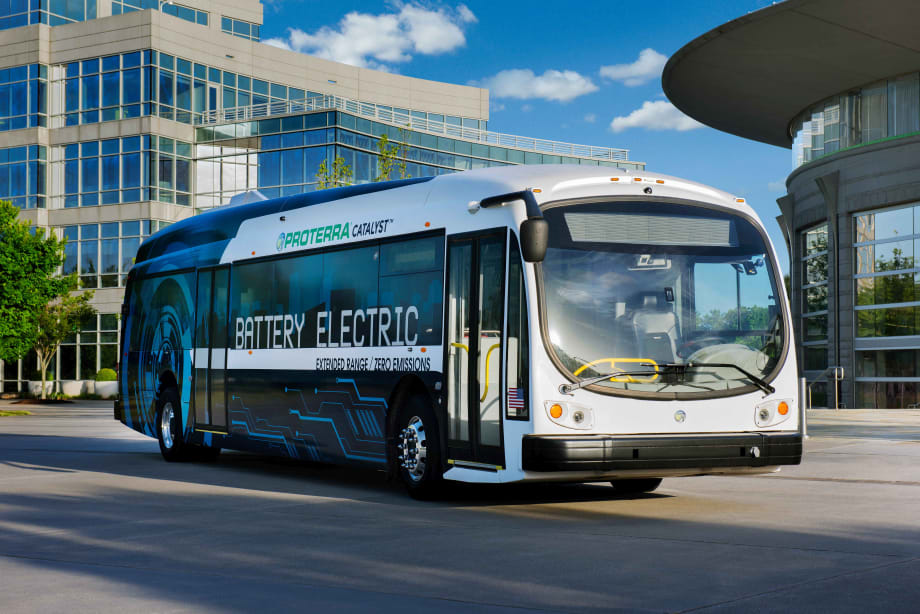
Photo: Proterra
2 min to read
Photo: Proterra
In a significant move intended to accelerate widespread EV technology adoption and infrastructure development, Proterra announced it would be opening its overhead on-route fast-charging technology to the transit industry on a royalty-free basis.
With the recent issuance of foundational patents covering this technology, Proterra is now clear to offer a complete technology package to the market. The company will grant anyone royalty-free access to its patents covering its industry leading single-blade overhead charging design. This includes the bus-mounted, single-blade charging design and the overhead-charging coupler.
Consistent with this, Proterra is working with its suppliers to open up Proterra's single-blade overhead charging design for direct sale to third parties. Industry-wide availability of the company's single-blade overhead charging design will advance standardization efforts and will facilitate additional innovation.
"As more and more electric buses operate on U.S. roads, it will be critical for the transit industry to have access to open technology platforms in order to effectively scale this technology and enhance the transit industry," said Lee Gibson, Regional Transportation Commission of Washoe County, Nev. "With Proterra opening up its technology to other manufacturers, this will significantly benefit communities across the nation with this proven technology. Together they can move the industry forward."
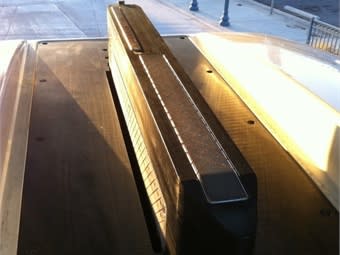
Proterra single-blade charger design. Photo: Proterra
Over the past five years, public transit agencies across the country have performed more than 250,000 charging events using the Proterra single-blade overhead fast-charge system, providing these agencies with the flexibility of keeping their buses on the road all-day, and seamlessly integrating electric buses with existing route schedules.
In order to meet the needs of transit operations, the single-blade vehicle coupling mechanism supports a charging voltage range of 250-1000 VDC, and can provide electrical current of up to 1400 amps, with safety taking the highest priority in these systems. Proterra's unique technology was specifically designed to limit exposure to high-voltage components, unlike catenary or third-rail solutions.
"We believe that everyone benefits from open platforms and greater customer choice," said Ryan Popple, CEO of Proterra. "We hope that this decision will encourage even more transit agencies to bring clean, quiet, emission-free vehicles to our city streets and community roadways."
More Bus

New York MTA Plans Largest Bus Fleet Upgrade in More Than a Decade
The agency is seeking manufacturers for 650 new CNG buses to replace aging vehicles, improve reliability, and advance its broader fleet modernization strategy.
Read More →
Building a Flexible Path to Transit Electrification
John Hroncich discusses BAE Systems’ modular and scalable approach, lessons learned from decades of real-world operations, and how agencies can identify electrification strategies that fit their fleets.
Read More →
Bus Tech Talk: Keeping Transit Technicians Ahead of the Technology Curve
LA Metro’s Obed Mejia discusses technician training, evolving maintenance technology, fleet replacement, and strategies for getting the most out of today’s transit fleets.
Read More →
Biz Briefs: RIPTA Unveils New Frontrunners, Clevland RTA Adds New Siemens, and More
In METRO's latest installment, we take a look at recent news from Siemens, Prevost, Dodge, and more partnerships making headlines across the transportation sector.
Read More →
People Movement: Holly Arnold Joins Transdev and More
In this edition, we also cover recent appointments and announcements at Pace, CamTran, MCI, and more, showcasing the individuals helping to shape the future of transportation.
Read More →
The High Cost of Transit Buses: Industry Leaders Look to Procurement Reform
Transit leaders and policymakers examine how standardized bus designs, streamlined procurement, and predictable funding could help agencies stretch budgets and deliver better service.
Read More →
The Business Voice Behind Public Transportation
As chair of APTA’s Business Members Board of Governors, Ray Melleady explains how more than 850 business members are partnering with transit agencies to advance funding, innovation, and industry-wide collaboration.
Read More →
From Surviving to Thriving: Building Stronger Transportation Organizations
Bus Business Consultants founder Brian Dickson shares lessons on leadership, organizational health, and creating options for long-term success in a changing transportation industry.
Read More →
Finding the ‘Happy Medium’: Optimizing Maintenance Without Sacrificing Reliability
The key to maintenance optimization isn’t doing less work—it’s doing the right work at the right time on the right assets.
Read More →
LA Metro, City of West Hollywood, and Partners Advance Smarter Bus Lane Enforcement
The award-winning partnership combines AI-powered detection with human oversight to improve bus reliability, accessibility, and enforcement efficiency.
Read More →