




RELATED: New Cummins app provides engine info within minutes
Cummins recommends 2 products for optimized engine performance
The announcement comes after significant internal testing concluded both Power Service products meet the company's requirements, becoming the first fuel additive products that Cummins has ever officially recommended in the marketplace.
May 12, 2017
2 min to read
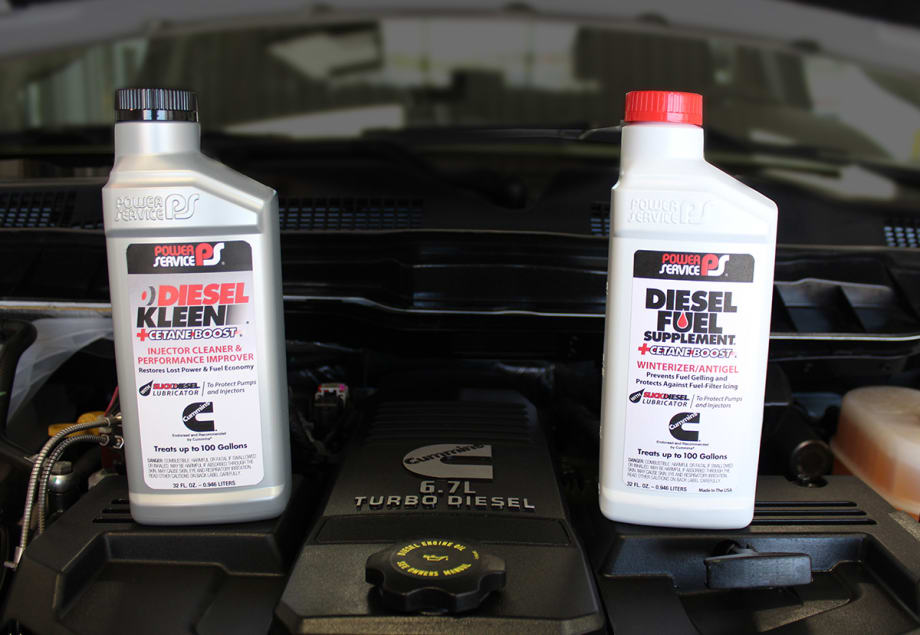
In a historic industry move, Cummins Inc. is now officially endorsing and recommending two Power Service products — Diesel Kleen +Cetane Boost and Diesel Fuel Supplement +Cetane Boost — for use in diesel engines.
The announcement comes after significant internal testing concluded both products meet Cummins requirements, becoming the first fuel additive products that Cummins has ever officially recommended in the marketplace.
“In recent years diesel fuel quality has become increasingly important as engines evolve and the diesel fuel manufacturing processes change. The Power Service Diesel Kleen and Diesel Fuel Supplement additives provide easily accessible solutions with proven technology to customers in the field when they encounter challenges with their fuel such as poor lubricity, low cetane numbers, low temperature operability issues, injector deposits, etc.,” said Roger England, director, technical quality and materials engineering for Cummins. “Cummins is in a unique position in that we design not only the engine but also the turbochargers, fuel system, and aftertreatment systems, which enables us to fully leverage the Power Service diesel fuel additive technologies.”
With the advancement of diesel engine technology and to fully realize the benefits of today’s cleaner burning fuels, using Power Service Diesel Kleen +Cetane Boost as a year-round performance enhancer cleans dirty injectors, prevents injector sticking, smooths rough-running engines, and can improve fuel economy. This all translates into maximizing overall engine performance.
Diesel Fuel Supplement +Cetane Boost, recommended for use in winter months when temperatures drop below +30F, is a winterizer/anti-gel used to prevent fuel gelling and keep fuel-filters from plugging with ice and wax. When temperatures drop, paraffin (wax) in Ultra-Low Sulfur Diesel fuel (ULSD) will gel, stopping fuel from flowing through the engine and water in the fuel can freeze on the facings of fuel-filters, blocking fuel flow. This formula provides trouble-free winter operation for diesel fuel.
More Bus

New York MTA Plans Largest Bus Fleet Upgrade in More Than a Decade
The agency is seeking manufacturers for 650 new CNG buses to replace aging vehicles, improve reliability, and advance its broader fleet modernization strategy.
Read More →
Building a Flexible Path to Transit Electrification
John Hroncich discusses BAE Systems’ modular and scalable approach, lessons learned from decades of real-world operations, and how agencies can identify electrification strategies that fit their fleets.
Read More →
Bus Tech Talk: Keeping Transit Technicians Ahead of the Technology Curve
LA Metro’s Obed Mejia discusses technician training, evolving maintenance technology, fleet replacement, and strategies for getting the most out of today’s transit fleets.
Read More →
Biz Briefs: RIPTA Unveils New Frontrunners, Clevland RTA Adds New Siemens, and More
In METRO's latest installment, we take a look at recent news from Siemens, Prevost, Dodge, and more partnerships making headlines across the transportation sector.
Read More →
People Movement: Holly Arnold Joins Transdev and More
In this edition, we also cover recent appointments and announcements at Pace, CamTran, MCI, and more, showcasing the individuals helping to shape the future of transportation.
Read More →
The High Cost of Transit Buses: Industry Leaders Look to Procurement Reform
Transit leaders and policymakers examine how standardized bus designs, streamlined procurement, and predictable funding could help agencies stretch budgets and deliver better service.
Read More →
The Business Voice Behind Public Transportation
As chair of APTA’s Business Members Board of Governors, Ray Melleady explains how more than 850 business members are partnering with transit agencies to advance funding, innovation, and industry-wide collaboration.
Read More →
From Surviving to Thriving: Building Stronger Transportation Organizations
Bus Business Consultants founder Brian Dickson shares lessons on leadership, organizational health, and creating options for long-term success in a changing transportation industry.
Read More →
Finding the ‘Happy Medium’: Optimizing Maintenance Without Sacrificing Reliability
The key to maintenance optimization isn’t doing less work—it’s doing the right work at the right time on the right assets.
Read More →
LA Metro, City of West Hollywood, and Partners Advance Smarter Bus Lane Enforcement
The award-winning partnership combines AI-powered detection with human oversight to improve bus reliability, accessibility, and enforcement efficiency.
Read More →