



San Diego's MTS bus service gets $2M boost
The changes to approximately 60 bus routes were approved by the MTS Board of Directors at its meeting on Thursday.

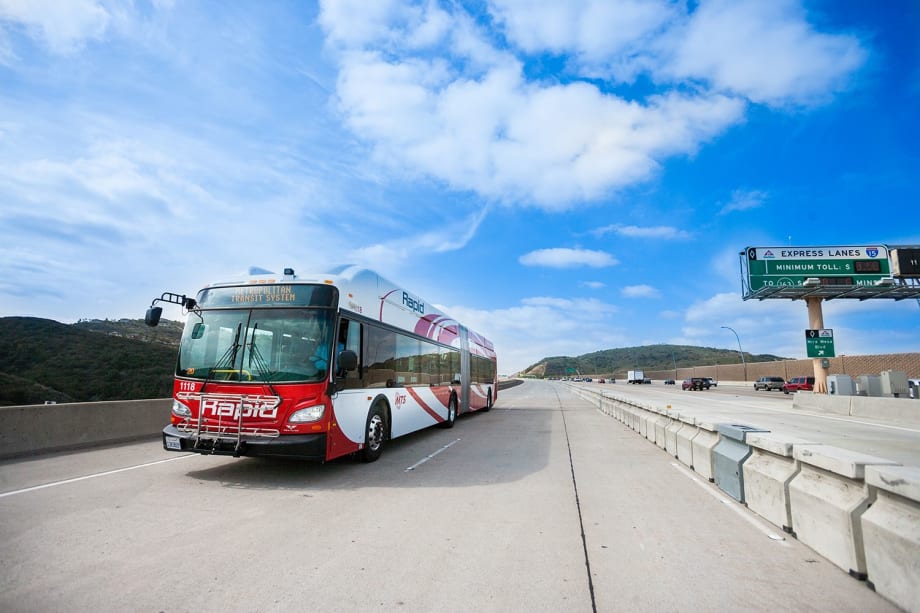
Frequency will increase to every 15 minutes during midday on Rapid 235, the high frequency, limited stop route that runs from Downtown San Diego to Escondido via the I-15.
Photos courtesy San Diego MTS
Frequency will increase to every 15 minutes during midday on Rapid 235, the high frequency, limited stop route that runs from Downtown San Diego to Escondido via the I-15.
Photos courtesy San Diego MTS
The San Diego Metropolitan Transit System (MTS) will boost the agency’s bus system by allocating an additional $2 million to provide more efficient and effective service. The changes to approximately 60 bus routes were approved by the MTS Board of Directors at its meeting on Thursday.
The increase in service was based on the agency’s Transit Optimization Plan (TOP), which it launched in fall 2016. TOP was an evaluation of MTS’ current network of services to ensure it meets the region’s travel needs. TOP changes will be implemented throughout 2018.
“One of MTS’ goals is to maximize the level of service for our customers,” said Paul Jablonski, MTS CEO. “After extensive outreach and surveys, we heard that frequency and speed of routes were the most important qualities for current and potential riders. The TOP service plan answers that call by substantially adding to our high frequency network and by streamlining routes to reduce travel times.”
Why Change the Bus Routes?
TOP is an update of the 2004-2006 Comprehensive Operational Analysis (COA) that resulted in major changes to the system’s bus and Trolley services. In the 10 years since COA implementation, MTS experienced increased ridership, fare revenue and operational efficiencies for nine years straight.
However, after record-breaking ridership in FY2015, ridership dipped in FY2016, and again in FY2017.
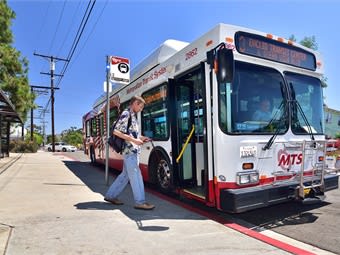
Route 3, which serves Hillcrest, Mission Hills, Balboa Park, Cortez Hill, Gaslamp Quarter, Lincoln Park will get increased frequency from 15 to 12 minutes, and Sunday frequency increased from 60 to 30 minutes.
Certain routes and geographical areas have experienced large gains, while others have experienced significant decline. The TOP process included MTS collecting nearly 6,000 surveys and attending over 50 outreach events across the region. Using rider input in conjunction with system performance data and ridership patterns, proposals were made for adjustments to approximately two-thirds of MTS’ bus services. The MTS Board of Directors held a public hearing on July 20, 2017 to obtain public testimony on the proposals. The Board considered the input of 49 speakers and more than 200 comments received via email, mail, and voicemails. Board members provided feedback and direction to staff on the various proposals.
MTS staff adjusted the plan and returned to the Board with recommendations for changes to approximately 60 routes. Changes approved by the MTS Board as part of TOP will be implemented throughout 2018.
MTS operates 95 bus routes and three Trolley lines on 53 miles of double-tracked railway. Every weekday more than 300,000 passenger trips are taken on MTS bus and Trolley services in 10 cities and the county. In FY 2017, MTS served more than 88 million riders.
More Bus

New York MTA Plans Largest Bus Fleet Upgrade in More Than a Decade
The agency is seeking manufacturers for 650 new CNG buses to replace aging vehicles, improve reliability, and advance its broader fleet modernization strategy.
Read More →
Building a Flexible Path to Transit Electrification
John Hroncich discusses BAE Systems’ modular and scalable approach, lessons learned from decades of real-world operations, and how agencies can identify electrification strategies that fit their fleets.
Read More →
Bus Tech Talk: Keeping Transit Technicians Ahead of the Technology Curve
LA Metro’s Obed Mejia discusses technician training, evolving maintenance technology, fleet replacement, and strategies for getting the most out of today’s transit fleets.
Read More →
Biz Briefs: RIPTA Unveils New Frontrunners, Clevland RTA Adds New Siemens, and More
In METRO's latest installment, we take a look at recent news from Siemens, Prevost, Dodge, and more partnerships making headlines across the transportation sector.
Read More →
People Movement: Holly Arnold Joins Transdev and More
In this edition, we also cover recent appointments and announcements at Pace, CamTran, MCI, and more, showcasing the individuals helping to shape the future of transportation.
Read More →
The High Cost of Transit Buses: Industry Leaders Look to Procurement Reform
Transit leaders and policymakers examine how standardized bus designs, streamlined procurement, and predictable funding could help agencies stretch budgets and deliver better service.
Read More →
The Business Voice Behind Public Transportation
As chair of APTA’s Business Members Board of Governors, Ray Melleady explains how more than 850 business members are partnering with transit agencies to advance funding, innovation, and industry-wide collaboration.
Read More →
From Surviving to Thriving: Building Stronger Transportation Organizations
Bus Business Consultants founder Brian Dickson shares lessons on leadership, organizational health, and creating options for long-term success in a changing transportation industry.
Read More →
Finding the ‘Happy Medium’: Optimizing Maintenance Without Sacrificing Reliability
The key to maintenance optimization isn’t doing less work—it’s doing the right work at the right time on the right assets.
Read More →
LA Metro, City of West Hollywood, and Partners Advance Smarter Bus Lane Enforcement
The award-winning partnership combines AI-powered detection with human oversight to improve bus reliability, accessibility, and enforcement efficiency.
Read More →