




RELATED: Van Hool to open Tennessee plant
Van Hool to build 40 hydrogen buses for German fleets
The order for Cologne and Wuppertal makes it the largest order for hydrogen-powered vehicles ever placed in Europe.
March 6, 2018
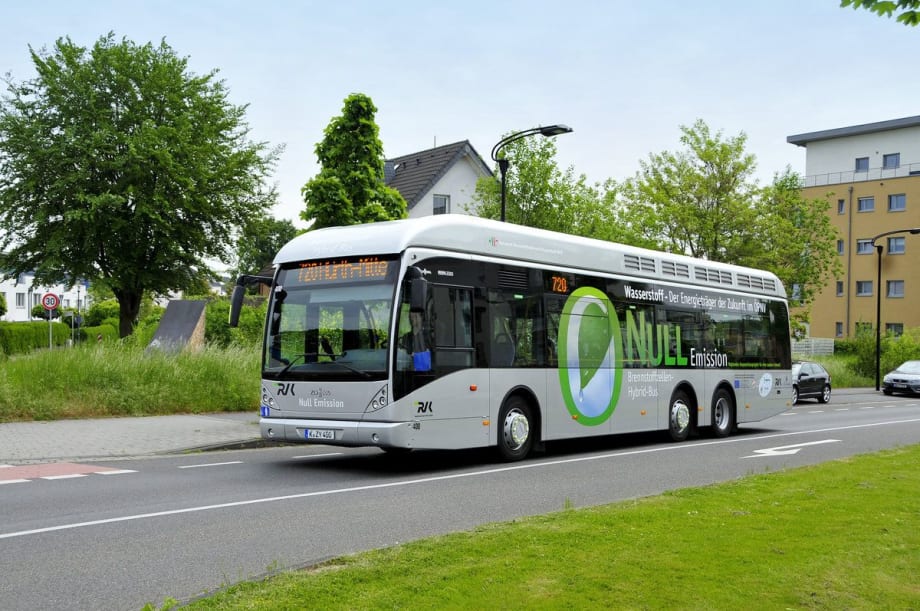
Van Hool has landed a significant contract with Germany-based bus companies, RVK Köln (pictured) and WSW Wuppertal, to supply 40 hydrogen buses. Photo: Van Hool
2 min to read
Van Hool has landed a significant contract with Germany-based bus companies, RVK Köln (pictured) and WSW Wuppertal, to supply 40 hydrogen buses. Photo: Van Hool
Van Hool, the independent bus, coach and industrial vehicles manufacturer, has landed a significant contract with Germany-based bus companies, RVK Köln (Cologne) and WSW Wuppertal (Wuppertal), to supply 40 hydrogen buses. This order consists of 30 fuel cell buses for Cologne and 10 for Wuppertal, making it the largest order for hydrogen-powered vehicles ever been placed in Europe.
These high-tech vehicles will be built in the Van Hool factory in Koningshooikt, Belgium. The first buses will be delivered in the spring of 2019.
Van Hool has been building hydrogen buses for the American market since 2005 and for the European market since 2007. By now, Van Hool has produced 53 hydrogen buses for North America (21) and Europe (32). The eight hydrogen-powered tram-buses Van Hool is manufacturing for Pau (France) should be added to this total. These are to be delivered in the second half of 2019.
The 40-foot hydrogen buses for the German fleets are Van Hool A330 hybrid vehicles (fuel cell and batteries) with dual axles. They will be equipped with the latest FCvelocity-HD85 Fuel Cell module from Ballard Power Systems of Vancouver, Canada and fitted with a 210kW Siemens PEM electric traction motor. The bus is designed for 29 seats and 46 (Cologne) and 49 (Wuppertal) standing passengers, with space for two wheelchair users and a stroller.
Due to the hybrid power source, the buses, with a tank capacity of 38.2kg of hydrogen on board, will be able to carry out a full day's schedule of 218 miles.
Together with the lithium batteries and electric motors, the fuel cells form the basis of the all-electric power source. Hydrogen is converted to electricity in the fuel cell, with water vapour as its only emission, while the batteries provide additional power wherever and whenever needed. Thanks to this hybrid power source and the re-use of braking energy, around 8 kg of hydrogen are consumed over a distance of 100 km.
The procurement of new vehicles fits into the framework of Germany's national innovation program for hydrogen and fuel cell technology (NIP), and is financed by the German Federal Ministry of Transport and Digital Infrastructure (BMVI), financed by the “Fuel Cells and Hydrogen Joint Undertaking” (FCH JU), the European public-private partnership is aimed at accelerating the market introduction of fuel cells and hydrogen technology, operating under the EU ‘Horizon 2020’ program.
More Bus

New York MTA Plans Largest Bus Fleet Upgrade in More Than a Decade
The agency is seeking manufacturers for 650 new CNG buses to replace aging vehicles, improve reliability, and advance its broader fleet modernization strategy.
Read More →
Building a Flexible Path to Transit Electrification
John Hroncich discusses BAE Systems’ modular and scalable approach, lessons learned from decades of real-world operations, and how agencies can identify electrification strategies that fit their fleets.
Read More →
Bus Tech Talk: Keeping Transit Technicians Ahead of the Technology Curve
LA Metro’s Obed Mejia discusses technician training, evolving maintenance technology, fleet replacement, and strategies for getting the most out of today’s transit fleets.
Read More →
Biz Briefs: RIPTA Unveils New Frontrunners, Clevland RTA Adds New Siemens, and More
In METRO's latest installment, we take a look at recent news from Siemens, Prevost, Dodge, and more partnerships making headlines across the transportation sector.
Read More →
People Movement: Holly Arnold Joins Transdev and More
In this edition, we also cover recent appointments and announcements at Pace, CamTran, MCI, and more, showcasing the individuals helping to shape the future of transportation.
Read More →
The High Cost of Transit Buses: Industry Leaders Look to Procurement Reform
Transit leaders and policymakers examine how standardized bus designs, streamlined procurement, and predictable funding could help agencies stretch budgets and deliver better service.
Read More →
The Business Voice Behind Public Transportation
As chair of APTA’s Business Members Board of Governors, Ray Melleady explains how more than 850 business members are partnering with transit agencies to advance funding, innovation, and industry-wide collaboration.
Read More →
From Surviving to Thriving: Building Stronger Transportation Organizations
Bus Business Consultants founder Brian Dickson shares lessons on leadership, organizational health, and creating options for long-term success in a changing transportation industry.
Read More →
Finding the ‘Happy Medium’: Optimizing Maintenance Without Sacrificing Reliability
The key to maintenance optimization isn’t doing less work—it’s doing the right work at the right time on the right assets.
Read More →
LA Metro, City of West Hollywood, and Partners Advance Smarter Bus Lane Enforcement
The award-winning partnership combines AI-powered detection with human oversight to improve bus reliability, accessibility, and enforcement efficiency.
Read More →