




RELATED: BYD partners to launch electric bus leasing program
Electric buses are cleaner in all parts of U.S., study finds
Electric buses produce less than half of the global warming pollution of diesel or natural gas buses on average.
July 24, 2018
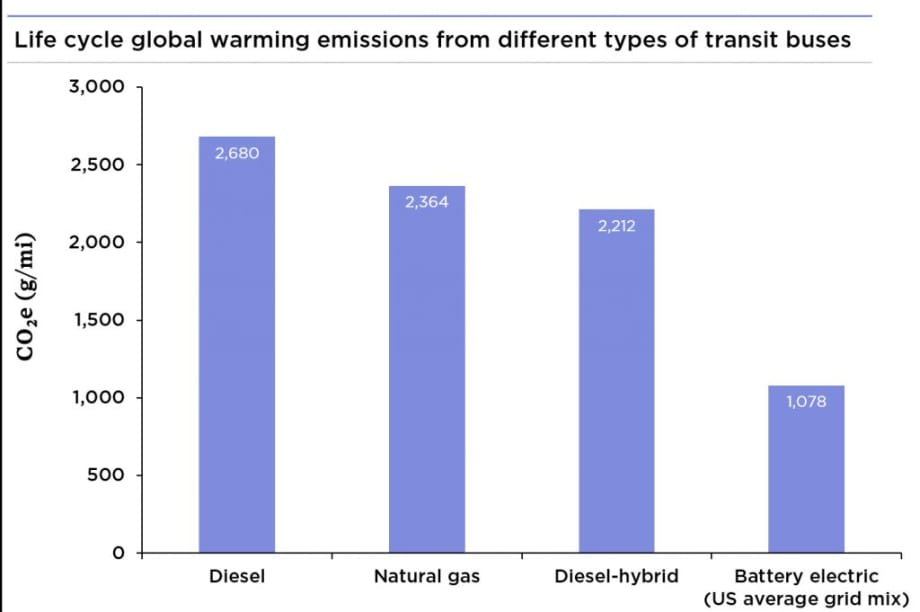
Everywhere in the country, battery electric buses also have lower life cycle global warming emissions than natural gas and diesel-hybrid buses. Image: Union of Concerned Scientists
3 min to read
Everywhere in the country, battery electric buses also have lower life cycle global warming emissions than natural gas and diesel-hybrid buses. Image: Union of Concerned Scientists
Across the U.S., electric buses have lower global warming emissions than diesel and natural gas buses, even in cities with power grids that depend on coal and natural gas power plants, according to an analysis released by the Union of Concerned Scientists (UCS). The study found electric buses produce less than half of the global warming pollution of diesel or natural gas buses on average.
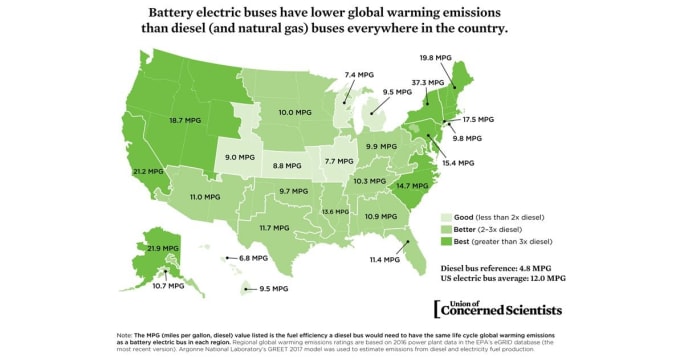
On average in the U.S., a typical diesel bus would have to attain 12 miles per gallon to have the same lifecycle global warming emissions as an electric bus. Those are the emissions released during the production of the fuel and operation of the bus. The comparable diesel bus today gets only 4.8 miles per gallon.
“Everywhere in the country, electric buses are better for climate than their diesel and natural gas counterparts,” said Dr. Jimmy O’Dea, senior vehicles analyst at UCS and study author. “In cities that get their electricity from power grids with the highest amounts of clean energy, electric buses are even cleaner than the typical car on the road today,” he said.
Electric buses are the cleanest in places like the Pacific Northwest that depend on hydropower, California with its large amounts of wind and solar power, the Carolina and Mid-Atlantic states that have relatively high levels of low-carbon nuclear power, and New York and New England that have a combination of these energy sources. These places also use less coal to generate their electricity. A typical diesel bus would have to attain 37.3 miles per gallon in upstate New York, 21.2 miles per gallon in California or 19.8 miles per gallon in New England to have the same lifecycle emissions as an electric bus.
“In regions that use a lot of renewable energy, transitioning to electric buses should be a no-brainer,” said O’Dea. “But even in places like Cleveland or Minneapolis that still rely on coal, electric buses have the advantage of getting cleaner as the power grid gets cleaner, and transit agencies have the option to power their buses with renewable electricity.” Nationwide, more than 85 transit agencies have begun electrifying buses. Los Angeles Metro committed last year to fully electrifying its transit fleet by 2030 and Seattle’s King County Metro committed to an all-electric fleet by 2040.
In terms of carbon emissions that cause and worsen climate change, putting one new electric bus on an average U.S. road is equivalent to taking 2.5 diesel-powered buses off the road.
Heavy-duty vehicles, including buses, make up only 5% of all vehicles on the road today but contribute 25% of global warming emissions in the transportation sector and a significant amount of air pollution. Most of the country’s carbon dioxide emissions that cause climate change come from transportation.
“Every time a big or small city commits to electric buses they increase the market demand, pave the way for more transit agencies to purchase electric, and get us closer to electrifying all heavy-duty vehicles,” said O’Dea. Buses share similarities with other types of heavy-duty vehicles like delivery trucks, garbage trucks and school buses. They are comparable in size, maneuver through urban traffic and over varied topography, make scheduled stops, have designated service areas and are parked overnight.
“It makes sense for all cities to electrify their transit fleets, cut toxic pollution along bus routes, and help the planet avoid the worst impacts of climate change,” said O’Dea. “Electric transit buses are a climate solution that cities and transit agencies can start implementing today.”
More Bus
Biz Briefs: New Flyer Delivers in Columbus, Houston, Beep and Freebee Merge, and More
In this edition of Biz Briefs, we spotlight the latest developments shaping the future of mobility.
Read More →
People Movement: Dan Dipert Coaches Adds Third-Generation Leader, Keolis Names New Valley Metro VP/GM, and More
In this edition, we also cover recent appointments and announcements at the Wabtec, SilverRide, HNTB, and more, showcasing the individuals helping to shape the future of transportation.
Read More →
New York MTA Plans Largest Bus Fleet Upgrade in More Than a Decade
The agency is seeking manufacturers for 650 new CNG buses to replace aging vehicles, improve reliability, and advance its broader fleet modernization strategy.
Read More →
Building a Flexible Path to Transit Electrification
John Hroncich discusses BAE Systems’ modular and scalable approach, lessons learned from decades of real-world operations, and how agencies can identify electrification strategies that fit their fleets.
Read More →
Bus Tech Talk: Keeping Transit Technicians Ahead of the Technology Curve
LA Metro’s Obed Mejia discusses technician training, evolving maintenance technology, fleet replacement, and strategies for getting the most out of today’s transit fleets.
Read More →
Biz Briefs: RIPTA Unveils New Frontrunners, Clevland RTA Adds New Siemens, and More
In METRO's latest installment, we take a look at recent news from Siemens, Prevost, Dodge, and more partnerships making headlines across the transportation sector.
Read More →
People Movement: Holly Arnold Joins Transdev and More
In this edition, we also cover recent appointments and announcements at Pace, CamTran, MCI, and more, showcasing the individuals helping to shape the future of transportation.
Read More →
The High Cost of Transit Buses: Industry Leaders Look to Procurement Reform
Transit leaders and policymakers examine how standardized bus designs, streamlined procurement, and predictable funding could help agencies stretch budgets and deliver better service.
Read More →
The Business Voice Behind Public Transportation
As chair of APTA’s Business Members Board of Governors, Ray Melleady explains how more than 850 business members are partnering with transit agencies to advance funding, innovation, and industry-wide collaboration.
Read More →
From Surviving to Thriving: Building Stronger Transportation Organizations
Bus Business Consultants founder Brian Dickson shares lessons on leadership, organizational health, and creating options for long-term success in a changing transportation industry.
Read More →